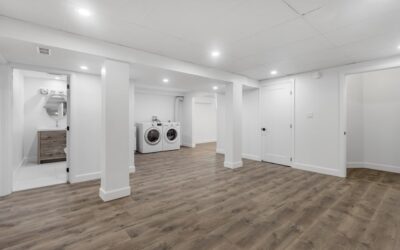
A basement floor faces a threat no other floor in the house does: moisture pushing up through the concrete slab from the ground below, plus the ever-present risk of a burst pipe or a rainy-season flood. Choosing waterproof basement floor tiles is really about surviving both, water from above and vapor from beneath, without warping, molding, or peeling. The right tile keeps a finished basement dry, warm, and usable; the wrong one buckles the first humid summer. This guide covers the tile types that genuinely handle basement conditions, what they cost, and how to install over concrete.
Part of our Epoxy, Concrete & Garage Floors guide — explore the full guide →
- The Two Moisture Problems Basements Have
- Porcelain and Ceramic Tile
- Raised Interlocking Basement Tiles With Air Gap
- Luxury Vinyl Tile and Plank
- What to Avoid Below Grade
- Installation Over Concrete
- Testing Your Slab for Moisture First
- Comfort, Warmth, and Radiant Heat
- Handling a Basement That Floods
- Frequently Asked Questions
The Two Moisture Problems Basements Have
Understanding basement flooring starts with recognizing you are fighting two things. The first is surface water, spills, appliance leaks, and outright flooding, which any waterproof surface handles. The second, and the one that ruins floors, is vapor transmission: concrete slabs sit on damp soil and constantly wick ground moisture upward, even when the slab looks bone dry. A floor that traps that vapor grows mold underneath and delaminates. So the best basement tiles are not only waterproof on top but also tolerant of, or vented against, moisture from below.
Porcelain and Ceramic Tile
Porcelain is arguably the gold standard for a basement floor. It is fired dense with a water absorption rate below 0.5 percent, so it is essentially impervious to moisture and completely unaffected by vapor from the slab. It cannot mold, warp, or rot, and it handles standing water and flooding better than any other option.
- Cost: $2 to $7 per sq ft for the tile, $5 to $12 installed
- Pros: fully waterproof, flood-proof, extremely durable, cool and clean
- Cons: hard and cold underfoot, requires a flat slab and mortar installation
The one caveat is that porcelain is rigid, so a slab with active cracking or heaving needs an uncoupling membrane like a dimpled underlayment to prevent the tile and grout from cracking.
Raised Interlocking Basement Tiles With Air Gap
Purpose-built basement subfloor tiles solve the vapor problem cleverly. These are modular interlocking tiles, often a rigid vinyl or PVC top on a dimpled plastic base that lifts the surface off the slab, creating a small air gap underneath. That gap lets any moisture that reaches the slab evaporate and vent rather than getting trapped, and it insulates your feet from the cold concrete.
- Cost: $2.50 to $6 per sq ft
- Pros: vents slab moisture, warmer and drier underfoot, fast DIY snap-together install, tolerates minor flooding
- Cons: raises floor height slightly, less premium look than porcelain
These are the smart choice for a basement with known dampness, because they manage vapor instead of ignoring it.
Luxury Vinyl Tile and Plank
Rigid-core SPC vinyl tile and plank are popular in basements because they are waterproof, warmer and softer than porcelain, and easy to install as a floating floor over concrete.
- Cost: $2 to $5 per sq ft materials
- Pros: waterproof, comfortable, DIY click installation, realistic wood and stone looks
- Cons: traps vapor against the slab if moisture is high, so it needs a vapor barrier or a slab with low moisture
Before installing vinyl directly on a slab, run a calcium chloride or relative humidity moisture test. If the slab reads damp, use the raised air-gap system instead or add a proper vapor barrier.
What to Avoid Below Grade
Some floors simply do not belong in a basement. Solid hardwood swells and cups with slab moisture. Standard laminate has a wood-fiber core that ruins if water reaches the seams. Glued-down carpet over a bare damp slab is a mold factory. If you love the look of wood or carpet, use waterproof wood-look SPC vinyl or carpet tiles designed with a moisture-tolerant backing over a raised subfloor, never the below-grade-hostile originals.
Installation Over Concrete
Whatever tile you choose, prep the slab the same way. Clean it thoroughly and check that it is flat within about 3/16 inch over 10 feet, grinding high spots and filling low ones with a leveling compound. Test the slab for moisture; a simple plastic-sheet test taped down overnight shows condensation if vapor is high. For porcelain, install over an uncoupling membrane with thinset. For raised tiles, snap them together with the expansion gap at the walls. For vinyl, add a vapor barrier if needed and float the click planks. Always leave an expansion gap around the perimeter to let the floor move.
Testing Your Slab for Moisture First
Before you buy a single tile, find out how wet your slab actually is, because that one test dictates which floor will survive. The simplest DIY method is the plastic-sheet test from ASTM D4263: tape a two-foot square of clear polyethylene tightly to the slab, sealing all edges, and leave it 24 to 72 hours. Condensation under the plastic or a darkened slab means significant vapor is coming up, steering you toward porcelain or a raised air-gap system rather than glued vinyl. For a more precise reading, a calcium chloride test kit measures moisture vapor emission in pounds per 1,000 square feet over 24 hours, and a relative humidity probe reads conditions deeper in the slab. Spending $20 on a test kit prevents a failed floor that costs thousands.
Comfort, Warmth, and Radiant Heat
Basements run cold because the surrounding earth stays cool year-round, so underfoot comfort deserves thought. Porcelain is the coldest and hardest option, which is why many homeowners pair it with electric radiant heat mats under the tile, an ideal match since tile conducts heat efficiently and radiant warming eliminates the chill. Raised air-gap tiles and rigid vinyl feel warmer on their own because they insulate you from the slab. If you plan to use the basement as living space rather than storage, either add radiant heat under porcelain or choose one of the warmer systems, and lay area rugs to break up cold expanses.
Handling a Basement That Floods
If your basement has flooded before or sits in a flood-prone area, plan for it in your flooring choice. Porcelain tile and raised interlocking tiles both survive occasional flooding: porcelain shrugs off water entirely, and raised tiles let water flow beneath and dry out through the air gap, after which you can often lift, dry, and relay them. Avoid anything with a wood-fiber core or a glued organic backing, which a flood destroys. Pairing a flood-tolerant floor with a sump pump and a perimeter drain gives a finished basement the best odds of coming through a water event intact.
Frequently Asked Questions
What are the best waterproof tiles for a basement?
Porcelain tile is the most waterproof and flood-proof option with a water absorption rate below 0.5 percent. For basements with known dampness, raised interlocking tiles with an air gap are ideal because they vent slab moisture while keeping the surface warm and dry.
Can you put tile directly on a basement concrete floor?
Porcelain and ceramic tile can go directly on a clean, flat slab with thinset, though an uncoupling membrane is wise if the slab has cracks. Vinyl and laminate should first be checked for slab moisture and may need a vapor barrier or a raised subfloor.
Why do basement floors need to handle moisture from below?
Concrete slabs sit on damp soil and continuously wick ground moisture upward as vapor, even when the surface looks dry. A floor that traps this vapor grows mold underneath and can delaminate, so basement tiles must either be impervious like porcelain or vented like raised air-gap systems.
Is luxury vinyl good for basement floors?
Rigid-core SPC vinyl is waterproof, warm, and easy to install over concrete, making it a popular basement choice. Just test the slab for moisture first and add a vapor barrier or use a raised system if the concrete is damp, since trapped vapor can cause problems.
How much does waterproof basement tile flooring cost?
Expect $2 to $7 per square foot for porcelain tile ($5 to $12 installed), $2.50 to $6 for raised interlocking basement tiles, and $2 to $5 for rigid-core vinyl. Slab prep, membranes, and vapor barriers add to the total depending on your basement’s moisture level.
Prefer to explore on your own?
See how new flooring looks in your actual room in seconds — free, no signup.
Try the free Floor Studio →