A single summer storm can turn a window well into a bathtub that empties straight onto your basement floor. Basement window well flooding is one of the most common sources of basement water damage, and it is also one of the most preventable. Most cases trace back to a clogged or missing drain, poor grading, or a well that sits too low relative to the surrounding soil. Fix the root cause and the problem usually disappears for good.
Part of our Windows & Doors guide — explore the full guide →
This guide walks you through why window wells fill with water, what to do during an active flood, the permanent fixes that work, what they cost, and how to protect the finished flooring below.
- What Causes Basement Window Well Flooding?
- Emergency Steps When Water Is Coming In Right Now
- Permanent Fixes That Stop Window Wells From Flooding
- How Much Does It Cost to Fix Window Well Flooding?
- Egress Windows: Extra Rules to Keep in Mind
- Protecting Basement Flooring From Window Well Leaks
- Ongoing Maintenance Checklist
- When to Call a Licensed Professional
- The Bottom Line
What Causes Basement Window Well Flooding?
A window well is a U-shaped liner, usually galvanized steel or molded polyethylene, set into an excavation around a below-grade window. The well holds back soil so light and air can reach the window. Rain that falls into the well, or runs into it from the yard, is supposed to drain down through gravel and into the footing drain system. When that path fails, water rises until it reaches the window sill, then pours in through the frame, the seal, or a cracked pane.
The usual culprits fall into a handful of categories:
- No drain at all. Many older homes, especially those built before the 1980s, have wells backfilled with plain soil. Clay soil drains slowly, so even an inch of rain can pond.
- Clogged gravel or drain pipe. Leaves, grass clippings, silt, and dead mulch migrate into the gravel over years and seal it like a clay liner.
- Negative grading. If the lawn slopes toward the house, every downpour sends surface runoff over the top of the well liner.
- Downspout discharge nearby. A downspout that dumps within a few feet of a well can deliver hundreds of gallons into it during one storm.
- Liner too short. The top edge of the liner should sit a few inches above finished grade. Once mulch and topsoil build up, the rim ends up flush or buried.
- Gaps between liner and foundation. Missing fasteners or failed sealant let soil and water slide in behind the liner.
- High water table. In some neighborhoods groundwater itself rises into the well, which requires a sump-based solution rather than a simple drain cleanout.
Emergency Steps When Water Is Coming In Right Now
When the well is full and water is running down the wall, speed matters more than elegance. Start with safety: if water is near outlets, extension cords, a furnace, or a water heater, shut off power to the basement at the panel before stepping into standing water. If you cannot reach the panel without wading, call an electrician or your utility.
- Bail or pump the well. A bucket works, but a small utility pump rated around 1/6 to 1/4 HP with a garden hose discharge empties a well in minutes. Run the hose at least 10 feet away from the foundation, downhill.
- Clear the surface of the gravel. Scoop out leaves and debris by hand. Sometimes a matted layer of organic material is the only thing blocking the drain.
- Redirect downspouts. Attach temporary extensions or flexible corrugated hose to carry roof water away from the well.
- Cover the well. A tarp weighted with bricks, sloped away from the house, keeps more rain from falling in until a proper cover arrives.
- Start drying inside. Remove wet rugs, pull up baseboards if water soaked behind them, and run fans and a dehumidifier. Drywall and carpet pad that stay wet more than 24 to 48 hours are at real risk of mold growth.
Photograph everything before cleanup. If you plan to file a homeowners insurance claim, adjusters will want to see water levels and damage, although many policies exclude surface water and groundwater, so read your coverage carefully.
Permanent Fixes That Stop Window Wells From Flooding
Emergency bailing buys time. Preventing the next flood means addressing how water gets into the well and how it gets out. Most homes need a combination of the fixes below rather than just one.
Clean Out and Rebuild the Gravel Base
Dig out the top 8 to 12 inches of material in the well. If you find soil, clay, or compacted silt instead of clean stone, keep digging. A properly built well has 6 to 12 inches of washed 3/4-inch crushed stone or pea gravel, ideally wrapped in filter fabric to keep fines out, with the top of the gravel sitting at least 4 to 6 inches below the window sill. That gap gives water somewhere to go before it touches the frame.
Add a Vertical Drain to the Footing Tile
The most reliable fix is a vertical standpipe: a 4-inch perforated PVC or corrugated pipe running from the gravel layer down to the perimeter drain tile at the footing. Water enters the pipe and drops directly into the drainage system that carries it to a sump pit or daylight outlet. On an existing home, this means excavating down to the footing, typically 6 to 8 feet, which is why many homeowners hire this out. The drain tile must actually be present and functioning; if the home has no footing drain, the standpipe simply moves the problem lower.
Install a Window Well Cover
A clear polycarbonate or acrylic cover sheds rain and snow while still admitting light. Look for covers sized to overlap the liner rim by an inch or two and sloped away from the house. For egress windows, the cover must be operable from inside without keys, tools, or special knowledge, so choose a hinged or easily lifted design rather than one screwed down. Covers do not stop groundwater, but they eliminate direct rainfall, which is often the entire problem.
Raise or Replace the Liner
If the liner rim is buried, you can add an extension ring or replace the liner with a taller one. Aim for the top edge to sit roughly 3 to 4 inches above grade. Seal the flanges to the foundation with a polyurethane construction sealant and secure them with concrete anchors so soil cannot creep in behind.
Fix the Grading and Downspouts
Soil around a foundation should fall away at about 6 inches over the first 10 feet, a slope commonly cited in residential building codes. Add compacted clay-rich fill, not loose topsoil or mulch, to build the slope, then top-dress. Extend every downspout at least 4 to 6 feet from the foundation, or tie it into buried solid pipe that discharges well away from the house.
How Much Does It Cost to Fix Window Well Flooding?
Costs vary widely depending on access, soil type, depth, and regional labor rates. Use the ranges below as rough planning figures, then get at least two written quotes.
| Repair | DIY Cost | Typical Pro Cost |
|---|---|---|
| Clean out and new gravel | $30-$80 | $150-$400 |
| Polycarbonate well cover | $40-$200 | $150-$450 installed |
| Liner extension or replacement | $60-$300 | $400-$1,200 |
| Vertical drain to footing tile | Rarely DIY | $800-$2,500 per well |
| Regrading and downspout extensions | $50-$300 | $500-$2,500 |
If the window itself has rotted or the seal has failed after repeated flooding, replacing a standard basement hopper window adds several hundred dollars. Replacing an undersized window with a code-compliant egress unit is a much larger job, often several thousand dollars, because it involves cutting the foundation.
Egress Windows: Extra Rules to Keep in Mind
If the basement window is an emergency escape and rescue opening for a bedroom, the well is not just a drainage feature. The International Residential Code (IRC Section R310) sets minimum well dimensions, including a minimum horizontal area and projection, and requires a permanently attached ladder or steps when the well is deeper than 44 inches. Any cover must be removable from the inside without tools. When you fix basement window well flooding on an egress well, do not raise the gravel so high, or install a cover so heavy, that you compromise escape. Check with your local building department, since jurisdictions adopt different code editions and amendments.
Protecting Basement Flooring From Window Well Leaks
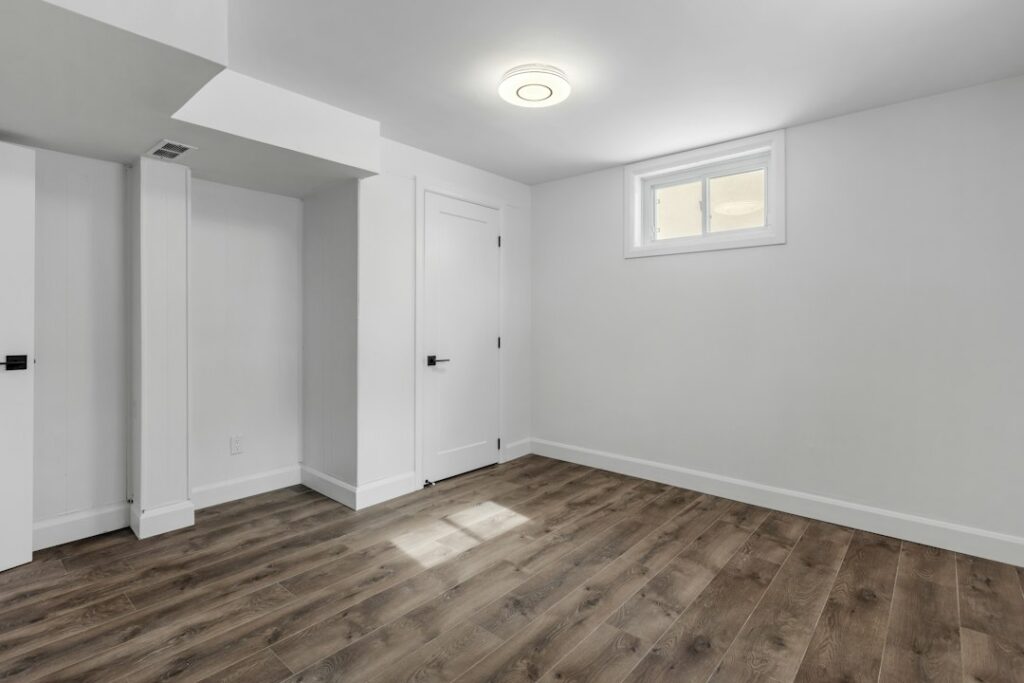
Water from a flooded well typically enters at the sill, runs down the wall, and spreads across the slab. The flooring you choose determines whether a leak is a nuisance or a tear-out.
- Carpet with pad is the worst choice near leak-prone windows. Pad soaks like a sponge and usually must be discarded after contaminated water exposure.
- Solid hardwood should not go on a basement slab at all; it cups and swells with moisture.
- Laminate with a fiberboard core swells at the seams when water sits on it, even if marketed as water-resistant.
- Rigid core luxury vinyl plank (SPC or WPC) is waterproof itself and can often be dried and reused after a minor leak, though water trapped underneath still needs to be pulled up and dried.
- Porcelain tile or sealed, stained concrete is the most flood-tolerant option and cleans up with a wet vac.
Whatever you install, use a vapor barrier appropriate for below-grade slabs, leave the expansion gap specified by the manufacturer, and consider a small section of removable baseboard under the window so you can inspect the wall after heavy storms.
Ongoing Maintenance Checklist
A few minutes twice a year prevents most repeat floods. In spring and fall, walk the perimeter and check each well:
- Remove leaves, trash, and any animal debris from the gravel.
- Pour a 5-gallon bucket of water into the well and time how long it takes to drain. If it is still standing after 15 to 20 minutes, the drain or gravel is failing.
- Confirm the liner rim sits above grade and mulch has not been piled against it.
- Check that downspout extensions are attached and pointing away.
- Inspect window caulk and weatherstripping for gaps.
- Test the sump pump by lifting the float, if your wells tie into a sump system.
When to Call a Licensed Professional
Handle cleanouts, covers, and downspouts yourself if you are comfortable. Call a licensed basement waterproofing contractor, foundation specialist, or excavator when you see cracks in the foundation wall around the window, when water enters even after the well is covered, when the job requires digging to the footing, or when soil around the well is sagging or washing out. Deep excavation next to a foundation can cave in without warning and can undermine the footing, so trenching beyond a few feet is not a weekend DIY task. Call 811 before any digging so buried utilities get marked. If standing water ever reaches electrical equipment or gas appliances, involve a licensed electrician or your gas utility before re-energizing anything.
The Bottom Line
Basement window well flooding almost always comes down to water getting in faster than it can get out. Keep rain out with a cover and proper grading, give water a clear path down with clean gravel and a working drain, and inspect twice a year. Pair those fixes with moisture-tolerant basement flooring and a flooded well becomes a minor maintenance item rather than a costly renovation.