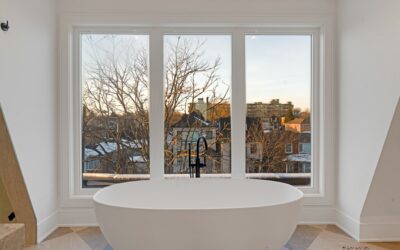
Understanding bathroom addition cost before you start framing walls prevents the kind of budget surprise that derails entire projects. A basic half bath tucked under a staircase might run $7,000 to $15,000, while a full en suite master bathroom with heated floors can exceed $75,000. The range is enormous because plumbing proximity, finish level, and structural work vary wildly from house to house.
Part of our Bathroom Remodeling & Flooring guide — explore the full guide →
Average Cost by Bathroom Type
Half baths, full baths, and en suite additions fall into distinct price bands. These figures include labor, materials, permits, and basic finishes at a mid-range quality level.
- Half bath (powder room): $7,000 to $18,000
- Three-quarter bath (shower, no tub): $18,000 to $35,000
- Full bath (shower + tub): $25,000 to $50,000
- En suite master bath: $40,000 to $75,000+
Converting an existing closet or storage area into a half bath on the same floor as existing plumbing lands on the lower end. Building a ground-floor addition with a new foundation, exterior walls, and a roof pushes costs toward the ceiling of these ranges or beyond.
Plumbing: The Biggest Variable
Plumbing accounts for 25% to 40% of most bathroom addition budgets. Tapping into an existing drain stack on the opposite side of a shared wall might cost $1,500 to $3,000 in plumbing labor. Running new supply and drain lines 20 feet across a basement or through a concrete slab can hit $5,000 to $10,000 or more.
Slab-on-grade homes are the most expensive to plumb. The concrete must be saw-cut, excavated, fitted with drain pipe, and patched. That process alone runs $3,000 to $6,000 before any fixtures are set. Homes with basements or crawl spaces give plumbers accessible routing, which keeps costs closer to $2,000 to $4,000 for a full bath rough-in.
Fixture and Finish Costs
Your finish level determines whether a full bath costs $25,000 or $50,000. Here is a realistic breakdown at three tiers:
- Budget fixtures: Builder-grade toilet ($120), single-handle faucet ($50), fiberglass shower surround ($300), stock vanity ($200 to $400). Total fixtures: $800 to $1,200.
- Mid-range fixtures: Kohler or American Standard toilet ($250), widespread faucet ($150), ceramic tile shower ($1,500 to $2,500 installed), semi-custom vanity ($600 to $1,200). Total fixtures: $2,500 to $4,500.
- High-end fixtures: Wall-hung toilet ($500+), waterfall faucet ($300+), frameless glass shower enclosure ($2,500 to $5,000), custom vanity ($2,000 to $4,000). Total fixtures: $5,500 to $10,000+.
Tile work is often the single largest finish expense. Porcelain floor tile installed by a professional runs $8 to $15 per square foot. Natural stone bumps that to $15 to $30 per square foot. Heated floor mats from brands like Schluter DITRA-HEAT add $500 to $1,200 in materials for a 50 sq ft bathroom floor.
Structural and Electrical Work
Adding a bathroom to an existing footprint requires framing new walls, possibly reinforcing floor joists to handle the weight of a cast-iron tub, and running dedicated electrical circuits. Most building codes require at least one 20-amp GFCI-protected circuit for a bathroom, and many jurisdictions mandate a separate circuit for the exhaust fan.
Framing a new partition wall runs $400 to $800 in materials and labor. Reinforcing floor joists beneath a heavy tub or whirlpool adds $500 to $1,500. Electrical rough-in for outlets, lighting, exhaust fan, and a switch loop typically costs $800 to $1,500. An exhaust fan vented to the exterior is code-required in most areas and runs $150 to $400 installed.
Permit and Inspection Fees
A bathroom addition touches plumbing, electrical, and possibly structural elements, which means multiple permits. Total permit fees range from $200 to $1,500 depending on your municipality. Some jurisdictions require separate plumbing, electrical, and building permits, each with its own fee and inspection schedule.
Skipping permits is a costly gamble. Unpermitted bathroom additions create problems during home sales, insurance claims, and future renovations. Inspectors catch issues that protect you: improper venting that leads to sewer gas in the house, missing GFCI protection, and inadequate waterproofing behind shower walls.
Building an Addition vs. Converting Existing Space
Converting a large closet, laundry area, or underused bedroom corner into a bathroom costs 30% to 50% less than building a bump-out addition. The structure already exists. You are paying for plumbing, electrical, finishes, and minor framing rather than foundation work, roofing, siding, and windows.
A bump-out addition for a full bathroom typically requires a 5-foot by 8-foot footprint at minimum. Foundation and framing for that 40 sq ft addition costs $8,000 to $15,000 before any bathroom-specific work begins. The total project including finishes lands at $35,000 to $60,000 in most markets. In high-cost areas like the San Francisco Bay Area, New York metro, or coastal Southern California, add 20% to 40% to these figures.
ROI and Resale Value
Adding a bathroom delivers one of the strongest returns on investment in home improvement. A mid-range full bathroom addition recoups 50% to 60% of its cost at resale, according to industry remodeling data. More importantly, going from a one-bathroom to a two-bathroom house eliminates a major buyer objection that can stall a sale entirely.
Half baths offer the best ROI ratio because they cost less to build. A $10,000 powder room addition near the main living area can add $8,000 to $12,000 in perceived home value, making it one of the few projects that can pay for itself. The key is placement: a half bath near the kitchen or entertaining area adds more functional value than one tucked in a far corner of the house.
How to Budget Your Project
Start with a 15% to 20% contingency above your estimated bathroom addition cost. Unexpected plumbing conditions, hidden structural issues, and material price fluctuations eat into tight budgets fast. Get three detailed written quotes from licensed contractors, and make sure each quote specifies the same scope of work so you are comparing equivalent bids.
Phase the project if funds are tight. Rough in the plumbing and electrical during a larger renovation, then finish the bathroom in a later phase. The rough-in costs $3,000 to $6,000 and preserves your options without committing to the full finish cost immediately. This approach works especially well when you are already opening walls for other work.