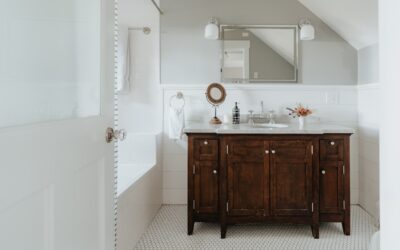
The all-gray bathroom is finally over. The strongest bathroom paint colors 2026 designers are reaching for trade cold, flat gray for warmth, depth, and a connection to nature. Whether you want a spa-calm retreat or a jewel-box powder room, the best bathroom paint colors 2026 lean into earthy neutrals, soft greens, and moody blues that make the small square footage of a bathroom feel intentional. This guide walks through the leading palettes, the right finishes for a humid room, and how to test before you commit.
Part of our Bathroom Remodeling & Flooring guide — explore the full guide →
- Warm Earthy Neutrals Take Over
- Soft and Sage Greens
- Moody Blues and Deep Tones
- Timeless Whites Still Have a Place
- Choosing the Right Finish for Moisture
- Adding Depth With Accents and Texture
- Lighting Changes Everything
- Small Bathrooms vs Large Ones
- Colors That Pair With Common Fixtures
- Ceiling and Trim Considerations
- Putting a Palette Together
Warm Earthy Neutrals Take Over
The biggest shift is toward warm, grounded neutrals. Think soft clay, mushroom, warm greige, and creamy off-whites that feel cozy rather than clinical. These colors flatter skin tones under bathroom lighting, which matters when you are getting ready in the mirror every morning.
Colors in the Benjamin Moore and Sherwin-Williams warm-neutral families, tones with a whisper of yellow or beige, replace the stark whites and cool grays of the last decade. They pair beautifully with wood vanities, brass fixtures, and natural stone, all of which are trending alongside them. For a small bathroom, a warm off-white keeps the space bright while feeling far softer than a cool white.
Soft and Sage Greens
Green is arguably the color of the moment, and bathrooms are where it shines. Sage and soft muted greens bring the outdoors in without overwhelming a small room.
- Sage green: calming and versatile, pairs with white tile, wood, and matte black hardware.
- Deeper olive and fern: for a bolder, enveloping powder room with drama.
- Gray-green: a transitional option for those easing away from gray.
Green reads as fresh and spa-like, which is exactly the mood most people want in a bathroom. It also happens to be forgiving; greens tie together the mix of white porcelain, wood, and metal that defines current bathroom design.
Moody Blues and Deep Tones
For homeowners ready to be bold, deep blues and near-black navies turn a small bathroom or powder room into a jewel box. Dark colors work surprisingly well in tiny spaces because they blur the edges of the room and create intimacy rather than shrinking it.
Navy, deep teal, and slate blue pair strikingly with white trim, brass fixtures, and marble-look tile. Use them in a windowless powder room where you are not fighting to maximize light, and lean on good vanity lighting to keep the space functional. A dark bathroom feels luxurious and forgiving; it hides water spots and reads as considered rather than dated.
Timeless Whites Still Have a Place
Trends aside, a well-chosen white remains one of the smartest bathroom colors, especially if you plan to sell within a few years. The shift for 2026 is not away from white but toward warmer whites that avoid the cold, blue-gray cast that dated so many bathrooms of the last decade.
A soft warm white keeps a bathroom feeling clean and bright, reflects light in a windowless space, and provides a neutral canvas for colorful towels, art, and accessories you can swap cheaply. Pair a warm white with a single bold element, a navy vanity, brass fixtures, or patterned floor tile, and you get a look that feels current without betting the whole room on a trend that may fade. For rental units and homes headed to market, warm white is the low-risk choice that still reads fresh and modern to today’s buyers.
Choosing the Right Finish for Moisture
Color is only half the decision. In a room full of steam and splashes, the sheen you choose determines how well the paint survives.
- Satin: the workhorse bathroom finish, moisture-resistant and easy to wipe, with a soft low sheen.
- Semi-gloss: most durable and washable, ideal for high-humidity bathrooms and trim, though it shows wall flaws.
- Eggshell: acceptable in low-moisture powder rooms with good ventilation, softer look but less scrubbable.
- Flat or matte: avoid on walls in a full bath; it traps moisture and stains.
Many brands now sell paint formulated specifically for bathrooms and kitchens with mildew-resistant additives. In a busy family bathroom without a strong exhaust fan, that extra mildew resistance is worth the small premium.
Adding Depth With Accents and Texture
Paint sets the foundation, but the most current bathrooms layer in texture and accent color rather than relying on a single flat wall shade. This is where you get the designer look for very little money, since accents are easy to change as trends move.
Consider painting a single feature wall a deeper tone of your main color, or adding beadboard and wainscoting painted in a crisp complementary shade for a classic, dimensional look. Limewash and micro-cement finishes are having a moment, giving walls a soft, mottled depth that flat paint cannot match, and they suit the warm, earthy palettes leading 2026. Even without special finishes, you can layer warmth through natural wood accents, woven baskets, and textured textiles that pick up your wall color. The goal is a room that feels collected and tactile rather than a single expanse of one color, and these accents let you refresh the space in an afternoon when you want a change.
Lighting Changes Everything
Bathroom lighting is often harsh and artificial, which shifts how paint reads. Test colors under your actual bulbs, not just daylight.
- Paint a large sample board and view it under your vanity lights at night.
- Check it again in whatever natural light the room gets during the day.
- Hold it against your tile, countertop, and flooring, since those anchor the palette.
Warmer bulbs, around 2700K, push colors toward yellow, while cooler daylight bulbs at 4000K make them look crisper and sometimes bluer. A green that looks perfect in the store can go gray or muddy under the wrong bulb, so match your paint test to the light you actually live with.
Small Bathrooms vs Large Ones
Square footage changes the calculus. In a small bathroom or a windowless powder room, you have two winning strategies, and picking one prevents a muddy in-between result. Either go light and airy to visually expand the space, using a warm off-white or the palest sage, or lean fully into drama with a deep, saturated color that makes the tight room feel like an intentional jewel box.
The mistake is a mid-tone that neither brightens nor commits, which just makes a small room feel dim and dated. In a larger bathroom with good natural light, you have more freedom. A mid-tone sage or a warm greige reads beautifully across bigger walls, and you can introduce a deeper accent on a feature wall or in a water closet without overwhelming the room. Match your ambition to your square footage and your light, and even the smallest half-bath can feel deliberate.
Colors That Pair With Common Fixtures
Your paint has to live with fixtures and finishes you are not replacing, so choose it to flatter what stays. The metal finish of your faucets, towel bars, and lighting is a major cue.
- Brass and gold fixtures: gorgeous against deep navy, sage green, and warm greige, which make the metal glow.
- Matte black hardware: pairs with nearly everything, especially soft greens, warm whites, and moody blues.
- Chrome and polished nickel: lean cooler, so a crisp warm white or a soft blue-green keeps the scheme cohesive.
- White subway tile: a blank canvas that flatters any of the trending colors above.
Existing tile is often the trickiest constraint, especially dated tile you cannot afford to replace. If you are stuck with beige or almond tile, a warm neutral or a warm-leaning green will harmonize with it far better than a cool gray, which fights beige and makes it look dingy.
Ceiling and Trim Considerations
Do not overlook the fifth wall. In a bathroom, the ceiling takes on real importance because steam rises and a poorly finished ceiling grows mildew fast. A traditional bright white ceiling keeps a colorful bathroom feeling open, but a current trend is painting the ceiling the same color as the walls for an enveloping, cocooning effect, which works especially well in a dramatic dark powder room.
Whatever color you choose for the ceiling, use a bathroom-rated paint with mildew resistance up there, since the ceiling sees the most concentrated moisture. For trim, a semi-gloss in a crisp white gives clean contrast and stands up to the wiping that baseboards and door casings need. If you paint trim the same tone as the walls for a seamless look, still bump the sheen up to satin or semi-gloss so it can take a scrub without burnishing.
Putting a Palette Together
The most polished bathrooms use a restrained palette: one main wall color, a coordinating trim, and one or two accents through tile, textiles, and metal finishes. For a serene look, pair a warm greige wall with white trim and wood tones. For drama, go deep navy on the walls with crisp white wainscoting and brass.
Whatever direction you choose among bathroom paint colors 2026 favors, buy sample pots before committing gallons, test on real boards under real light, and tie the wall color to the fixed elements you are keeping. A bathroom is one of the cheapest rooms to repaint given its small size, so it is the perfect place to try a bolder, warmer, more current color than you would risk elsewhere in the house.