Salt air destroys hardware, humidity warps cabinets, and sand finds every gap in a kitchen built without coastal conditions in mind. Designing a true beach kitchen is part aesthetics and part engineering. The picture-perfect blue cabinets you see on Pinterest will look ruined after two summers in Cape Hatteras unless they’re built for the conditions. This guide covers materials, layouts, finishes, and the small details that separate a beach kitchen from a regular kitchen with seashells on the counter.
Part of our Kitchen Remodeling guide — explore the full guide →
Plan for the Environment, Not Just the Look
Coastal homes face four constant enemies: humidity averaging 70 to 90 percent, salt-laden air that corrodes metal in 6 to 18 months, sand that scratches every soft surface, and intense UV through large ocean-facing windows. Every material decision should start with one question: how does this hold up after five years of these conditions?
Skip MDF cabinet boxes. Choose plywood with marine-grade glue or solid wood. Skip standard chrome and brass hardware. Choose 316 stainless steel or solid brass with a living finish. Skip pure white untinted grout. Choose epoxy grout that resists mildew.
Cabinet Choices for a Beach Kitchen
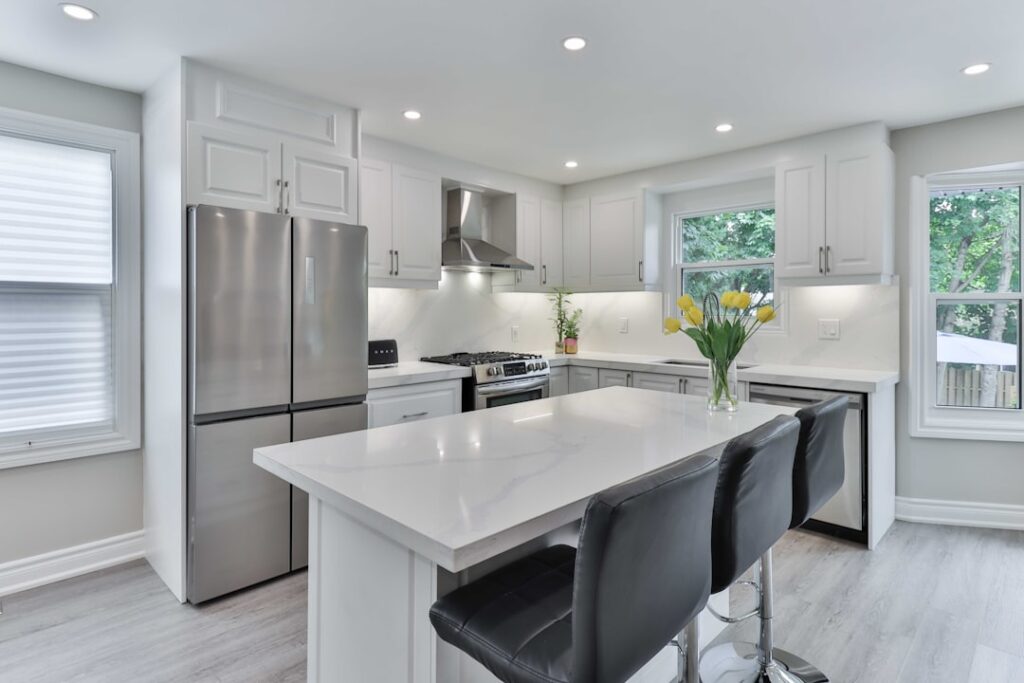
White and pale blue Shaker-style cabinets dominate coastal design for good reason. They reflect light, handle wear gracefully, and don’t show salt residue. Choose plywood box construction with solid wood face frames and doors. Conversion varnish or 2K polyurethane finishes outperform standard catalyzed lacquer in humidity, lasting 15 to 20 years before refinishing.
Top color picks include Benjamin Moore White Dove (OC-17), Sherwin Williams Sea Salt (SW 6204), and Farrow and Ball Borrowed Light (No. 235). For deeper blues, try Hale Navy (HC-154) on a kitchen island. Open shelving in solid white oak or pickled pine adds breeziness and is forgiving of slight wood movement.
Countertops That Survive Salt and Sun
Three materials handle coastal conditions well. Quartz (engineered stone) at $50 to $120 per sq ft installed resists stains, doesn’t need sealing, and tolerates UV better than most natural stones. Top brands include Cambria, Caesarstone, and Silestone. Pick a low-pattern white or pale gray to match the airy feel.
Quartzite (true natural stone, not quartz) at $80 to $200 per sq ft offers stunning veining with hardness similar to granite. Bianco Macaubas and Taj Mahal are popular coastal choices. Soapstone at $70 to $130 darkens beautifully over time and tolerates direct sun. Avoid marble in a beach kitchen near windows. UV and salt etch the polished surface within a few years.
Flooring for Sandy Feet
Bare feet, wet swimsuits, and tracked sand mean flooring takes constant abuse. Luxury vinyl plank (LVP) at $3 to $7 per sq ft installed handles humidity, water, and sand without complaint. Choose products with at least 20 mil wear layers and stone-plastic composite (SPC) cores. Top picks include COREtec Plus, Karndean LooseLay, and Shaw Floorte Pro.
Porcelain tile that mimics weathered wood or limestone runs $7 to $14 per sq ft installed and lasts decades. Skip solid hardwood unless you can guarantee 30 to 50 percent humidity year-round, which is rare in a beach house with windows open to the breeze.
Backsplash and Wall Treatments
White subway tile, beadboard, and tongue-and-groove planks all suit coastal styles. Subway tile at $5 to $15 per sq ft installed with epoxy grout (Mapei Flexcolor CQ or similar) resists mildew and salt residue. Beadboard adds cottage texture but should be primed with shellac-based primer like Zinsser BIN to block tannin bleed-through, then finished with two coats of marine-grade enamel.
For a more modern beach look, large-format porcelain slabs in a soft Calacatta pattern create a seamless backsplash with minimal grout joints. Plan around outlets carefully, since slab work requires precision cuts a tile setter charges $1,500 to $3,500 for in a typical kitchen.
Hardware, Faucets, and Lighting
Cheap brushed nickel pulls will pit and rust within two summers in a beach kitchen. Spend the extra dollars on solid 316 marine-grade stainless steel, or use solid unlacquered brass and let it patina naturally. Top Knobs and Emtek both offer marine-rated lines starting around $8 per pull.
Faucets should be all-metal construction with ceramic disc cartridges. Kohler, Brizo, and Waterstone all rate well in coastal conditions. Avoid plastic-lined sprayer hoses that turn brittle in 5 to 7 years. Pendant lights over the island should be UL-listed for damp locations if the kitchen has open-air windows or doors.
Color Palettes That Read Coastal
Three palettes work for nearly every beach kitchen:
- Crisp white and navy: White cabinets, navy island, gold or polished nickel hardware, white quartz tops
- Sun-bleached neutrals: Pale gray or pickled oak cabinets, soapstone tops, weathered brass hardware
- Sea glass: Soft pale blue or green cabinets, white tops, polished chrome hardware, glass tile backsplash
Use color in 60-30-10 proportions. Sixty percent dominant (white cabinets and walls), 30 percent secondary (an island, a feature wall, or upper cabinets in a contrasting tone), and 10 percent accent (hardware, light fixtures, art).
Layouts That Work in Beach Houses
Coastal homes often have open floor plans that flow to a deck or porch. Galley layouts with a peninsula or island work well to direct traffic away from the cooking zone. Plan a 42-inch minimum aisle between counters to handle multiple cooks and beach gear.
Outdoor connection matters. A pass-through window over the sink or a pocket door connecting to a covered porch makes hosting simple. A small beverage fridge near the dining area cuts foot traffic through the cooking zone.
Finishing Details
Add a dedicated outdoor shower outside the back door or mudroom to keep sand out of the kitchen entirely. A drip-tray boot bench with cubbies for towels and beach bags pays for itself in floor cleanup time. Inside the kitchen, a deep apron-front fireclay sink (not stainless, which scratches) handles sandy fish, beach toys, and full sheet pans without complaint. Total budget for a coastal kitchen renovation typically runs $40,000 to $90,000 depending on size and finishes.