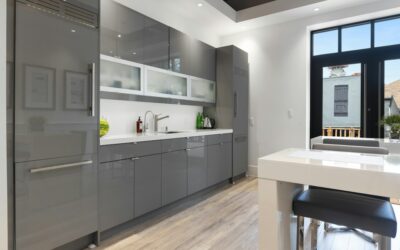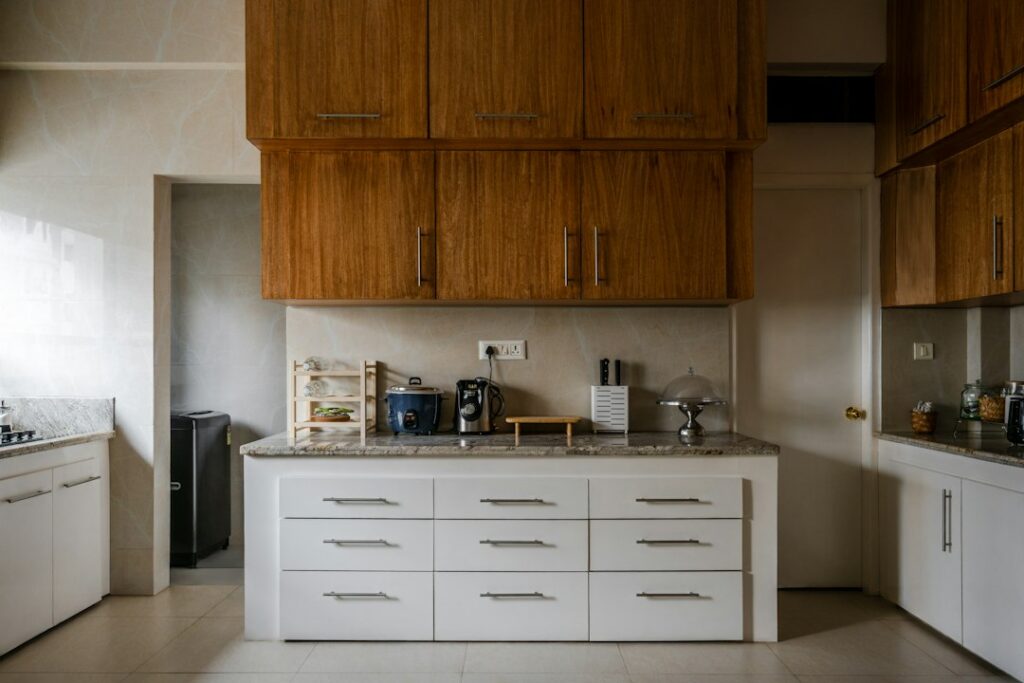
A thin rounded line running around the inside of every cabinet opening is one of those details people notice without being able to name. That line is the bead, and beaded inset cabinets use it to frame each door and drawer like a picture. The look reads as old-house craftsmanship, and it costs more than standard cabinetry for real reasons.
Part of our Kitchen Remodeling guide — explore the full guide →
Beaded inset cabinets are face-frame cabinets where the doors sit flush inside the frame openings, and the inner edge of each opening carries a small half-round bead, usually 1/4 to 3/8 inch wide. The bead is either milled into the face frame itself or applied as a separate molding. You typically pay a premium of roughly 15 to 30 percent over plain inset cabinets, and more over overlay cabinets, because the bead adds machining, careful corner joinery and tighter fitting.
- What Beaded Inset Cabinets Are
- Milled Bead vs Applied Bead
- Door Styles That Pair With a Beaded Frame
- Hinge Choices for Beaded Inset
- What the Beaded Inset Look Costs
- Pros and Cons
- Choosing and Ordering Your Cabinets
- Care and Troubleshooting
- When to Call a Pro
- Frequently Asked Questions
- What is the difference between inset and beaded inset cabinets?
- Are beaded inset cabinets out of style?
- Does a beaded inset frame need special hinges?
- How much more do beaded inset cabinets cost?
- Can I add a bead to existing inset cabinets?
- Is a shaker cabinet with bead a good choice for a small kitchen?
Here you will find how the bead is made, how it compares to plain inset, which door styles pair with it, the hinge choices that work, what to expect on cost, and how to keep the doors looking crisp for years.
What Beaded Inset Cabinets Are
Start with inset construction: the cabinet box has a face frame of stiles and rails, and the doors and drawer fronts fit inside the frame openings rather than covering them. When the door is closed, its face sits flush with the frame, leaving a consistent gap of about 1/16 to 1/8 inch all around. That reveal is what gives inset its tailored, furniture-like character.
The beaded version adds a small convex bead along the inside edge of each opening. The bead casts a fine shadow line, softens the hard edge of the frame and makes the reveal look intentional rather than just a gap. Historically, cabinetmakers used the bead partly to hide small seasonal movement in wood doors. A slightly uneven reveal is much less noticeable next to a bead.
The style shows up in farmhouse, Colonial, Victorian, traditional and transitional kitchens. It also works in bathrooms, butler’s pantries and built-in bookcases where you want a classic detail.
Milled Bead vs Applied Bead
There are two ways to get the bead, and the method affects quality, cost and longevity.
Milled (Integral) Bead
The bead is cut directly into the edges of the face frame stiles and rails with a router or shaper. At the corners, the bead is mitered so the profile turns cleanly around the opening. This is the traditional, higher-end method. Because the bead is part of the frame, it never separates or cracks along a seam. It also takes more labor, especially getting tight miters at every corner of every opening.
Applied Bead
A separate thin bead molding is glued and pinned inside each opening. It is faster and cheaper to produce, and many semi-custom lines use it. Done well, it looks nearly identical from a few feet away. The tradeoff is a joint line where the bead meets the frame, which can show a hairline crack in painted finishes as wood moves with humidity.
When comparing quotes, ask which method the shop uses. It is a fair question and a meaningful price driver.
Door Styles That Pair With a Beaded Frame
The bead is a frame detail, so it combines with many door designs. A few combinations are especially common.
- Shaker door with bead: the most popular pairing. A shaker cabinet with bead around the frame keeps the clean recessed panel of a shaker door but adds a touch of traditional refinement.
- Flat slab door: a simple slab inside a beaded frame looks restrained and works in transitional rooms.
- Raised panel door: leans formal and traditional, good for Colonial or Georgian style homes.
- Beaded cabinet door: some doors carry their own bead on the inside edge of the door frame around the panel. Paired with a beaded face frame, this doubles the detail; it can look rich, but in a small kitchen it can feel busy.
Note that a beaded frame is not the same thing as beadboard. Beadboard is a panel with vertical grooves and beads across its whole surface. A beaded frame is a single fine profile around the opening.
Hinge Choices for Beaded Inset
Hinges matter more on inset cabinets than on overlay, because the door must close perfectly into a fixed opening. With beaded frames, the hinge also has to clear the bead.
Concealed Inset Hinges
Inset cabinet hinges of the concealed, cup style are the most common modern choice. They mount in a bored cup on the back of the door and attach to a mounting plate on the face frame or inside the box. Their big advantage is three-way adjustment: up and down, side to side and in and out. That adjustability is how installers keep reveals even around a beaded opening. Many include soft-close. Make sure you buy hinges specifically rated for inset application and for the frame thickness, since a standard overlay hinge will not work.
Exposed Butt Hinges
Traditional barrel or butt hinges are visible on the outside of the cabinet and are mortised into the door edge and the frame. They give the most authentic period look and come in finishes like polished nickel, unlacquered brass and oil-rubbed bronze. They offer little adjustment, so the door and frame must be fitted precisely, which raises labor costs.
Finial or Ball Tip Hinges
Decorative exposed hinges with small finials are a variation on butt hinges, popular for vintage and farmhouse kitchens. Same tradeoffs: beautiful, but they demand precise fitting.
With applied beads, confirm that the mounting plate location does not interfere with the molding. With milled beads, the frame edge has a slightly different profile where the hinge mounts, which a good shop accounts for.
What the Beaded Inset Look Costs
Inset cabinets already cost more than overlay because of the tight tolerances, and the bead adds another layer. Very general ranges:
| Cabinet Type | Typical Price Position |
|---|---|
| Stock full overlay | Baseline |
| Semi-custom plain inset | Roughly 15 to 30 percent above overlay |
| Beaded inset, applied bead | About 10 to 20 percent above plain inset |
| Custom beaded inset, milled bead | Often 20 to 35 percent above plain inset |
For a mid-size kitchen, that can mean a difference of a few thousand dollars up to well over ten thousand compared with overlay cabinets, depending on wood species, finish, box construction and region. Painted finishes sometimes cost more than stained, because the bead corners need extra sanding and careful spraying.
There is also a hidden cost in storage space. Because inset doors sit inside the frame, drawer boxes and pull-out accessories are a bit narrower than in overlay cabinets. Plan for that when you lay out a kitchen with lots of drawers.
Pros and Cons
Advantages
- Timeless, furniture-quality appearance that suits historic and traditional homes
- The bead masks small changes in the reveal as wood expands and contracts
- Adds visual texture without ornate carving
- Pairs with simple doors, so the kitchen still feels clean
Drawbacks
- Higher cost than plain inset or overlay
- Slightly less interior storage than overlay
- Doors need periodic hinge adjustment to keep reveals even
- Paint can chip on the bead edge in high-traffic spots
- Fewer stock options, so lead times may run longer
Choosing and Ordering Your Cabinets
- Decide on milled or applied bead. Look at samples in person, especially painted ones, and check the corners.
- Pick the door style. Shaker remains the safest pairing. Bring a sample door next to a sample frame corner before committing.
- Choose hinges early. Exposed or concealed affects the door machining and the overall look.
- Confirm the frame material. Hard maple and poplar are common paint grade choices. Cherry, walnut, white oak and quartersawn oak suit stained finishes.
- Ask about finish durability. A catalyzed or conversion varnish finish holds up better on the bead edge than a basic paint.
- Review drawer sizes. Make sure the narrower inset drawer boxes still hold your cookware and utensils.
- Plan hardware. Inset doors usually need a knob or pull plus a catch or bumper, since the door has no frame behind it to stop on.
Care and Troubleshooting
Uneven Reveals
Seasonal humidity and settling shift doors slightly. With concealed hinges, adjust the side to side and height screws a quarter turn at a time until the gap is even around the bead. Exposed butt hinges may need a shim behind a leaf or professional refitting.
Door Rubbing the Frame
A door that binds in summer is usually swelling with humidity. Run a dehumidifier or air conditioning to hold indoor humidity in the 35 to 50 percent range. If it still binds after the season, a cabinetmaker can plane the edge and refinish it.
Cracks at Bead Corners or Seams
Hairline cracks in painted applied beads are common. Fill with flexible paintable caulk or fine filler and touch up with matching paint. Milled beads rarely crack, but mitered corners can open slightly and are fixed the same way.
Cleaning the Bead
Dust and grease collect in the small cove beside the bead. Wipe with a soft cloth and mild dish soap in warm water, then dry. A soft toothbrush works for corners. Avoid abrasive pads that wear through paint on the rounded edge.
When to Call a Pro
This style rewards experienced installation. Because the doors sit inside fixed openings, the boxes have to be perfectly level, plumb and flat to the wall, or the reveals go crooked no matter how you adjust the hinges. A professional cabinet installer will shim boxes precisely and scribe filler pieces to uneven walls. Call a pro for installing a new kitchen, for refitting doors with exposed butt hinges, and for refinishing painted beaded frames, where spray equipment gives a far better result on the curved profile than a brush.
Frequently Asked Questions
What is the difference between inset and beaded inset cabinets?
Both have doors that sit flush inside the face frame. Beaded inset adds a small rounded bead along the inside edge of each opening, which frames the door and softens the reveal.
Are beaded inset cabinets out of style?
No. They are a long-standing traditional detail that continues in farmhouse, Colonial and transitional kitchens. Paired with simple shaker doors, they look current rather than dated.
Does a beaded inset frame need special hinges?
They need hinges made for inset doors, either concealed inset hinges or exposed butt hinges. The hinge must suit the frame thickness and clear the bead.
How much more do beaded inset cabinets cost?
Expect roughly 10 to 35 percent more than plain inset, depending on whether the bead is applied or milled. Compared with overlay cabinets, the gap is larger.
Can I add a bead to existing inset cabinets?
Yes. A carpenter can install thin applied bead molding inside each opening, but doors may need trimming so the reveal stays even. Test on one opening first.
Is a shaker cabinet with bead a good choice for a small kitchen?
Yes, it is one of the calmer combinations. The bead adds detail without much visual weight, though a double bead on both frame and door can feel busy in a tight space.