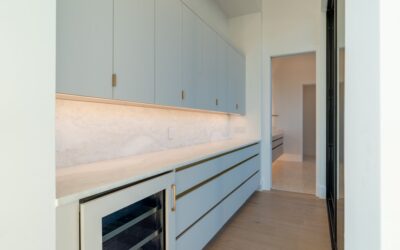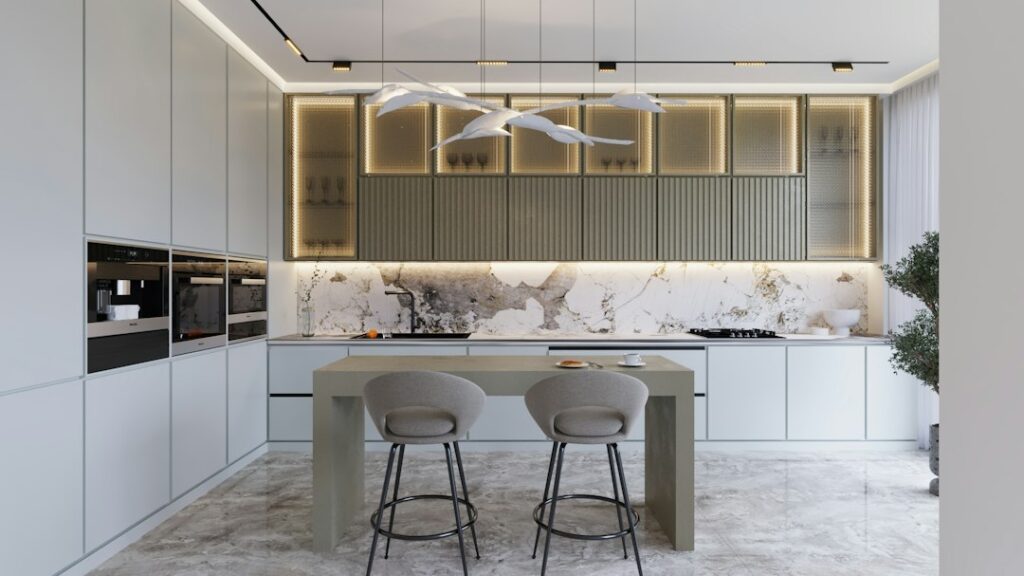
Two kitchens can use the same wood, the same paint and the same hardware and still look completely different, and the reason is usually how the doors meet the cabinet box. Face frame cabinet doors mount to a solid wood frame glued to the front of the cabinet, and how much of that frame the door covers sets the whole style of the room. Cover a little and you get a traditional look with visible frame lines. Cover nearly all of it and you get a clean, modern wall of doors. Set the door inside the frame and you get the fine furniture look of inset cabinetry.
Part of our Kitchen Remodeling guide — explore the full guide →
Choosing the overlay affects cost, storage access, hinge type and how forgiving the cabinets are over decades of use. Frameless boxes are a separate system with their own strengths, so it helps to compare all four options side by side before you order.
- What Face Frame Cabinet Doors Are
- Standard Overlay Cabinets
- Full Overlay Face Frame Doors
- Inset Face Frame Cabinets
- Frameless Cabinets: When They Win
- How to Choose an Overlay: A Decision Guide
- Measuring for Replacement Face Frame Doors
- Troubleshooting Overlay Problems
- Cost Overview and When to Call a Pro
- Frequently Asked Questions
What Face Frame Cabinet Doors Are
A face frame is a rectangle of hardwood rails (horizontal pieces) and stiles (vertical pieces), typically 1 1/2 to 2 inches wide, attached to the front edge of the cabinet box. It stiffens the box, hides the plywood or particleboard edges, and gives the hinges a strong place to mount. This is the dominant construction style in American kitchens and the one most stock and semi-custom lines are built around.
Face frame cabinet doors attach to that frame in one of three ways: standard overlay, full overlay or inset. Each uses a different hinge and a different door size relative to the opening. The frame itself stays the same; only the door position changes.
Standard Overlay Cabinets
Standard overlay cabinets use doors that overlap the face frame opening by about 1/2 inch on each side. That leaves roughly 1 to 1 1/2 inches of frame visible between neighboring doors and drawers. The look is familiar, slightly traditional, and works with nearly every door profile from a classic cabinet door with a raised panel to a simple flat slab.
- Cost: Usually the least expensive option because doors are smaller and the tolerances are forgiving.
- Hinges: Concealed face-frame hinges or traditional semi-concealed hinges.
- Adjustment: Easy. Small gaps and slight misalignment are hard to spot because so much frame shows.
- Drawback: Visible frame breaks up the look, and the hinge side of the frame slightly narrows the usable opening.
Full Overlay Face Frame Doors
Full overlay doors on a face frame cover nearly the entire frame, leaving only about 1/8 to 1/4 inch between doors. From a few feet away, the cabinets read as a continuous surface of doors and drawer fronts, much like European frameless cabinetry, while keeping the strength of a face frame behind them.
- Cost: Moderately higher than standard overlay because doors are larger and alignment must be tighter.
- Hinges: Concealed hinges with a larger overlay setting, usually with soft-close dampers.
- Adjustment: More demanding. Narrow reveals show any crooked door or uneven gap.
- Drawback: Frame stiles still sit between doors inside the box, so a wide pot or sheet pan has slightly less clearance than in a frameless cabinet.
Many homeowners who want a contemporary look but prefer the sturdiness of a frame land here. It is a good middle ground for shaker, slab and simple recessed-panel doors.
Inset Face Frame Cabinets
Inset face frame cabinets set the door inside the frame opening so the door face sits flush with the frame. Each door is surrounded by an even reveal of about 1/16 to 1/8 inch, and the full frame is visible. This is the style of older built-in cabinetry and high-end furniture, and it pairs naturally with exposed barrel or butt hinges, though concealed inset hinges are also available.
- Cost: Typically the most expensive face-frame option. Doors are fit individually and the frame must be perfectly square.
- Hinges: Inset concealed hinges or exposed butt, barrel or knife hinges.
- Adjustment: Least forgiving. Seasonal wood movement can cause doors to rub if the cabinets sit in a humid room.
- Drawback: Interior storage loses some space because the door and the frame both sit inside the opening, and drawers are slightly smaller.
Inset rewards good craftsmanship and good climate control. Keep indoor humidity steady (roughly 35 to 50 percent) and the doors will stay true.
Frameless Cabinets: When They Win
Frameless cabinets skip the face frame entirely. The box sides are thicker, usually 3/4 inch, and edge-banded, and full overlay doors mount directly to the inside of the box with cup hinges. Without a frame in the way, every inch of the box opening is usable.
Frameless is the stronger pick in a few situations:
- Maximum storage: No center stile and no frame lip means wider drawers and easier access for large cookware. In a small kitchen, that extra inch or two per cabinet adds up.
- Modern design: Slab doors with tight, even reveals look their best on frameless boxes.
- Easy reconfiguration: Frameless systems usually use a standard grid of holes for shelves and hinges, so parts are interchangeable.
- Budget flat-pack: Many ready-to-assemble cabinets are frameless, which can cut costs if you are comfortable with assembly.
Face frame wins when you want traditional or transitional styling, when the walls and floors are out of level (the frame hides small scribing errors), or when you want inset doors. Face frames also tolerate rough handling and heavy countertops well, which suits older homes.
How to Choose an Overlay: A Decision Guide
- Start with the style. Traditional or cottage kitchens suit standard overlay or inset. Transitional kitchens suit full overlay. Contemporary kitchens suit frameless or full overlay with slab doors.
- Weigh storage. If you cook a lot and store large equipment, frameless or full overlay keeps openings widest. Inset gives up the most interior room.
- Check the budget. Standard overlay is the most affordable. Full overlay runs a little higher, and inset typically costs noticeably more than standard.
- Think about the room’s conditions. Homes with big seasonal humidity swings are tougher on inset doors. Standard and full overlay hide movement better.
- Consider future refacing. Face frame cabinets are easy to reface: new veneer on the frame plus new doors. Changing from standard to full overlay during a reface is common and often requires only new hinges and bigger doors.
- Match the hinges. Confirm the hinge type and overlay dimension before ordering doors. A mismatched hinge is the most common reason replacement doors do not close properly.
Measuring for Replacement Face Frame Doors
If you are replacing or upgrading face frame cabinet doors on existing boxes, measure each opening from the inside edges of the frame. Then add the overlay. For standard overlay, add about 1 inch to both width and height (1/2 inch per side). For full overlay, add enough to leave 1/8 to 1/4 inch between neighboring doors, which means calculating from the center of the shared stiles. For inset, subtract the reveal, usually 1/8 inch total in each direction.
For pairs of doors sharing one opening without a center stile, divide the width and subtract the gap between the doors. Write every measurement down by cabinet location, since openings in older kitchens are rarely identical.
Troubleshooting Overlay Problems
Doors hit each other when opening
Full overlay doors on narrow reveals can collide. Adjust the hinge side-to-side screw to widen the gap, or switch to a hinge with a different opening angle.
Inset doors rub in summer
The wood is swelling with humidity. Run a dehumidifier or air conditioning to stabilize the room, and adjust the hinges before planing the door edges.
Gaps look uneven across a run
Most concealed hinges adjust in three directions. Work from one end of the run, setting the height first, then the side gap, then the depth.
Cost Overview and When to Call a Pro
Replacement doors in standard overlay are usually the least expensive per door, with full overlay somewhat higher and inset typically the priciest because of individual fitting. Refacing a kitchen with new doors and veneered frames generally costs a fraction of full cabinet replacement while delivering a similar visual change. Hinges are a small line item but matter: soft-close concealed hinges cost more per pair than basic hinges and are worth it on large full overlay doors.
A confident DIYer can swap doors and hinges on existing face frames. Call a cabinet installer or refacing pro when converting to inset (the frame must be checked for square and often adjusted), when the frames are damaged or loose, or when the job involves moving or reconfiguring boxes. A pro also helps when changing from face frame to frameless, which means new boxes rather than new doors.
Frequently Asked Questions
Can I put full overlay doors on standard face frame cabinets?
Yes, in most cases. You need larger doors and hinges set for the bigger overlay. Check that the frame stiles are wide enough to leave a small gap between neighboring doors.
Are inset face frame cabinets worth the extra cost?
They are worth it if you love the furniture-quality look and can keep indoor humidity stable. If storage space and low maintenance matter more, full overlay is a better value.
Which is stronger, face frame or frameless?
Both are strong when built well. Face frames add stiffness at the front of the box, while frameless cabinets rely on thicker sides and solid assembly. Construction quality matters more than the system.
What is a classic cabinet door style for face frame cabinets?
Shaker and raised-panel doors are the classic choices. Shaker works with any overlay, while raised-panel doors usually look best on standard overlay or inset frames.
How do I tell what overlay my cabinets have?
Close the doors and look at the frame. About an inch of visible frame means standard overlay, a thin line means full overlay, and doors flush with the frame mean inset.