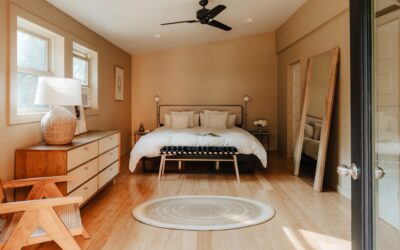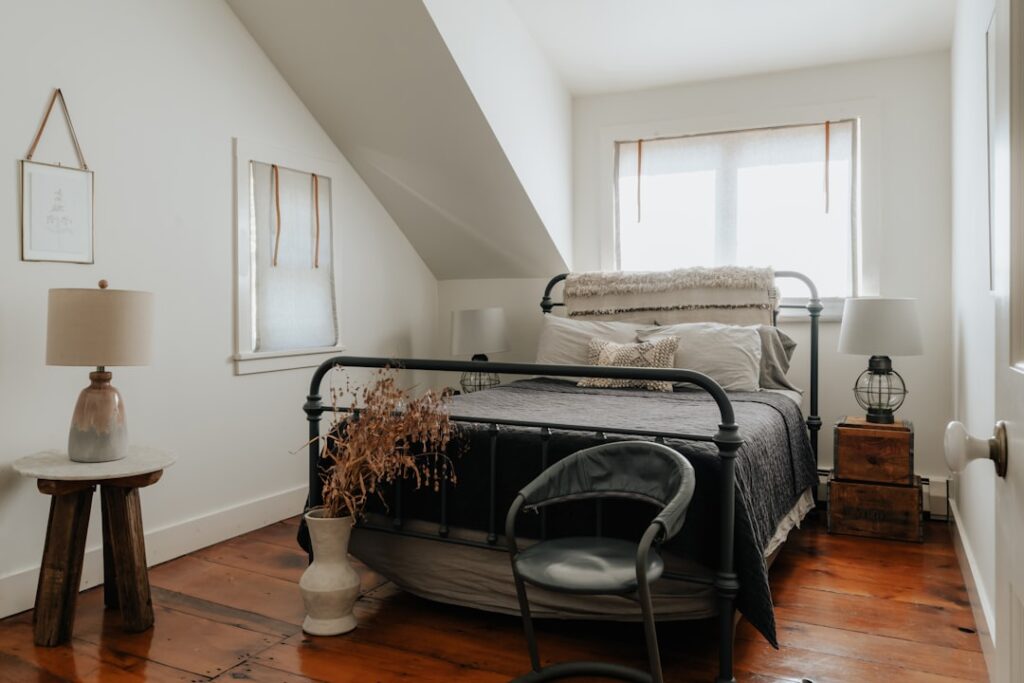
Choosing bedroom flooring is a different calculation than choosing flooring for any other room. Bedrooms prioritize comfort, warmth, and quiet over waterproofing and high-traffic durability. The floor is the first thing your bare feet touch every morning and the last surface you feel before climbing into bed. Noise matters because bedrooms sit above or beside other sleeping spaces. And allergens matter because you spend 7 to 9 hours breathing the air just above your floor every night.
This guide ranks the five best bedroom flooring options — carpet, hardwood, LVP, cork, and laminate — by comfort, noise performance, allergen impact, style, and cost. We also cover the best flooring for different bedroom types: master, kids, and guest rooms.
- Bedroom Flooring Options Ranked
- 1. Carpet — The Comfort King
- 2. Hardwood — Timeless Beauty
- 3. LVP — Practical and Versatile
- 4. Cork — The Unique Choice
- 5. Laminate — Budget-Friendly
- Cost Comparison Table
- Best Flooring by Bedroom Type
- Noise and Sound Considerations
- Allergens and Indoor Air Quality
- Frequently Asked Questions
Bedroom Flooring Options Ranked
| Rank | Flooring | Comfort | Noise | Allergens | Style | Cost (installed) |
|---|---|---|---|---|---|---|
| 1 | Carpet | ★★★★★ | ★★★★★ | ★★☆☆☆ | ★★★☆☆ | $3 – $12/sqft |
| 2 | Hardwood | ★★★☆☆ | ★★★☆☆ | ★★★★★ | ★★★★★ | $6 – $15/sqft |
| 3 | LVP | ★★★★☆ | ★★★★☆ | ★★★★☆ | ★★★★☆ | $4 – $10/sqft |
| 4 | Cork | ★★★★★ | ★★★★★ | ★★★★☆ | ★★★☆☆ | $5 – $12/sqft |
| 5 | Laminate | ★★☆☆☆ | ★★☆☆☆ | ★★★★☆ | ★★★★☆ | $3 – $8/sqft |
1. Carpet — The Comfort King
Carpet remains the most popular bedroom flooring choice in North America, and for good reason: nothing else matches it for barefoot warmth, softness, and noise absorption. Stepping out of bed onto plush carpet on a cold morning is a luxury that hard-surface floors simply cannot replicate without an area rug.
Modern bedroom carpet has evolved far beyond the flat, stain-prone materials of previous decades. Today’s options include stain-resistant nylon (the most durable), soft triexta (branded as SmartStrand), natural wool (the most luxurious), and budget-friendly polyester. Cut pile, plush, and frieze textures are the most popular for bedrooms.
Why carpet ranks #1 for bedrooms: It provides unmatched softness underfoot, absorbs more sound than any other flooring (reducing both impact noise and ambient echo), and provides thermal insulation that keeps feet warm in winter. In a room where comfort is the primary goal, carpet wins.
The drawback: Carpet traps allergens — dust mites, pet dander, pollen, and mold spores accumulate in carpet fibers and pad. For allergy and asthma sufferers, this can be a significant health concern. Regular vacuuming with a HEPA-filter vacuum and professional steam cleaning every 12 to 18 months mitigate but do not eliminate this issue.
Carpet lifespan in bedrooms: 10 to 15 years (longer than in high-traffic living areas because bedrooms get less foot traffic).
2. Hardwood — Timeless Beauty
Hardwood flooring in a bedroom creates a timeless, elegant foundation that works with virtually any design style. Oak, maple, walnut, and hickory are the most popular bedroom species. The natural warmth and grain variation of real wood adds character that no synthetic material fully replicates.
Why hardwood ranks #2: It is the most stylistically versatile bedroom floor, adds the most resale value, is easy to clean (no allergen trapping), and can be refinished multiple times to refresh the look over decades. Hardwood also pairs beautifully with area rugs, giving you the option to add softness exactly where you want it.
The drawback: Hardwood is the most expensive bedroom option, it is hard and cold underfoot (especially in winter), and it transmits more noise than carpet or cork. Without an area rug, walking across a hardwood bedroom floor creates audible footfall that can be heard in rooms below.
Pro tip: Install hardwood with a quality underlayment designed for sound reduction (such as cork or rubber underlayment) to minimize noise transmission to lower floors. Add a large area rug under and around the bed for barefoot comfort.
3. LVP — Practical and Versatile
Luxury vinyl plank (LVP) has become one of the most popular bedroom flooring choices in 2026 because it offers the look of hardwood at a lower price with better moisture resistance and easier installation. Modern LVP is remarkably realistic — embossed-in-register textures and high-definition printing make it difficult to distinguish from real wood at a glance.
Why LVP ranks #3: It is waterproof (useful for bedrooms adjacent to bathrooms or in humid climates), softer underfoot than hardwood or laminate, quieter (especially with attached underlayment), easy to install as a DIY project, and available in hundreds of wood-look styles. For bedrooms that need to balance aesthetics, practicality, and budget, LVP hits the sweet spot.
The drawback: LVP does not have the prestige or resale value of real hardwood. It cannot be refinished — when the wear layer is gone, the floor must be replaced. And while softer than hardwood, it still lacks the plush warmth of carpet for barefoot mornings.
LVP lifespan in bedrooms: 15 to 25 years (the low traffic in bedrooms extends LVP lifespan significantly compared to kitchens and living rooms).
4. Cork — The Unique Choice
Cork flooring is the sleeper hit for bedroom flooring. It matches carpet for comfort and sound absorption while offering the clean, hard-surface benefits of wood — easy cleaning, no allergen trapping, and a unique natural aesthetic.
Cork’s cellular structure (millions of microscopic air-filled cells) provides natural cushioning, thermal insulation, and sound dampening. Walking on cork feels softer than any other hard-surface floor. It is also naturally antimicrobial and hypoallergenic — a significant advantage for bedroom use.
Why cork ranks #4: It is the most comfortable hard-surface floor, the quietest non-carpet option, naturally warm underfoot, and sustainable (harvested from bark without harming the tree). For homeowners who want hardwood-level cleanliness with carpet-level comfort, cork is the ideal compromise.
The drawback: Cork is susceptible to denting from heavy furniture legs, fading from direct sunlight (UV-filtering curtains are recommended), and moisture damage if not properly sealed. Its unique appearance (a mottled, organic pattern) is not for everyone — it does not mimic traditional wood grain.
Explore our full best flooring for bedrooms guide for additional options and detailed comparisons.
5. Laminate — Budget-Friendly
Laminate flooring provides the look of hardwood at the lowest cost of any hard-surface bedroom option. Modern laminate with embossed-in-register textures is visually convincing and available in hundreds of wood species and stain colors. For bedrooms on a tight budget, laminate delivers the most aesthetic value per dollar.
Why laminate ranks #5: It is the most affordable option that still looks like real wood. Easy click-lock installation makes it a popular DIY project, and the wear layer resists scratches well. For guest rooms and rental properties where budget is the top priority, laminate is a smart choice.
The drawback: Laminate is the hardest and coldest bedroom floor on this list (even harder than hardwood due to its rigid HDF core). It is also the noisiest — footsteps on laminate create a hollow, clicking sound that requires quality underlayment to mitigate. Laminate cannot be refinished and is vulnerable to moisture damage at seams.
Pro tip: Invest in a premium acoustic underlayment ($0.50 to $0.75 per square foot) to reduce the hollow sound. Laminate without underlayment in a bedroom over a lower living space will transmit noticeable footfall noise.
Cost Comparison Table
| Flooring | Material (per sq ft) | Installation (per sq ft) | Total Installed (per sq ft) | 200 sq ft Bedroom |
|---|---|---|---|---|
| Carpet (mid-range) | $1.50 – $5.00 | $1.00 – $3.00 | $3.00 – $8.00 | $600 – $1,600 |
| Carpet (premium wool) | $5.00 – $15.00 | $1.50 – $3.00 | $6.50 – $18.00 | $1,300 – $3,600 |
| Hardwood (solid oak) | $4.00 – $10.00 | $3.00 – $5.00 | $7.00 – $15.00 | $1,400 – $3,000 |
| LVP (mid-range) | $2.00 – $5.00 | $2.00 – $4.00 | $4.00 – $9.00 | $800 – $1,800 |
| Cork | $3.00 – $8.00 | $2.00 – $4.00 | $5.00 – $12.00 | $1,000 – $2,400 |
| Laminate | $1.00 – $4.00 | $1.50 – $3.00 | $2.50 – $7.00 | $500 – $1,400 |
Best Flooring by Bedroom Type
Master Bedroom
The master bedroom is the one room where you can prioritize luxury and personal preference over practicality. Hardwood with a plush area rug is the most popular master bedroom combination — it delivers the elegance and resale value of hardwood with the barefoot comfort of carpet exactly where you need it (beside the bed). Premium wool carpet is another excellent master bedroom choice for homeowners who prioritize all-over softness.
Kids’ Bedroom
Kids’ bedrooms need flooring that handles spills, dropped toys, and general chaos. LVP is the most practical choice — it is waterproof, scratch-resistant, easy to clean, and affordable to replace when the child grows up and the room is redesigned. Carpet is a close second for younger children who spend time playing on the floor, but it will stain more easily and need replacing sooner.
Guest Bedroom
Guest bedrooms see light traffic and do not justify premium investments. Laminate provides the best value — it looks like hardwood, is easy to install, and costs 50 to 70 percent less than real wood. The low traffic in a guest room means laminate’s durability limitations are rarely tested. Pair with a quality rug for guest comfort.
Noise and Sound Considerations
Sound performance is often overlooked when choosing bedroom flooring, but it has a significant impact on sleep quality — especially in multi-story homes.
Impact Insulation Class (IIC) measures how well a floor assembly reduces impact noise (footsteps, dropped items) transmitted to the room below. Higher IIC ratings mean less noise transmission. Most building codes require a minimum IIC of 50 for multi-story residential construction.
| Flooring | Typical IIC Rating (with standard underlayment) | Noise Level |
|---|---|---|
| Carpet with pad | 65 – 85 | Very quiet |
| Cork | 55 – 70 | Quiet |
| LVP with attached pad | 50 – 65 | Moderate |
| Hardwood with underlayment | 45 – 60 | Moderate to loud |
| Laminate with underlayment | 40 – 55 | Loud |
If your bedroom is above another living space, carpet and cork are the best choices for minimizing noise transmission. Hardwood and laminate require premium acoustic underlayment to meet code and reduce the annoying hollow footstep sound.
Allergens and Indoor Air Quality
You spend roughly a third of your life in your bedroom, making indoor air quality a critical consideration for bedroom flooring.
Carpet is the biggest allergen concern. Dust mites, pet dander, mold spores, and pollen accumulate in carpet fibers and the pad underneath. Regular vacuuming (twice weekly with a HEPA-filter vacuum) and professional steam cleaning (annually) reduce but do not eliminate allergen accumulation. For severe allergy or asthma sufferers, allergists typically recommend removing bedroom carpet entirely.
Hard-surface floors (hardwood, LVP, laminate, cork) do not trap allergens — dust and dander sit on the surface where they are easily removed by sweeping or damp-mopping. This makes hard-surface floors the better choice for allergy-prone individuals.
Cork has a natural advantage: suberin, a waxy substance in cork bark, is naturally antimicrobial and resists mold, mildew, and dust mites. This makes cork the most allergen-friendly bedroom floor.
Low-VOC considerations: All new flooring emits volatile organic compounds (VOCs) to some degree after installation. In a bedroom where you breathe for 7+ hours nightly, choosing low-VOC or FloorScore-certified products is especially important. Hardwood and cork have the lowest VOC emissions; some vinyl and laminate products may emit more initially but dissipate within a few weeks of installation.
Frequently Asked Questions
Is carpet or hardwood better for bedrooms?
It depends on your priorities. Carpet is better for comfort, warmth, and noise reduction. Hardwood is better for style, allergen management, resale value, and longevity. The most popular compromise is hardwood with a large area rug — you get the durability and cleanliness of wood with the softness of carpet where it matters most.
What is the most comfortable bedroom flooring?
Carpet (especially plush or frieze pile) is the softest and warmest bedroom floor. Among hard-surface options, cork is the most comfortable due to its cellular cushioning structure. LVP with attached foam underlayment is a close third.
Is LVP a good choice for bedrooms?
Yes. LVP is an excellent bedroom choice for homeowners who want the look of hardwood with better moisture resistance, easier installation, and lower cost. The lower traffic in bedrooms means LVP’s wear layer will last significantly longer than in kitchens or entryways.
Should I put laminate flooring in a bedroom?
Laminate is a good budget-friendly bedroom option, especially for guest rooms and rentals. Invest in quality acoustic underlayment to reduce the hollow sound, and add an area rug for barefoot comfort. The low traffic in bedrooms means laminate will last longer than its typical lifespan suggests.
What bedroom flooring is best for allergies?
Hard-surface floors — hardwood, LVP, cork, and laminate — are all better for allergy sufferers than carpet because they do not trap dust mites, dander, or pollen. Cork is the best single option due to its natural antimicrobial properties. If you prefer carpet, choose a low-pile synthetic carpet with a moisture-barrier pad and vacuum twice weekly with a HEPA-filter vacuum.
Does bedroom flooring affect resale value?
Yes. Hardwood flooring in bedrooms adds the most resale value and appeals to the broadest range of buyers. Carpet is neutral (buyers expect it in bedrooms). Laminate and LVP are acceptable but may not add value. The key is that any flooring should be in good condition — damaged or outdated flooring of any type hurts resale.
Prefer to explore on your own?
See how new flooring looks in your actual room in seconds — free, no signup.
Try the free Floor Studio →