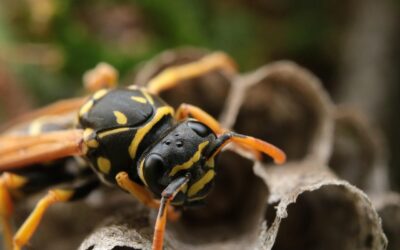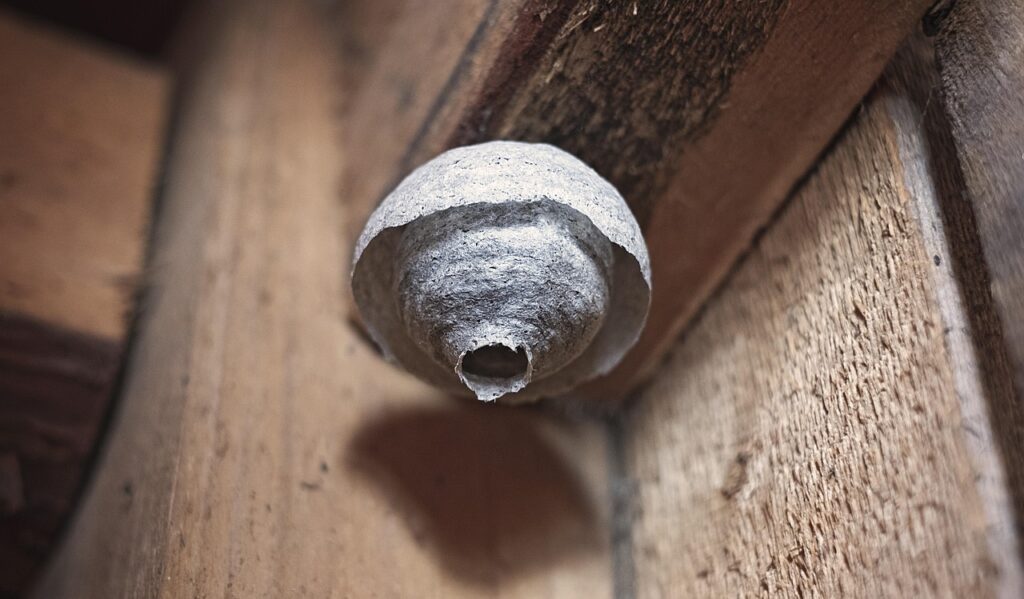
Before you reach for the wasp spray, look at what is flying. The single most important step in bee nest removal is identifying the species, because honey bees are protected in many states and a local beekeeper will relocate a swarm or established hive for free or a small fee. Wasps, hornets, and yellow jackets are a different problem entirely, and most pest control companies handle their removal for $150 to $500 depending on access and nest size. Treating both the same way wastes money and, in the case of honey bees, often violates state pollinator laws.
Identifying What You Actually Have
Most homeowners use “bee” to mean any flying striped insect, but the differences are easy to learn:
- Honey bees: golden brown and black, fuzzy body, only the queen has a smooth stinger; they leave the stinger behind when defending
- Bumblebees: larger, very fuzzy, often with bright yellow or orange bands; nest in ground holes or wall voids
- Carpenter bees: shiny black abdomen, no fuzz on the back; bore perfect 1/2 inch holes in wood
- Yellow jackets: sleek, bright yellow and black, smooth body; aggressive, build paper nests in ground or walls
- Paper wasps: long legs, narrow waist, umbrella-shaped open nest hanging from eaves
- Bald-faced hornets: black with white markings, build large gray football-shaped paper nests in trees
Take a photo from 8 to 10 feet away and zoom in. Most beekeepers and pest pros can ID the species from a clear photo within minutes by text or email.
Honey Bees Get Relocated, Not Killed
Honey bee colonies are valuable, declining, and protected by state agricultural laws in many places. A swarm cluster (a temporary ball of bees on a tree branch, mailbox, or porch railing) is the easiest to relocate; a local beekeeper will typically come at no cost because they get a free colony out of the deal. Established hives inside walls require a “cut-out,” a more involved removal that may cost $200 to $700 because the beekeeper must open the wall, remove combs, and rebuild the structure.
Find a local beekeeper through your state beekeepers association website or by Googling “beekeeper swarm removal” plus your city. Most are listed in directories maintained by university extension services. They prefer a phone call within 24 hours of spotting a swarm; cluster swarms move on within a few days.
Wasps and Yellow Jackets Need Pest Control
Wasps and hornets are not protected and are aggressive defenders of their nests. Removal options:
- DIY aerosol spray: Spectracide PRO Wasp & Hornet Killer or Raid Wasp & Hornet ($6 to $12); dusk treatment, 20 foot range, eyewear required
- DIY dust treatment: Tempo or Delta Dust applied to nest entry, used for ground nests and wall voids
- Professional removal: $150 to $500 depending on access, nest size, and follow-up visits
Treat at dusk or dawn when most of the colony is in the nest and activity is lowest. Wear long sleeves, long pants, gloves, and a face shield; thousands of stings have been documented from people thinking “just one quick spray” did not need protection.
When to Call a Pro
Call a professional pest control company in any of these situations:
- Nest is inside a wall void, attic, soffit, or chimney
- Nest is larger than a softball
- Anyone in the household has a confirmed bee or wasp allergy
- Yellow jackets have established a ground nest near a high-traffic area
- Nest is more than 12 feet off the ground
- You cannot identify the species with confidence
Pest control companies use commercial-grade insecticides, professional dust applicators, and bee suits that DIY products cannot match. Most jobs are completed in one visit with a 30-day callback guarantee for any survivors.
Cost Breakdown
Typical 2025 US pricing for bee nest removal services:
- Beekeeper swarm pickup (cluster, accessible): $0 to $100
- Beekeeper cut-out (established hive in wall): $200 to $700
- Wasp/yellow jacket nest, accessible exterior: $150 to $300
- Wall void or attic wasp nest: $250 to $500
- Multiple nests or recurring service: $400 to $800
- DIY products (aerosol, dust, suit, ladder): $40 to $120
Why You Should Never Spray Honey Bees in Walls
Killing a honey bee colony inside a wall creates a much worse problem than the bees themselves. A medium-sized colony stores 30 to 60 pounds of honey in the comb. Without bees to maintain the temperature, that honey ferments, drips down inside the wall, attracts roaches, ants, mice, and wax moths, and ruins the drywall. The only correct solution is a full cut-out by a beekeeper or a “trap-out” by a pest professional who specializes in bees.
Preventing Future Nests
Wasps and hornets choose nesting sites by scouting in early spring. Inspect the eaves, attic vents, deck undersides, and shed corners in March and April. Spray potential sites with a residual product like Onslaught FastCap or hang a fake wasp nest decoy; wasps are territorial and avoid areas they think are already claimed.
Seal openings larger than 1/4 inch with copper mesh or steel wool packed into caulk. Carpenter bees specifically can be deterred by painting bare wood; they prefer unfinished surfaces and rarely bore through paint.
Aftercare Once the Nest Is Gone
Remove the empty nest if possible; old paper nests do not get reoccupied, but they signal nearby alternate sites for next year’s queens. For ground nests, fill the hole with dirt and tamp; for wall voids, seal the entry and treat the void with residual dust to kill any returning foragers and any latent eggs.
If the nest was inside a wall, watch for staining, drywall sag, or odor for the next 30 days. Even a fully removed wasp nest occasionally leaves a small honey or larva residue that needs cleanup.
Final Thoughts on Bee Nest Removal
Identify before you act. Honey bees go to a beekeeper and the relocation costs little or nothing; wasps and hornets go to a pest professional or careful DIY treatment. Either way, dusk timing, proper protection, and accurate species ID separate a clean, one-time bee nest removal from a multi-week mess that ruins drywall and attracts secondary pests.