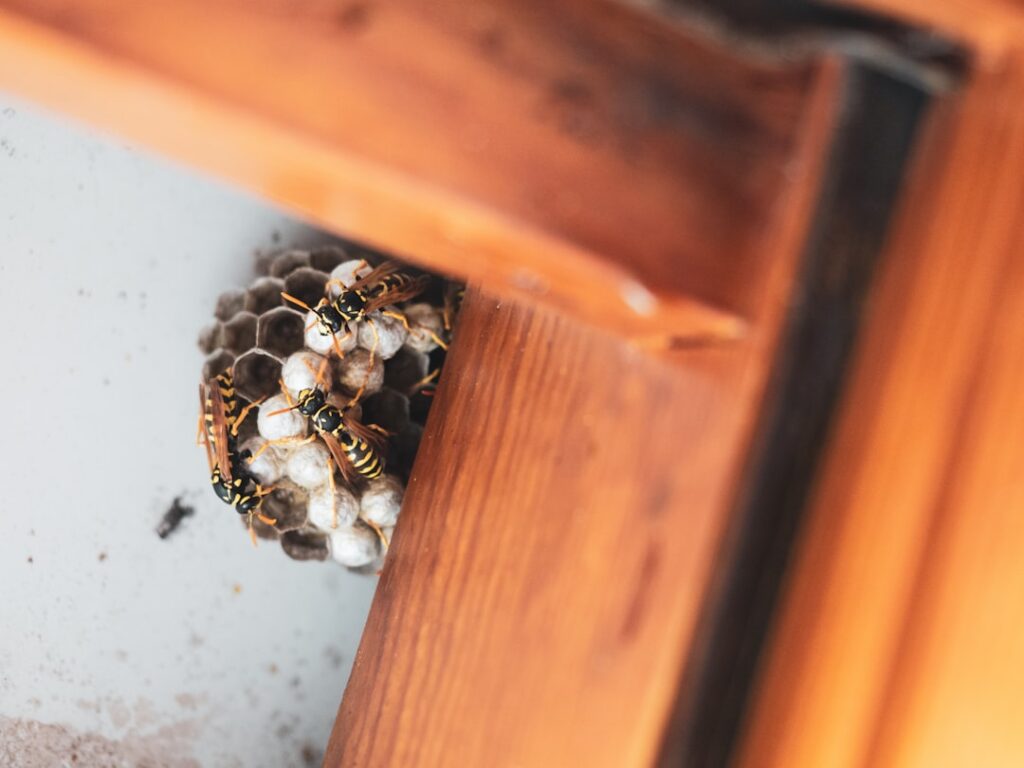
Finding a papery gray nest under your eaves is unsettling, and the first question most homeowners ask is a smart one: when is it safe to remove a wasp nest? The honest answer is that timing, nest size, and your own health all matter far more than courage. A wasp nest is only reasonably safe to tackle yourself when it is small, easy to reach, and the wasps are dormant from cold or darkness. Anything larger, higher, or hidden inside a wall belongs to a licensed exterminator, full stop. This guide walks through the safest conditions, the gear you need, and the clear warning signs that mean you should put the spray can down and pick up the phone.
The Safest Time of Day and Year
Wasps are cold-blooded and rely on warmth and daylight to stay active. That biology gives you your safest window. Late evening at dusk, or very early before sunrise, is ideal because the entire colony is home, sluggish, and less likely to swarm. Never approach a nest during the middle of a warm, sunny day when foragers are zipping in and out and the colony is at peak aggression.
Temperature matters just as much as time of day. When the air is below roughly 50°F, wasps become slow and grounded. Early spring and late fall mornings, when overnight lows dip into the 40s, are the calmest times to act. In many northern climates the colony dies off after the first hard frost, and an abandoned winter nest can be removed with almost no risk at all because wasps do not reuse old nests.
- Best conditions: dusk or pre-dawn, air temperature under 50°F, no wind, no rain.
- Worst conditions: warm sunny afternoons between 10 a.m. and 6 p.m. when the colony is active and defensive.
- Safest of all: after a hard frost in late fall, when the colony has naturally died.
Protective Clothing You Must Wear
No matter how small the nest, never approach one in shorts and a t-shirt. Even a “dormant” colony can wake fast. Cover every inch of skin before you get close.
- Long-sleeve shirt and long pants, ideally thick material like denim or canvas.
- Gloves, preferably leather work gloves or dedicated beekeeping gloves.
- Closed shoes and socks, with pant legs tucked into the socks or boots.
- Eye protection, since aerosol spray and defensive wasps both target the face.
- A hat and, if possible, a bug net or beekeeper’s veil over the head and neck.
- Zip collars and cuffs; wasps crawl into gaps before they sting.
Wear light, neutral colors. Avoid dark clothing, floral prints, and perfume or scented deodorant, all of which can provoke wasps. Keep a clear, unobstructed escape path behind you so you can retreat quickly without tripping.
When a Nest Is Small Enough for DIY
A nest is a candidate for careful DIY removal only if it meets every one of these conditions:
- It is smaller than a golf ball or tennis ball, meaning the colony is young and small, typically early in the season.
- It hangs in an open, easy-to-reach spot such as under an eave you can access from the ground or a low step.
- You have no allergy to insect stings and neither does anyone who might be nearby.
- The wasps are the calmer paper-wasp type rather than aggressive yellowjackets or hornets.
- You can act at dusk or in cold weather when the colony is dormant.
For a qualifying small nest, a can of wasp-and-hornet spray that shoots a 15 to 20 foot jet lets you treat the nest from a safe distance. Products like Spectracide Wasp and Hornet Killer or Raid Wasp and Hornet run about $5 to $10. Spray at dusk, aim for the nest opening, soak it thoroughly, then leave the area immediately. Wait a full 24 hours before checking, and only knock the nest down once you are certain there is no activity.
When You MUST Hire a Licensed Exterminator
This is the most important section, so read it before you decide anything. Call a professional pest-control company, and do not attempt removal yourself, if any of the following is true:
- The nest is large. Anything bigger than a baseball can house hundreds or thousands of wasps that will swarm when disturbed.
- The location is high or hard to reach. Nests on a second story, in a tree, on the roofline, or anywhere you would need a ladder are dangerous. Getting stung on a ladder can cause a fall that is more harmful than the stings.
- The nest is inside a wall, attic, soffit, or the ground. Hidden colonies cannot be safely treated with a spray can, and disturbing them can drive wasps into your living space.
- You are dealing with yellowjackets or hornets. These species are far more aggressive than paper wasps, sting repeatedly, and defend their nests violently.
- Anyone in the household has a sting allergy or history of anaphylaxis. A severe reaction is a medical emergency. Do not gamble; hire a pro.
Professional wasp-nest removal typically costs between $100 and $400 or more, depending on the nest size, location, and difficulty of access. A simple, reachable nest may land near the $100 to $150 range, while a colony inside a wall or high on a roofline can run $300 to $500. That fee buys the right protective suits, professional-grade insecticides, and, crucially, someone else taking the risk. Compared with an emergency-room bill or a fall from a ladder, it is money well spent.
Wasps vs. Bees: Know the Difference
Before you treat anything, confirm you are dealing with wasps and not honeybees. Honeybees are important pollinators and are often protected; a local beekeeper will frequently relocate a swarm for free rather than exterminate it. Wasps have smooth, shiny, narrow bodies and build papery nests, while honeybees are fuzzy, rounder, and build waxy combs. If you are unsure, take a photo from a safe distance and ask a pest professional or beekeeper to identify it before acting.
Do’s and Don’ts of Wasp Nest Removal
Do
- Act only at dusk, pre-dawn, or in cold weather.
- Wear full protective clothing every single time.
- Keep children and pets indoors during and after treatment.
- Have an escape route planned before you spray.
- Keep an antihistamine on hand and know where the nearest ER is.
Don’t
- Don’t swat, poke, or knock a live nest with a broom or stick.
- Don’t pour gasoline or boiling water on a nest; both are dangerous and ineffective.
- Don’t seal a wall or ground entrance while wasps are inside, as they will chew their way into your home.
- Don’t spray in windy conditions where insecticide can blow back on you.
- Don’t remove any nest if you feel unsure. Hesitation is a signal to call a pro.
Preventing Wasps From Coming Back
Once a nest is gone, discourage rebuilding. Seal cracks and gaps around eaves, soffits, and siding with caulk in early spring before colonies form. Keep trash cans tightly lidded and clean up fallen fruit and sugary spills, which attract foraging wasps. Hang a decoy nest, since paper wasps are territorial and often avoid areas that appear already claimed. Inspect your property monthly during spring and summer so you catch new nests while they are still golf-ball sized and manageable.
Frequently Asked Questions
What time of day is safest to remove a wasp nest?
Dusk or very early pre-dawn is safest, when the whole colony is home and sluggish from the cool, dark conditions. Cold weather below 50°F makes them even slower.
Can I remove a wasp nest myself?
Only if it is small, low, easy to reach, involves calmer paper wasps, and no one nearby has a sting allergy. Large, high, hidden, or hornet or yellowjacket nests always require a licensed exterminator.
How much does professional wasp nest removal cost?
Most jobs run $100 to $400 or more, with simple reachable nests near the low end and wall or roofline nests toward the high end.
Do wasps reuse old nests?
No. Wasps build a fresh nest each year, so an abandoned winter nest can be removed safely once you confirm there is no activity.
What should I do if I get stung multiple times?
Move away immediately, wash the area, and apply a cold compress. Seek emergency care right away if you experience swelling of the face or throat, difficulty breathing, dizziness, or hives, as these can signal a life-threatening reaction.
The Bottom Line
So, when is it safe to remove a wasp nest? Only when the nest is small and reachable, the wasps are dormant from cold or darkness, you are fully protected, and no one at risk of an allergic reaction is nearby. The moment a nest is large, high, hidden in a wall, or built by aggressive hornets or yellowjackets, the safe choice is to hire a licensed professional. Wasps are worth respecting, not challenging, and a $100 to $400 service call is always cheaper than a hospital visit.