A well-chosen beige rug for bedroom use is one of the easiest ways to make a room feel calm, warm, and pulled-together without committing to a bold color you might tire of. Beige is the quiet workhorse of neutral decorating: it softens hard floors, warms up cool color schemes, and forgives the dust and light foot traffic a bedroom sees. But “beige” covers a surprising range, from cool greige to warm sand to creamy oatmeal, and the shade you pick, along with the size and material, makes the difference between a rug that feels intentional and one that reads as an afterthought. This guide walks through sizing, placement, materials, and styling so you get it right the first time.
Because a bedroom is a place of rest, texture and softness matter more here than in almost any other room. The first thing your feet touch in the morning is the rug beside the bed, so comfort underfoot is a real consideration, not just a design one. Beige’s advantage is that it recedes, letting your bedding, headboard, and art carry the personality while the floor stays serene.
Choosing the Right Shade of Beige
Beige is not a single color, and the undertone you choose should respond to your room’s existing palette. Cool beiges (greige, with gray undertones) pair beautifully with slate blues, charcoals, and modern white walls. Warm beiges (sand, tan, camel undertones) flatter creamy whites, warm woods, and earthy or boho schemes. A warm room with cool greige can feel muddy, and a cool room with orange-toned tan can feel dated, so hold a sample against your bedding and wall in daylight before committing.
If your walls are already a warm neutral, a slightly deeper beige or a beige-and-cream pattern keeps the rug from disappearing entirely into the floor. Contrast is your friend: a rug that’s an exact match for the wall or floor can read flat, while a beige a shade or two different adds subtle definition.
Getting the Size and Placement Right
Size is where most bedroom rugs go wrong, usually by being too small. The rug should anchor the bed, not float beside it like a bath mat. Here are the placements that work:
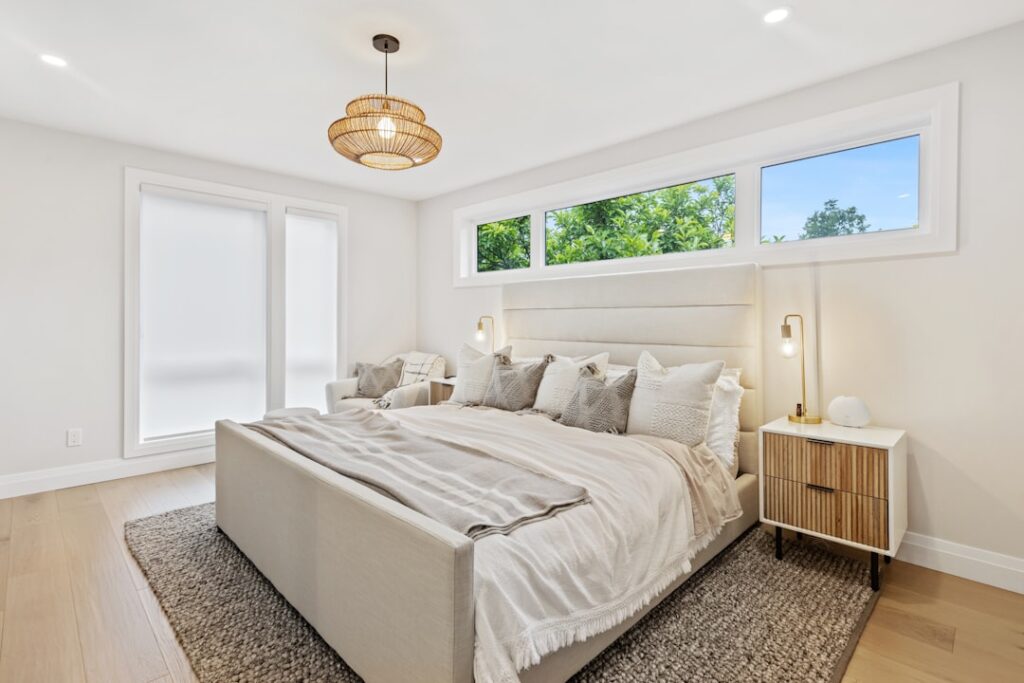
- Large rug under the bed (best look): An 8×10 under a queen or a 9×12 under a king, positioned so 18 to 24 inches of rug shows on each side and at the foot. This frames the bed and gives you soft footing on both sides.
- Two-thirds under the bed: Slide the rug under from the foot, stopping just past the nightstands. A common budget-friendly compromise that still reads intentional.
- Runners on each side: Two 2.5×8 runners flanking the bed, ideal for smaller rooms or when you don’t want to move a heavy bed.
- Angled rug under an armchair: A smaller 5×8 in a reading corner rather than under the bed.
As a rule, a rug that stops short of the nightstands or barely peeks out from under the bed looks undersized. When in doubt, go one size larger; a generous beige rug makes the whole room feel more luxurious.
Material and Pile Considerations
Bedrooms are low-traffic and shoe-free, which means you can prioritize softness over ruggedness here more than anywhere else in the home. Plush, high-pile, and shag beige rugs feel wonderful underfoot first thing in the morning. Consider these options:
- Wool: Naturally soft, resilient, and stain-resistant; the premium choice that lasts decades. Beige wool hides soil well.
- Polypropylene (olefin): Budget-friendly, soft enough for bedrooms, and easy to clean; good for renters and kids’ rooms.
- Viscose and blends: Silky and lustrous but delicate; better as an accent than under heavy furniture.
- Jute and natural fiber: Textured and organic for boho looks, though coarser underfoot.
For plush comfort, look for a pile height of half an inch or more. Always add a rug pad; it cushions the step, keeps the rug from sliding, and extends its life by preventing the backing from grinding against the floor.
Styling a Beige Rug So It Doesn’t Fall Flat
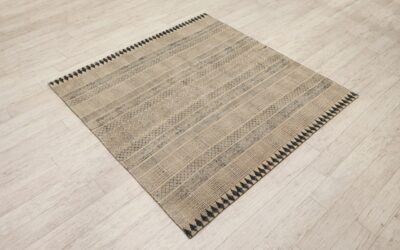
The knock on beige is that it can feel bland, but that’s easily solved with texture and layering. Choose a beige rug with visible texture, a subtle geometric pattern, a low-contrast tone-on-tone design, or a fringed edge, and it adds depth without adding color. Layering a smaller patterned or textured rug over a large flat beige one is a designer trick that instantly elevates a bedroom.
Play the neutral against contrast elsewhere: a beige rug lets you introduce a rich headboard, dark wood nightstands, or moody bedding without the room feeling busy. In a light, airy room, beige reinforces the serene mood; in a darker room, a warm beige rug brightens the floor and balances heavier furniture.
Keeping It Clean
Beige shows less dirt than white but more than dark colors, so regular care keeps it looking fresh. Vacuum weekly, rotate the rug twice a year so foot traffic and sunlight wear it evenly, and blot spills immediately rather than rubbing. For wool and synthetic beige rugs, a mild carpet cleaner handles most spots; test any product in a hidden corner first. With the right size, a flattering undertone, and a little texture, a beige rug for bedroom comfort delivers the warm, restful foundation that makes a bedroom feel finished.
Matching Beige to Your Bedroom’s Mood
Beige is often called safe, but the right beige actually sets a specific mood, and choosing intentionally is what elevates the room. For a serene, spa-like retreat, lean into soft, cool oatmeal and greige tones paired with white bedding and natural wood, which read airy and calm. For a warm, cocooning bedroom, choose a deeper camel or sand beige with a plush pile, which feels enveloping and cozy, especially in a north-facing room that gets cooler light. In a small bedroom, a light beige rug that’s close in tone to the floor makes the space feel larger and more open, while in a large or sparse room, a beige rug with visible texture or a subtle pattern adds the warmth and definition the space needs to feel inviting rather than empty. Thinking about the feeling you want first, then choosing the shade to match, is far more reliable than picking a swatch in isolation.
Common Mistakes to Avoid
A handful of predictable missteps keep beige rugs from looking their best. The most common is buying too small, a rug that floats between the nightstands or sits like a mat at the foot of the bed shrinks the whole room and looks like an afterthought. The second is ignoring undertones, since a beige with the wrong warm or cool cast can make an otherwise coordinated room feel slightly off in a way that’s hard to pinpoint. The third is skipping texture and pattern entirely, which is what gives beige its reputation for being boring; a tone-on-tone weave, a low pile with a subtle geometric, or a fringed edge solves that instantly. Finally, don’t forget the rug pad, because even the most beautiful beige rug feels cheap if it slides around and thin if it sits directly on a hard floor. Sidestep these four mistakes and a beige bedroom rug reads as a deliberate, restful design choice rather than a default one, grounding the room in exactly the quiet warmth that makes a bedroom the easiest place in the house to relax.