Beige has quietly outlasted nearly every “color of the year” because it does something few shades can: it makes a room feel calm, warm, and finished without demanding attention. A well-chosen beige walls living room works as a backdrop for almost any furniture style, from rustic farmhouse to clean modern. The catch is that beige is not one color but a whole family of tones, and the wrong undertone can leave a space looking flat, yellow, or oddly pink. This guide walks you through choosing, pairing, and styling beige so the result feels intentional rather than builder-basic.
Understanding Beige Undertones
Every beige leans toward a hidden secondary color, and that undertone determines how the paint reads on your walls. The most common categories are warm beiges with yellow, gold, or orange undertones; cool beiges that drift toward gray, often called greige; and pink-leaning beiges that can look rosy in certain light. The same swatch can shift dramatically between a north-facing room with cool light and a south-facing room flooded with warm sun.
Before committing, paint a 2-by-2-foot sample on at least two walls and watch it across a full day. Morning, midday, and lamp-lit evening will reveal undertones a tiny store chip can hide.
Popular Beige Shades to Consider
If you want a starting point, several widely available shades have earned their reputation for being reliably flattering.
- Soft warm beiges read cozy and traditional, ideal for north-facing rooms that need warmth.
- Greige tones blend beige and gray for a more contemporary, neutral feel that pairs easily with cool flooring.
- Creamy off-whites with a beige base brighten small living rooms while keeping the softness beige is known for.
Sample within your own light rather than chasing a specific name, since lighting, trim color, and flooring all change the final effect.
How Lighting Changes Beige
Natural light direction is the single biggest factor in how beige behaves. North-facing rooms cast cool, bluish light that can make warm beige look muddy and cool beige look gray, so warmer shades usually balance that out. South-facing rooms get strong warm light that intensifies yellow undertones, where a greige can keep things from going too golden. Artificial lighting matters too: warm 2700K bulbs deepen yellow tones, while cooler 4000K bulbs flatten and gray them.
Colors That Pair Well With Beige
Beige is endlessly flexible, which is exactly why it benefits from a deliberate accent palette. A few combinations consistently work.
- Crisp white trim sharpens beige walls and prevents a flat, monochrome look.
- Navy or charcoal adds grounding contrast through sofas, pillows, or a feature wall.
- Sage and olive greens bring an organic, restful feel that flatters warm beige.
- Terracotta, rust, and ochre echo beige’s warm side for a cozy, earthy scheme.
- Black accents in lighting and frames create modern definition.
For a layered, designer look, vary the tone within your neutrals: pair cream cushions, a tan throw, and a darker brown wood table so the beige does not flatten everything around it.
Pairing Beige With Flooring and Wood Tones
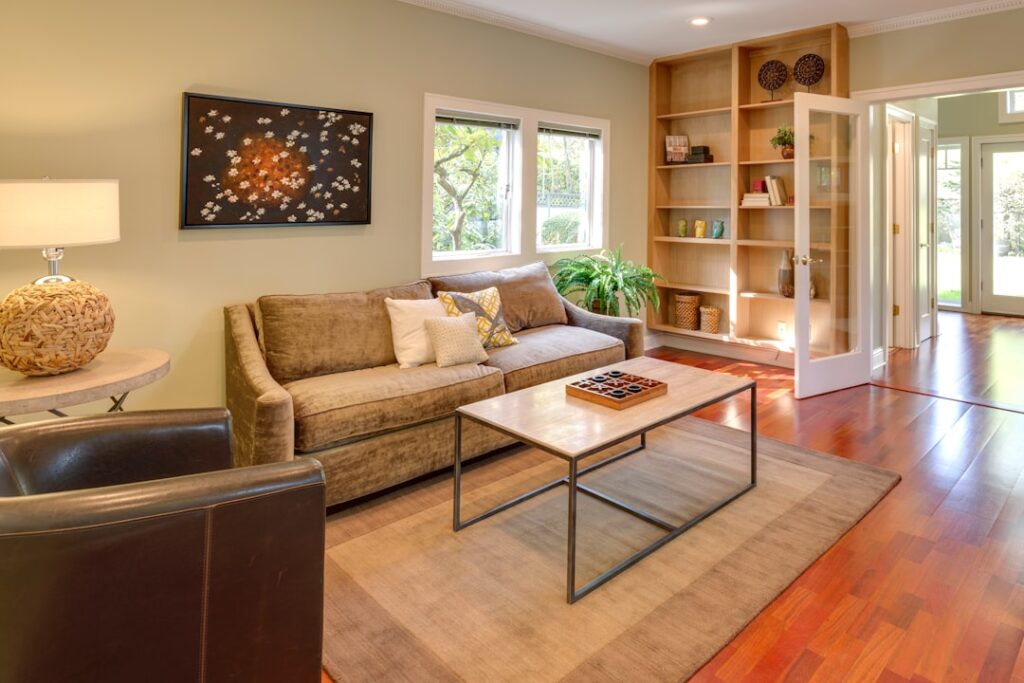
Flooring can make or break a beige scheme. Warm beige walls sing alongside honey oak, walnut, and other warm woods, creating a seamless, inviting envelope. Cool greige walls, on the other hand, look sophisticated against gray-washed wood, light maple, or porcelain tile with cool undertones. The trick is matching warmth to warmth and cool to cool; a warm yellow beige fighting against a cold gray floor is the most common reason a neutral room feels “off.”
If your flooring is already in place, choose your beige to harmonize with it rather than the other way around, since repainting is far cheaper than refinishing floors.
Adding Texture So Beige Does Not Fall Flat
The biggest risk with a beige room is monotony. Because the color recedes quietly, texture has to do the work that bold color would otherwise handle. Layer a chunky knit throw, a jute or wool rug, linen drapes, and a few woven baskets to introduce depth your eye reads as richness. Mixing matte and slightly sheen finishes, such as a flat wall paint against a leather chair, keeps the space from looking one-dimensional.
Plants are another easy upgrade. Green foliage pops against beige and adds the organic contrast the palette quietly craves.
Styling a Beige Living Room
Treat beige as the canvas and build outward in layers. Start with the walls, add a flooring tone that shares the same temperature, then introduce one grounding dark element so the eye has somewhere to rest. From there, accent colors and metals, whether warm brass or cool nickel, set the overall mood. A few metallic touches keep the scheme from reading too soft.
Done thoughtfully, a beige walls living room becomes the most versatile space in the house, easy to restyle each season without ever repainting and forgiving enough to absorb new furniture for years. The secret is never the beige itself but the undertones, textures, and accents you build around it.