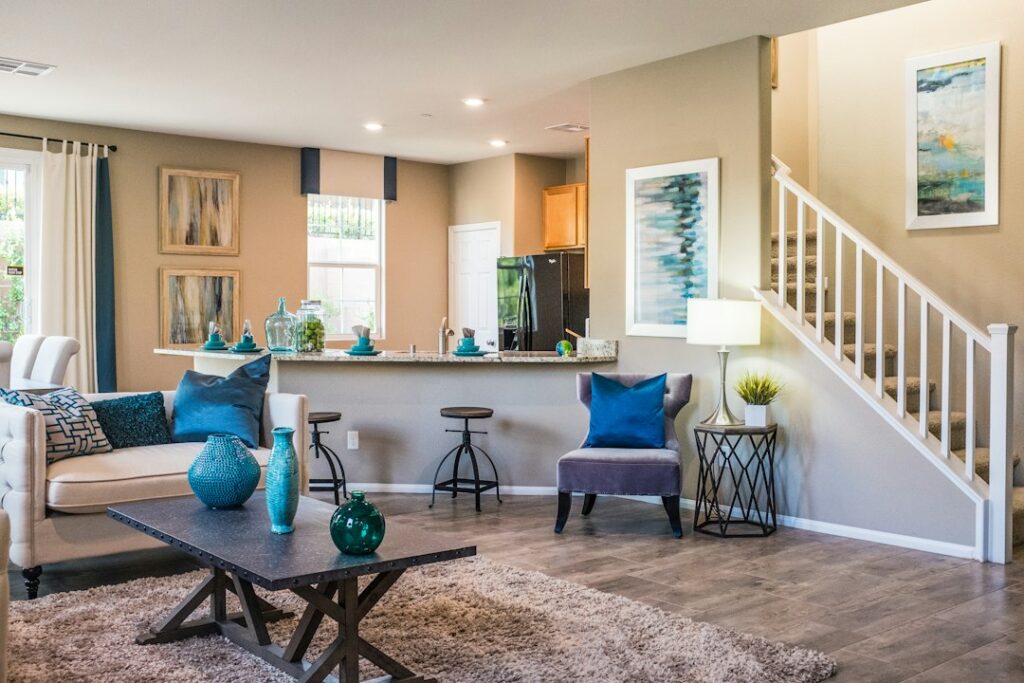
Most people who search for Benjamin Moore Wish have already seen it on a friend’s wall or in a listing photo and want to know one thing: will it look gray or beige in their own house? Wish, color number AF-680 in the Affinity collection, is a mid-light gray with warm undertones. Benjamin Moore describes it as an ultra-versatile gray with comforting warm undertones, and it carries a light reflectance value (LRV) of 58.58 on the manufacturer’s color page.
In plain terms, that puts Wish in the space many designers call greige. It is dark enough to give white trim real contrast, yet light enough to work in a standard living room without making it feel closed in. Because of the warm lean, it pairs comfortably with oak floors, brass hardware and cream textiles, and it tends to avoid the cold, blue cast that some cooler grays pick up in north light.
- Benjamin Moore Wish at a Glance
- What LRV 58.58 Means in a Real Room
- Undertones: Warm Gray, Greige or Taupe?
- How to Test Benjamin Moore Wish Before You Commit
- Best Sheens and Rooms for Wish
- Coordinating Colors and Pairings
- Similar Colors and Close Look-Alikes
- Troubleshooting Common Wish Problems
- Cost and Quantity for a Typical Room
- When to Call a Pro
- Frequently Asked Questions
Benjamin Moore Wish at a Glance
Here is the quick reference most shoppers want before they buy a sample. Every number in this table comes from Benjamin Moore’s own color page for Wish. Items marked as guidance are general painting practice, not manufacturer claims.
| Spec | Value | What it means |
|---|---|---|
| Color name and number | Wish AF-680 | Use the number when ordering so the store mixes the right formula |
| Collection | Affinity Color Collection | A curated palette designed so its colors coordinate with each other |
| LRV | 58.58 | Mid-light: reflects a little over half the light that hits it |
| Color family | Neutral (warm gray) | Reads as a soft greige rather than a cool, steely gray |
| Wall sheen (guidance) | Matte or eggshell | Hides drywall flaws and keeps the color looking soft |
| Trim and doors (guidance) | Satin or semi-gloss | Tougher, wipeable finish for high-touch surfaces |
| Coordinating whites | Super White OC-152 | A crisp white the maker pairs with Wish for trim and ceilings |
| Coordinating accent | Iron Mountain 2134-30 | A deep charcoal for doors, islands or an accent wall |
What LRV 58.58 Means in a Real Room
Light reflectance value runs on a scale from 0 (pure black) to 100 (a theoretical perfect white). Most bright whites sit in the 80s and 90s, while charcoals and navy blues fall below 15. Wish, at 58.58, lands in the middle of the light range. It will look noticeably darker than a white or an off-white but still bounces back enough light to keep a room from feeling dim.
That middle position matters for planning. In a sunny south- or west-facing room, Wish will read lighter and warmer than the chip suggests, sometimes close to a soft putty. In a north-facing room with cooler, indirect light, it will look deeper and more clearly gray. In a basement or a hallway with no windows at all, the color depends almost entirely on your bulbs. Warm white LEDs around 2700K bring out its beige side, while daylight bulbs at 5000K push it toward a cleaner gray.
If your room already feels dark, consider using Wish on three walls and a lighter neutral on the wall that faces the window. Another option is to keep Wish in the main living space and step to a lighter color in tight halls, where the same paint will look a shade or two darker because less light reaches the walls.
Undertones: Warm Gray, Greige or Taupe?
The manufacturer calls Wish a gray with warm undertones, and that is the safest description. Independent color databases agree that it sits on the warm side, though they label the exact undertone differently. Some lean it toward a subtle red or taupe base. What you will notice in practice is that Wish rarely looks blue or green. Instead, it can drift slightly toward a mushroom or taupe tone next to very warm woods, and toward a neutral mid-gray next to bright white trim.
Three things shift how the undertone shows up:
- Flooring. Orange-toned oak or cherry pulls the warmth forward, so Wish can read more beige. Gray-washed or white oak lets it look more like a true gray.
- Trim color. A stark white trim makes Wish look darker and grayer. A creamy white softens the contrast and lets the walls read warmer.
- Furniture and textiles. Large blocks of color, like a navy sofa or a rust rug, will reflect onto the walls and nudge the undertone in their direction.
Because undertones depend so heavily on surroundings, test samples on at least two walls. Peel-and-stick paint sample swatches are handy here: you can move them from wall to wall and check them at morning, midday and evening without painting test patches that later need covering.
How to Test Benjamin Moore Wish Before You Commit
A careful test takes about two days and saves you from repainting a whole room. Follow these steps:
- Get a large sample. A small chip is too small to judge an LRV in the 50s. Use a sample sheet or a sample pot painted onto white poster board at least 12 by 12 inches.
- Place it next to your trim. Hold the sample right against the existing baseboard or casing so you see the contrast you will live with.
- Check it on the darkest and brightest walls. The wall beside the window and the wall opposite it often look like two different colors.
- Look at it at three times of day. Note how it appears in morning light, at midday and under your lamps at night.
- Compare it to one alternative. Put a similar color beside it, such as Abalone 2108-60 or Nimbus 1465, two of the similar colors the maker lists. Comparison makes undertones easier to see than a single sample on its own.
- Decide on sheen. Sheen changes how dark a color appears. A flat or matte sample will look slightly lighter and softer than the same color in satin.
Best Sheens and Rooms for Wish
Wish works in most rooms, but sheen choice should follow how the surface is used.
Living rooms, bedrooms and dining rooms
Matte or eggshell is the usual pick. Matte gives the softest, most even color and hides minor drywall flaws. Eggshell adds a little more washability, which helps in a family room where hands and furniture touch the walls.
Kitchens and bathrooms
Choose an eggshell or satin finish rated for humid rooms. The extra sheen helps the surface shed moisture and makes wiping off splatters easier. In a bath, run the exhaust fan during and after showers so the paint film cures and stays clean.
Cabinets, trim and doors
Wish on kitchen cabinets or a vanity gives a quiet, warm gray look. Use a satin or semi-gloss cabinet-grade enamel for durability. If you keep the walls in Wish too, paint the cabinets a different sheen or pair them with a deeper color so they do not disappear into the walls.
Exteriors
Exterior light is much stronger than indoor light, so a mid-light gray like Wish will look several shades lighter on siding. Always test a large exterior sample on the actual wall and check that the color is offered in the exterior product line you plan to use.
Coordinating Colors and Pairings
Benjamin Moore lists four coordinating colors for Wish on its color page. They form a small, ready-made palette for a whole floor of a house.
- Super White OC-152. A clean white for trim, ceilings and doors. It gives Wish a crisp frame without the yellow cast of a creamy white.
- Steam AF-15. A soft off-white from the same Affinity collection. Use it for adjoining hallways or ceilings when stark white feels too cold.
- Chambourd AF-645. A deep, rich accent from the same collection. It suits a powder room, a library wall or an upholstered headboard wall.
- Iron Mountain 2134-30. A dark charcoal that works on an island, front door, window sashes or an accent wall behind a TV.
Beyond those, Wish plays well with natural materials. White oak, walnut, linen, jute, cream wool and unlacquered brass all sit comfortably against it. Sage greens and dusty blues work as accent colors because they balance the warm base, while very saturated yellows and oranges tend to make Wish look muddy.
Similar Colors and Close Look-Alikes
The manufacturer’s page lists four similar Benjamin Moore colors: Abalone 2108-60, Apparition 860, London Fog 1541 and Nimbus 1465. These are worth sampling side by side if Wish is close but not quite right. Expect small differences in depth and warmth rather than a completely different look: Benjamin Moore lists Abalone at LRV 61.99, Nimbus at 59.4, Apparition at 57.29 and London Fog at 56.44.
Across brands, Wish is often compared to Sherwin-Williams Agreeable Gray, another popular warm gray. The two are in the same general family, but they are not identical. Put both samples on the same wall if you are trying to match an existing room painted in the other brand, since a computer-matched formula can still look slightly different once the sheen and base change.
| Option | Source | How to use it |
|---|---|---|
| Abalone 2108-60 | Listed as similar by Benjamin Moore (LRV 61.99) | Slightly lighter, with a trace of mauve; sample beside Wish to compare depth |
| Apparition 860 | Listed as similar by Benjamin Moore (LRV 57.29) | Slightly deeper; compare warmth in your light |
| London Fog 1541 | Listed as similar by Benjamin Moore (LRV 56.44) | The deepest of the four; compare in north-facing rooms |
| Nimbus 1465 | Listed as similar by Benjamin Moore (LRV 59.4) | Nearly the same depth; compare next to white trim |
Troubleshooting Common Wish Problems
It looks too purple or pink. Warm grays with a red-leaning base can show a faint rosy cast next to cool white trim or under some LED bulbs. Switch to a warmer white for trim, or swap bulbs to a 2700K to 3000K warm white.
It looks too dark. A mid-range LRV can feel heavy in a room with small windows. Try a lighter color for the ceiling instead of a matching tint, raise lamp brightness, or use Wish only on the walls that get the most light.
The touch-ups show. Touch-ups flash most often in higher sheens. Use the same can, stir it well, and feather the edges with a lightly loaded roller instead of a brush.
The color looks patchy after one coat. When you paint over a much lighter or darker wall, two full coats are normal. A tinted primer can help when covering bold colors.
Cost and Quantity for a Typical Room
One gallon of interior paint generally covers about 350 to 400 square feet per coat, depending on the product and surface texture. A 12 by 14 foot bedroom with 8 foot ceilings has roughly 400 square feet of wall area before you subtract doors and windows, so plan on two gallons for two coats. Premium interior paints usually fall in a general range of $50 to $90 per gallon, with sample pots and peel-and-stick swatches costing a few dollars each. Prices vary by product line and region, so check with your local paint dealer for current pricing.
When to Call a Pro
Painting a bedroom in Wish is a reasonable DIY job. Hire a professional painter for tall stairwells, vaulted ceilings, exterior siding or cabinet refinishing, where ladder work, spray equipment and surface prep skills make a big difference in the result. If your home was built before 1978, test the existing paint for lead before you sand or scrape, and follow lead-safe work practices or hire a certified contractor.
Frequently Asked Questions
Is Benjamin Moore Wish gray or beige?
It is a warm gray, often called greige. It reads gray next to bright white trim and cool floors, and more beige next to warm wood tones and in warm lighting.
What is the LRV of Benjamin Moore Wish?
The manufacturer lists the LRV at 58.58. That makes it a mid-light color that reflects a little more than half of the light that hits it.
What white trim goes with Wish?
Benjamin Moore pairs it with Super White OC-152, a clean white. If you want a softer contrast, sample Steam AF-15 from the same Affinity collection.
Does Wish work in a north-facing room?
Yes, though it will look deeper and grayer there. Sample it on the darkest wall before you commit, and use warm white bulbs if it feels too cool.
Can I use Wish on kitchen cabinets?
Yes. Use a cabinet-grade enamel in satin or semi-gloss, prep and prime the surfaces properly, and allow the full cure time listed on the product label before heavy use.