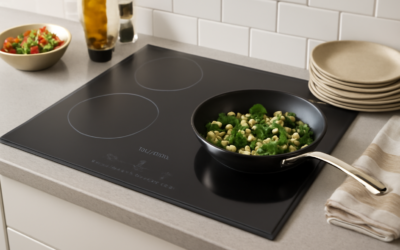
An induction cooktop costs $1,200 to $4,500 installed, and the glass-ceramic surface is the most expensive cosmetic component in any modern kitchen. One stainless steel scrub pad can leave permanent micro-scratches that show under every light angle for the rest of the appliance’s life. The best cleaner for induction cooktop work depends on the type of mess, the brand of the surface, and the schedule of cleaning, but the constants are no abrasive pads, no chlorine bleach, and no scrubbing pressure. Done right, the glass stays mirror-clear for fifteen years.
Why Induction Surfaces Need Special Care
Most induction cooktops use a Schott Ceran or EuroKera glass-ceramic surface. The material is engineered for thermal shock and impact resistance, but the surface hardness rating is around 6 on the Mohs scale. Anything harder, including stainless steel scouring pads (Mohs 7-8), grit-trapped sponges, and dirty bottoms of cast iron pans, will scratch the surface. Each scratch traps food and grease in a place where future cleaning cannot reach it.
The visual concern is also a functional one. A scratched surface holds heat unevenly because the gloss layer disrupts the magnetic field-to-pan coupling slightly. Manufacturers like Bosch, Wolf, and GE Profile specifically void their warranties on damage caused by abrasive cleaners.
The Top Five Cleaners Tested
The induction-cooktop-specific cleaner market has consolidated around five products that consistently outperform general-purpose surface sprays:
- Cerama Bryte Cooktop Cleaner: $8 per 18 oz, gold standard, recommended by GE, Whirlpool, Frigidaire
- Weiman Cooktop Cleaner and Polish: $7 per 20 oz, slightly thicker formula, leaves micro-protective film
- Bar Keepers Friend Cooktop Cleaner: $9 per 13 oz, removes light burned-on food, citric acid base
- Affresh Cooktop Cleaner: $12 per 10 oz, made by Whirlpool, slightly more expensive but identical chemistry to private label
- Bosch 12010030 Cooktop Cleaner: $15 per 8.5 oz, premium European formula, included with new Bosch cooktops
Cerama Bryte is the most-recommended pick by appliance technicians because it cleans, polishes, and seals in one step. The bottle lasts most households 6-9 months with daily use.
The Tools That Matter
The cleaner is only half the equation. The tool that meets the cooktop matters just as much:
- Cerama Bryte cleaning pads: $5 for a pack of 8, soft cotton-blend, never scratches
- Single-edge razor blade scraper (Bosch or Weiman branded): $9, only for burned-on residue
- Microfiber cloth (E-Cloth or Norwex): $6-$12, lifts grease without chemicals
- Scotch-Brite Non-Scratch Pad (white or blue): $4, fine for light scrubbing on cool surface
Never use steel wool, Brillo pads, green Scotch-Brite scouring pads, or any pad that has been used on a cast iron skillet. Anything that has scraped a metal surface picks up metal particles that scratch glass.
Daily Cleaning Routine
The fastest way to keep an induction cooktop spotless is the daily wipe-down. After cooking, wait for the surface to cool to warm (not cold), then take 60 seconds:
- Wipe spills off with a damp microfiber cloth while still warm
- For any sticky residue, drop a few beads of Cerama Bryte directly on the spot
- Wipe in circles with a clean pad until the cleaner haze appears
- Buff dry with a clean dry microfiber for the polished finish
This routine keeps food from baking onto the glass over multiple cooking sessions. Skipping it for a week is what creates the burned-on rings that require more aggressive cleaning.
Removing Burned-On Food
When food has baked onto the surface despite the daily routine, the right approach is razor blade plus cooktop cleaner. The razor blade scraper, held at a low 15-20 degree angle, slides under the burn without scratching the glass. Push, do not pull, and let the blade do the work without pressure.
After scraping off the bulk of the residue, apply a generous amount of Cerama Bryte or Weiman directly to the spot. Let it sit for two to three minutes to soften the remaining film. Wipe with a soft pad in circles. Repeat the application if needed. Most burned-on spills come off within two cycles.
Removing Sugar Spills Immediately
Sugar, caramel, and tomato-based spills are the only induction emergency. The acids and sugars chemically bond to the glass at high temperature and can leave permanent pits if left to cool. When sugar boils over, turn off the burner, put on an oven mitt, and use the razor blade scraper to lift the spill while still warm.
The mess is hot and the technique is tricky. The alternative is a permanent etched mark on the surface that no cleaner will remove. Move fast, scrape carefully, and clean the residue with cooktop cleaner after the surface cools.
Hard Water Spots and Mineral Buildup
Homes with hard water (above 120 ppm hardness) eventually see white mineral haze on the cooktop, especially around the edges where water collects from cleaning. Bar Keepers Friend Cooktop Cleaner is the best pick for this case because the citric acid dissolves the mineral deposits without harming the glass. Apply, let sit one minute, wipe with a soft pad. Rinse with a damp cloth and buff dry.
For prevention, dry the cooktop completely after every cleaning rather than letting tap water air-dry. The buffing step in the daily routine handles this for free.
What Not to Use, Ever
The list of products that ruin induction surfaces is short and worth memorizing:
- Steel wool or stainless scouring pads (immediate scratches)
- Bleach or ammonia-based cleaners (can pit the glass)
- Oven cleaner sprays like Easy-Off (etches the surface)
- Glass cleaner with isopropyl alcohol (leaves streaks and can damage seals)
- Abrasive powders (Comet, Ajax) – too coarse for glass-ceramic
- Anything from a previously-greasy sponge (grit transfer)
If a cleaner is not specifically labeled for ceramic or glass cooktops, do not put it on the surface. The few-dollar price difference between a generic cleaner and Cerama Bryte is trivial against a $300 replacement glass panel.
The Long-Term View
An induction cooktop kept on the daily-wipe routine looks new at year 10. The glass-ceramic does not yellow, does not stain, and does not lose gloss. The most common reason an older induction cooktop looks worn out is not age, it is years of the wrong cleaners and the wrong pads. Spend the $8 on Cerama Bryte and the $5 on cotton pads, and the cooktop outlasts everything else in the kitchen.