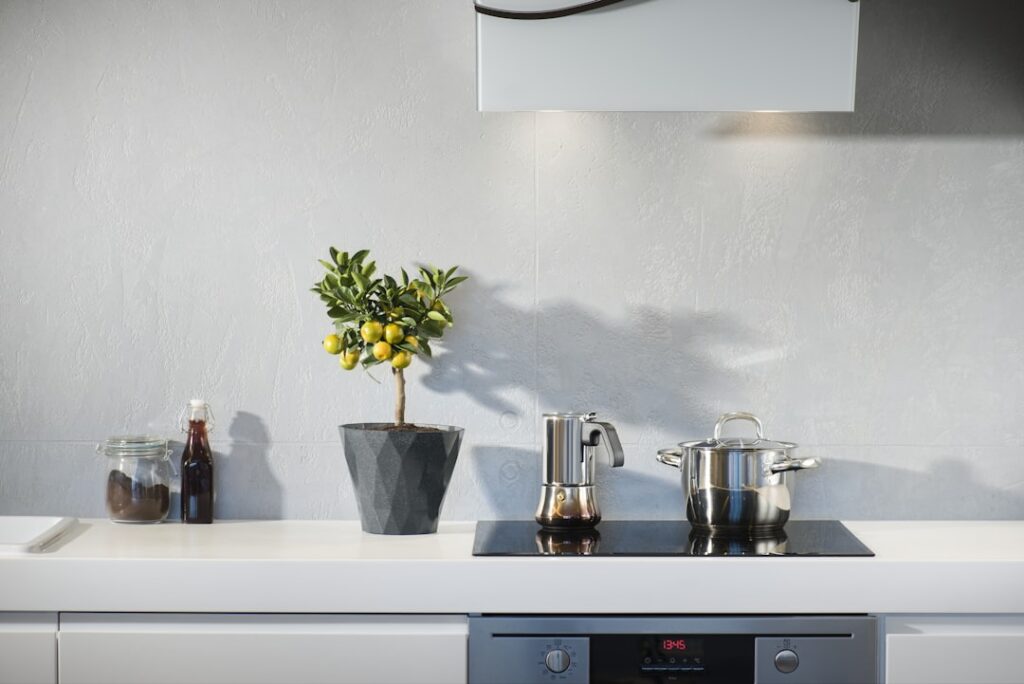
An induction countertop cooktop is the portable, plug-in burner that delivers the speed and precision of high-end induction cooking without remodeling your kitchen. These compact units sit on the counter, heat faster than gas or electric, and stay cool to the touch around the pan. They are a favorite for small kitchens, dorms, extra holiday cooking, and anyone curious about induction before committing to a built-in range. Here is how they work and what to know before buying one.
Part of our Countertops guide — explore the full guide →
How Induction Cooking Works
Induction is fundamentally different from a traditional burner. Instead of heating a coil or flame that then heats the pan, an induction cooktop uses an electromagnetic field to generate heat directly in the cookware itself. A copper coil beneath the glass surface creates a rapidly changing magnetic field, which induces electrical currents in a compatible pan, and those currents heat the pan. The cooktop surface itself stays relatively cool, only warming from contact with the hot pan.
The practical result is fast, responsive cooking. Water boils noticeably quicker than on electric coils, and the temperature responds almost instantly when you adjust the setting, much like a gas flame but more precise.
The Cookware Requirement
This is the single most important thing to understand before buying. Induction only works with magnetic cookware. Because heat is created by a magnetic field, your pots and pans must contain ferrous (magnetic) metal:
- Works: Cast iron, enameled cast iron, magnetic stainless steel, and carbon steel.
- Does not work: Aluminum, copper, glass, and most nonmagnetic stainless steel, unless they have a magnetic base.
The quick test is simple: hold a kitchen magnet to the bottom of a pan. If it sticks firmly, the pan will work on induction. If your favorite cookware is not magnetic, you will either need new pans or an induction interface disk that sits between the cooktop and the pan.
Power and Performance
Portable induction cooktops typically draw between 1,200 and 1,800 watts and plug into a standard household outlet. Higher wattage means faster heating and more cooking power. Most units offer multiple power and temperature levels, and better models include precise temperature settings, timers, and presets for tasks like simmering or boiling. Keep in mind that a single high-wattage unit can draw most of a 15-amp circuit, so avoid running it alongside other heavy appliances on the same circuit.
Safety Advantages
Induction is among the safest ways to cook. Because the surface only heats from the pan, the risk of burns and accidental fires is lower than with gas or electric coils. Most units include helpful safety features:
- Auto shut-off when no pan is detected or after a set time.
- Pan-detection that only powers on when compatible cookware is present.
- Child-lock controls to prevent accidental changes.
- Residual-heat indicators warning that the glass is still warm from the pan.
The cool surrounding surface also means spills do not bake onto a hot burner, making cleanup easier and safer.
What an Induction Countertop Costs
Single-burner portable induction cooktops typically run $50 to $150, with feature-rich models reaching $200. Double-burner units generally fall between $150 and $400. Factor in cookware if your current pans are not magnetic; a basic induction-ready pan set can be found for $80 to $200. For occasional use or a small kitchen, a quality single burner around $80 to $120 is a sensible starting point.
Where a Portable Induction Cooktop Shines
These units solve a lot of everyday problems. In a small apartment or studio without a full range, a portable burner is enough to cook real meals. During the holidays, an extra induction burner adds cooking capacity when every stovetop element is occupied. They are popular for dorms, RVs, and offices where a gas line is not an option, and they make a great outdoor cooking surface for the patio when you want to keep heat and smells out of the kitchen. Because they heat fast and respond instantly, many home cooks also use one for precise tasks like tempering chocolate, deep frying with steady oil temperature, or keeping a sauce at a gentle simmer.
Care and Cleaning
The smooth glass surface is easy to maintain. Let it cool, then wipe spills with a damp cloth and a mild cleaner; for stuck-on residue, a glass-cooktop cleaner and a soft pad work well. Avoid abrasive scrubbers that can scratch the glass. Lift pans rather than sliding them to prevent scratches, and keep the underside of your cookware clean so grit does not mar the surface. Store and transport the unit carefully, since the glass top can crack if dropped or struck.
Final Thoughts
Energy Efficiency and Everyday Use
One reason induction has caught on is efficiency. Because heat is generated directly in the pan rather than transferred from a hot element, very little energy is wasted heating the air or the cooktop. That means faster boil times and a kitchen that stays cooler, a real benefit in summer or in a small space where a gas burner would heat up the whole room. The instant responsiveness also reduces overcooking, since you can drop the heat from a hard boil to a gentle simmer in a moment.
In everyday use, a portable induction burner is also quieter and cleaner than gas. There is no open flame, no combustion byproducts, and no grates to scrub. Some users notice a faint hum or fan noise during operation, which is normal as the unit cools its electronics. Once you adjust to the quick response and learn your favorite power settings, most cooks find induction at least as intuitive as the burners they grew up with.
An induction countertop cooktop brings fast, precise, and safe cooking to any kitchen without an installation project. The non-negotiable detail is cookware: your pans must be magnetic, so test them with a magnet before you buy. Match the wattage to how much cooking power you want, mind the circuit load, and keep the glass surface clean and scratch-free. With the right pans, it is one of the most convenient and efficient ways to cook.