Your garage floor takes more punishment than any other surface in your home — heavy vehicles, chemical spills, dropped tools, and temperature swings from freezing to sweltering. After 30+ years of flooring work that includes hundreds of garage projects, I have tested and installed every type of garage tile on the market. This guide covers the best garage floor tiles available in 2026, what actually performs under real-world garage conditions, and what to avoid.
Part of our Epoxy, Concrete & Garage Floors guide — explore the full guide →
If you’re running out of room even with a clean garage floor, a backyard shed takes the overflow — seasonal gear, tools, lawn equipment. And if you’re parking outside while the garage doubles as a workshop, a carport keeps your car covered without needing a second garage.
We may earn a commission when you purchase through our links.
Garage Floor Tile Types Compared
Garage floor tiles fall into three main categories, each with distinct strengths. Understanding the differences saves you from an expensive mismatch between your needs and your purchase.
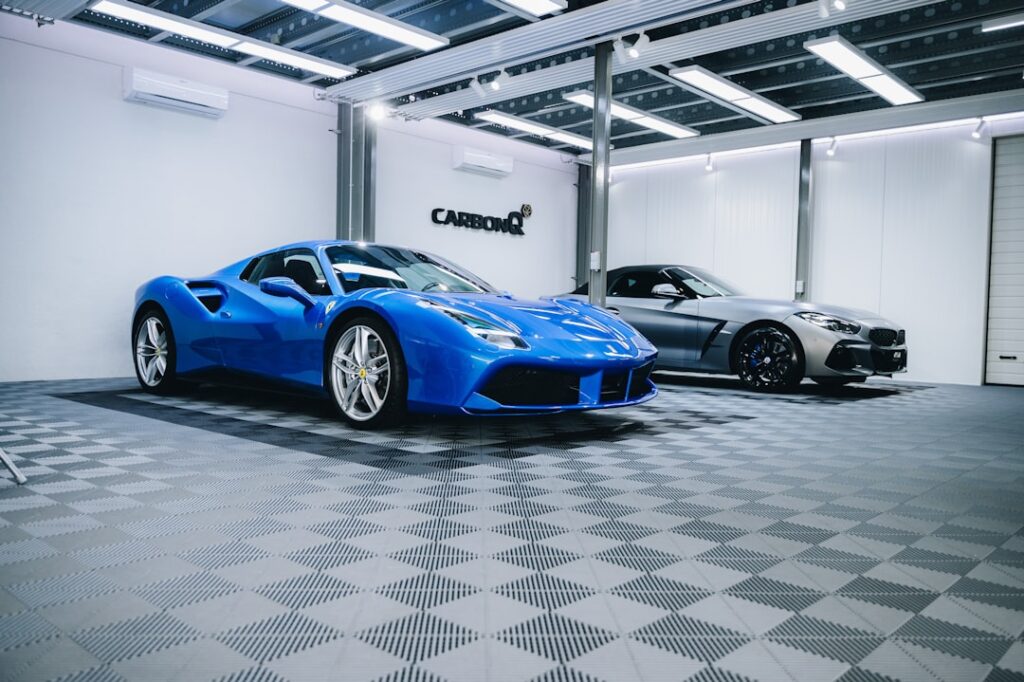
Rigid interlocking tiles (polypropylene). Hard plastic tiles that snap together without adhesive. They sit on top of the concrete and can be removed if you move. Best for general-purpose garages, workshops, and show-car spaces. The raised base allows air circulation and lets moisture drain beneath the tiles.
Flexible PVC tiles. Softer interlocking tiles that provide cushioning and noise dampening. They lay flat against the concrete without the raised-base airflow of polypropylene. Best for workshops where you stand for long periods, gym areas, and lighter-duty garages.
Porcelain tiles. Permanent installation with thinset mortar, just like indoor tile. The most durable and attractive option, but also the most expensive and labor-intensive. Best for garages that double as living spaces, luxury car storage, and high-end home additions.
There are also rubber garage tiles and carpet tiles, but these serve niche purposes. Rubber works well for gym-focused garages, and carpet tiles suit climate-controlled car collector spaces. For most homeowners, the three main types above cover every practical scenario.
Best Interlocking Garage Tiles
Rigid polypropylene interlocking tiles are the most popular garage flooring product in the country, and for good reason. They install in hours, look great, and handle vehicle traffic without complaint.
The best interlocking tiles share these features: a load rating of at least 10,000 pounds per square foot, UV-stable pigments that resist fading, a positive-locking connection system that stays tight under thermal expansion, and a raised base that allows drainage.
Top picks in this category include SwissTrax, RaceDeck, and MotorMat. These brands have been in the market for over 15 years, and I have seen their tiles hold up for a decade or more in active garages. The surface patterns range from diamond plate to coin texture to smooth for different aesthetics and traction levels.
The diamond plate pattern is the most popular because it hides tire marks and minor scuffs while providing excellent traction, even when wet with oil or water. Coin texture offers a clean, modern look but shows tire marks more readily. Smooth finishes look sharp initially but can become slippery when wet.
Expect to pay $3-6 per square foot for quality interlocking tiles. Budget brands at $1.50-2.50 per square foot exist but often use thinner plastic, weaker connection systems, and less UV-stable coloring. I have seen cheap tiles crack in cold weather and fade within two years of sunlight exposure.
Porcelain Garage Tiles
Porcelain is the premium choice for garage floors. It is virtually indestructible, impervious to chemicals, and available in designs that make a garage look like an extension of the home.
For garage use, choose porcelain rated PEI 5 (the highest wear rating) with a textured or matte surface for slip resistance. Full-body porcelain, where the color runs through the entire thickness of the tile, is ideal because chips and scratches are far less visible than on glazed tiles.
Recommended porcelain tiles for garages include Daltile Industrial Park, Florida Tile Urbanscape, and Marazzi Montagna. These lines offer the durability, chemical resistance, and slip resistance that garage environments demand.
The downside of porcelain is the installation process. The garage floor must be clean, flat, and free of moisture problems. Cracks in the concrete will telegraph through to the tile unless you use an uncoupling membrane like Schluter DITRA. Installation is permanent — you cannot relocate porcelain tiles if you move. Total installed cost runs $8-16 per square foot.
PVC Garage Floor Tiles
PVC tiles offer a middle ground between rigid interlocking tiles and permanent porcelain. They are softer, quieter, and more comfortable underfoot than polypropylene while being far easier to install than porcelain.
PVC tiles interlock with a hidden joint system and lay flat against the concrete, creating a surface that looks almost seamless. The material absorbs impact and sound, making PVC an excellent choice for workshops and garages used as multipurpose spaces.
The top PVC brands include Perfection Floor Tile, Lock-Tile, and Norsk. These manufacturers offer tiles in 5mm and 7mm thicknesses, with the thicker option providing better cushioning and durability.
PVC handles vehicle traffic, but it is not as rigid as polypropylene under extreme loads. Very heavy vehicles, car jacks, and concentrated point loads from jack stands can indent PVC tiles. If you regularly work on vehicles with jack stands, choose polypropylene or porcelain instead.
PVC tiles cost $3-7 per square foot. They are also the easiest option to keep clean — the smooth, non-porous surface wipes down quickly with a mop or hose.
Load Capacity and Durability
Understanding load capacity prevents premature tile failure. Here is how the three types compare under real garage loads.
Vehicle weight distribution. A typical passenger car weighs 3,500-4,500 pounds distributed over four tire contact patches of roughly 25-30 square inches each. That translates to about 35-45 PSI per contact patch. A full-size truck or SUV increases this to 50-65 PSI.
Polypropylene interlocking tiles. Premium brands handle 10,000-50,000 pounds per square foot in compression. Even budget tiles rated at 6,000 pounds per square foot handle normal vehicle traffic. The concern is point loads from jack stands and motorcycle kickstands, which concentrate force on a small area. Use a steel or plywood pad under jack stands to distribute the load.
PVC tiles. Most handle 10,000-20,000 pounds per square foot but are prone to indentation under sustained point loads. PVC also softens in extreme heat, which can be an issue in sun-baked garages without insulation. Look for tiles rated for a minimum operating temperature of -20°F to 200°F.
Porcelain tiles. Porcelain has a compressive strength exceeding 30,000 PSI, making it the strongest option by a wide margin. The weak point is impact resistance — a heavy tool dropped from height can chip or crack the surface. Use anti-fatigue mats in work areas to protect both the tile and your dropped tools.
Chemical and Stain Resistance
Garages encounter motor oil, brake fluid, antifreeze, gasoline, road salt, and various solvents. Not all tiles resist these equally.
Porcelain: Virtually impervious to every common garage chemical. Oil, gasoline, brake fluid, antifreeze, and solvents wipe clean without staining. This is the gold standard for chemical resistance.
Polypropylene: Resistant to oil, gasoline, and antifreeze. Some aggressive solvents like acetone and MEK can soften or discolor the surface over time. Most automotive chemicals clean up without permanent staining if addressed within a few hours.
PVC: Resistant to most garage chemicals, but prolonged exposure to gasoline and certain solvents can cause softening or discoloration. Oil and antifreeze are not a problem. Clean spills promptly — within an hour is the safe threshold for aggressive chemicals.
Regardless of tile type, I recommend cleaning chemical spills as quickly as possible. Wipe up oil and fluids with shop towels, then mop the area with a degreasing cleaner. Prevention beats cleaning every time.
Installation Guide
Interlocking tiles (polypropylene and PVC). Start in one corner and work outward. Snap tiles together by aligning the edges and pressing or stepping down firmly. Cut border tiles with a utility knife (PVC) or circular saw with a fine-tooth blade (polypropylene). Most two-car garages take 4-6 hours for one person.
Prep the concrete by sweeping and removing loose debris. The floor does not need to be perfectly flat — interlocking tiles can bridge minor cracks and imperfections up to about 1/4 inch. However, severe heaving or slopes should be addressed first.
Leave a 1/4-inch expansion gap around the perimeter. Most interlocking tile kits include edge and corner ramp pieces that create a clean transition at doorways and garage door openings.
Porcelain tiles. This is a full tile installation project. Clean and etch the concrete, repair cracks, apply a crack-isolation membrane if needed, and install tiles with modified thinset mortar. The same techniques used for interior tile apply here, with extra attention to slope management for drainage. This is typically a professional-grade project costing $8-16 per square foot installed.
Cost Comparison
Here is a realistic cost breakdown for a standard two-car garage (approximately 400 square feet).
Polypropylene interlocking tiles:
- Budget brands: $600-1,000
- Premium brands: $1,200-2,400
- Installation: DIY (4-6 hours)
- Total: $600-2,400
PVC interlocking tiles:
- Standard thickness: $1,200-2,000
- Premium thickness: $2,000-2,800
- Installation: DIY (3-5 hours)
- Total: $1,200-2,800
Porcelain tiles:
- Tile material: $1,200-3,200
- Professional installation: $2,400-4,000
- Total: $3,600-7,200
Interlocking tiles offer the best value when you factor in the zero cost of installation. Porcelain costs the most upfront but lasts essentially forever with zero replacement cost. Over a 20-year period, porcelain often ends up cheaper per year than interlocking tiles that need replacing every 10-15 years.
Top Brands and Recommendations
Based on my experience installing and observing these products over years of actual use, here are my top recommendations by category.
Best overall interlocking tile: SwissTrax Ribtrax Pro. The open-grid design allows water, dirt, and debris to fall through, keeping the surface clean. The connection system is one of the strongest available, and the UV resistance is excellent. Around $4.50 per square foot.
Best budget interlocking tile: IncStores Nitro. Solid polypropylene at $2-3 per square foot with decent quality. Not as refined as SwissTrax or RaceDeck, but holds up well under normal passenger vehicle use.
Best PVC tile: Perfection Floor Tile HomeStyle. Thick 5mm PVC with a tight-fitting hidden interlock. Available in dozens of colors and patterns including realistic stone and wood looks. Around $4-5 per square foot.
Best porcelain for garages: Daltile Industrial Park. Full-body through-color porcelain with a textured, slip-resistant surface. PEI 5 rated with excellent chemical resistance. Available in concrete-look and stone-look designs. Around $4-7 per square foot for materials.
Best for workshops: Norsk Reversible Foam Tiles. Not a hard tile, but worth mentioning for garages used primarily as workshops. The foam cushioning reduces fatigue during long standing sessions, and the reversible design offers two color options. Around $2-3 per square foot.
Frequently Asked Questions
Can you park a car on interlocking garage floor tiles?
Yes, quality interlocking polypropylene tiles handle passenger cars, trucks, and SUVs without issue. Look for tiles rated at 10,000 pounds per square foot or higher. Avoid using jack stands directly on the tiles without a load-distribution pad, as concentrated point loads can crack individual tiles.
Do garage floor tiles need to be sealed?
Interlocking polypropylene and PVC tiles do not need sealing. Porcelain garage tiles do not need surface sealing either, but the grout joints should be sealed with a penetrating grout sealer every 12-18 months to prevent oil and chemical staining.
How long do garage floor tiles last?
Polypropylene interlocking tiles last 10-20 years depending on usage and sun exposure. PVC tiles last 10-15 years. Porcelain tiles last essentially forever — 30+ years is common with no signs of degradation. Climate extremes and heavy use shorten the lifespan of plastic tiles more than porcelain.
Can you install garage floor tiles over a cracked concrete floor?
Interlocking tiles (both polypropylene and PVC) can go directly over cracked concrete as long as the surface is reasonably level. They float over the surface and bridge minor cracks and imperfections. Porcelain tiles require crack repair and a crack-isolation membrane over the repaired area before installation.