Most homeowners assume epoxy is the only serious upgrade for a garage slab. It isn’t. Porcelain garage floor tiles shrug off oil drips, hot tire pickup, and the occasional dropped wrench in a way coatings often can’t, and they do it without the recoating cycle epoxy demands every few years. If you want a floor that looks showroom-clean for two decades, porcelain deserves a hard look before you crack open a resin kit.
Part of our Epoxy, Concrete & Garage Floors guide — explore the full guide →
The catch is that not every porcelain tile belongs under a 4,000-pound SUV. Choosing the wrong thickness or slip rating turns a premium floor into a cracked, dangerous mess. Here is what actually matters.
- Why Porcelain Works in a Garage
- The Pros Worth Paying For
- The Cons You Should Know Before Buying
- Choosing the Right Tile: Thickness and Ratings
- Installation: Full Mortar vs. Interlocking
- Cost Breakdown for a Two-Car Garage
- Preventing Cracks: The Substrate Matters Most
- Frequently Asked Questions
- Is Porcelain Right for Your Garage?
Why Porcelain Works in a Garage
Porcelain is fired at roughly 2,200°F to 2,500°F, denser and harder than standard ceramic. That density gives it a water absorption rate under 0.5 percent, which is the technical line between porcelain and ordinary tile. In a garage, that near-zero absorption means road salt, brake fluid, and antifreeze sit on the surface instead of soaking in and staining.
The material also handles heat swings well. A tire coming off the highway can hit 140°F, and porcelain doesn’t soften or lift the way some vinyl and epoxy surfaces do under hot tire pickup. Combine that with a Mohs hardness around 7 to 8, and you get a floor that resists the scratching and gouging a working garage dishes out daily.
If you’re running out of room even with a clean garage floor, a backyard shed takes the overflow — seasonal gear, tools, lawn equipment. And if you’re parking outside while the garage doubles as a workshop, a carport keeps your car covered without needing a second garage.
We may earn a commission when you purchase through our links.
The Pros Worth Paying For
- Chemical resistance: Motor oil, gasoline, and degreasers wipe off a glazed porcelain surface without etching.
- Longevity: A properly installed porcelain floor lasts 25 to 50 years, far outlasting a 3-to-7-year epoxy coating.
- Impact durability: Rated tiles handle rolling loads from floor jacks and jack stands better than most coatings.
- Low maintenance: No annual reseal, no yellowing under UV, no chalking. A damp mop keeps it clean.
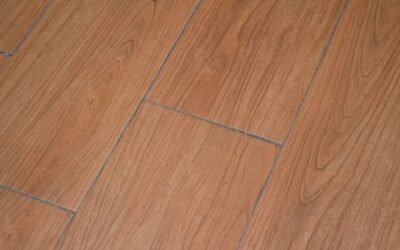
- Design range: You can get concrete-look, wood-look, or high-gloss finishes, so a garage gym or workshop can look intentional.
There’s also a resale angle. A tiled garage reads as a finished, cared-for space, which helps when a buyer walks through the one room most sellers ignore.
The Cons You Should Know Before Buying
Porcelain is hard, but a hard surface is unforgiving. Drop a cast-iron skillet or a heavy socket and a cheap tile can chip; a dense, thick tile usually survives. The bigger real-world complaint is slip resistance. A glossy porcelain tile mixed with winter slush becomes a hazard, which is why you should insist on a Dynamic Coefficient of Friction (DCOF) of 0.42 or higher for wet areas.
Cost and labor are the other honest downsides. Material runs $3 to $12 per square foot, and professional installation adds $5 to $10 per square foot because a garage slab often needs leveling first. Compared to a DIY epoxy kit at under $2 per square foot, porcelain is a bigger upfront commitment.
Choosing the Right Tile: Thickness and Ratings
Not every porcelain tile is built for vehicle loads. Skip anything under 8 millimeters thick for a garage that parks cars. Look for these specs when you shop:
- Thickness: 10mm minimum for daily parking; 3/4-inch pavers (20mm) for heavy trucks or lifts.
- PEI rating: PEI 4 or 5, the two grades built for heavy commercial traffic.
- Breaking strength: Above 400 pounds-force per ASTM C648, and ideally an ISO breaking load rating over 1,300 newtons.
- DCOF: 0.42 or higher for wet-area slip safety.
Large-format tiles, like 24×24 or 24×48 inches, cut down grout lines and give a cleaner look, but they demand a dead-flat slab. If your concrete has more than 1/8 inch of deviation over 10 feet, plan on self-leveling compound before you set a single tile.
Installation: Full Mortar vs. Interlocking
You have two realistic paths. The permanent method is a full thin-set mortar bed over the concrete slab, the same way you’d tile a floor indoors. This is the strongest option and the only one I’d trust under a car lift, but it’s a two-to-three-day job for a two-car garage and mistakes are hard to undo.
The Interlocking Alternative
Manufacturers like Swisstrax and RaceDeck sell rigid interlocking tiles, some faced with porcelain or porcelain-like composite, that snap together over the bare slab with no adhesive. A handy homeowner can floor a two-car garage in a weekend. These float over minor cracks and moisture, and you can lift a damaged tile in seconds. The trade-off is a slightly hollow feel and seams that collect grit.
For a mortar-set floor, use a polymer-modified thin-set rated for exterior and high-traffic use, and choose a flexible, stain-resistant epoxy or urethane grout. Standard cement grout will discolor from oil within a season.
Cost Breakdown for a Two-Car Garage
A standard two-car garage is roughly 400 square feet. Here’s a realistic range:
- Budget porcelain, DIY interlocking: $1,600 to $2,800 in materials.
- Mid-grade porcelain, professional mortar set: $3,600 to $6,400 all in.
- Premium large-format with leveling: $7,000 to $9,000 or more.
Add 10 percent for waste and cutting, and budget another $150 to $400 for a rental wet saw and diamond blade if you’re doing it yourself. Even at the high end, spreading that over a 30-year lifespan makes porcelain cheaper per year than repeated epoxy jobs.
Preventing Cracks: The Substrate Matters Most
Porcelain doesn’t crack on its own, it cracks because the slab beneath it moves or was never flat to begin with. A garage slab that already has active cracks, heaving, or more than 1/8 inch of deviation over 10 feet will transmit that movement straight into a rigid mortar-set tile. Before you commit to a permanent installation, get down on the slab and check it honestly.
For a mortar-set floor, an uncoupling membrane like Schluter Ditra is cheap insurance. It’s a plastic matting that goes down between the slab and the thin-set, absorbing minor slab movement so it never reaches the tile. On a garage floor that sees temperature swings from freezing winters to 100°F summers, that membrane is the difference between a floor that lasts decades and one that telegraphs every seasonal crack. If your slab is badly compromised, the interlocking tile route sidesteps the problem entirely, since floating tiles bridge cracks instead of bonding to them.
Frequently Asked Questions
Will porcelain tile crack under a car jack?
Not if you use the right tile. A PEI 4 or 5 rated porcelain at least 10mm thick, with a breaking strength above 400 pounds-force, handles a floor jack and jack stands. Distribute the load with a plywood or rubber pad under jack stands to be safe, and never point-load a thin decorative tile.
Is porcelain slippery in a garage?
Glossy porcelain can be dangerously slick when wet with snowmelt or oil. Choose a tile with a DCOF of 0.42 or higher, and consider a matte or textured surface. Textured porcelain gives you traction without sacrificing cleanability.
How does porcelain compare to epoxy for cost over time?
Epoxy costs less upfront, around $2 per square foot DIY, but needs recoating every 3 to 7 years. Porcelain costs more to install but lasts 25 to 50 years with no recoating. Over two decades, porcelain often works out cheaper per year despite the higher initial price.
Is Porcelain Right for Your Garage?
Choose porcelain if you want a permanent, low-maintenance floor and you’re willing to pay for it once. It shines in garages that double as gyms, workshops, or hobby spaces where looks and cleanability matter. If you park work trucks, drop heavy tools daily, or want a cheap refresh you can redo yourself, an epoxy or polyaspartic coating may fit better.
For most homeowners, the sweet spot is a 10mm PEI 4 tile with a DCOF above 0.42, set in epoxy grout over a leveled slab with an uncoupling membrane. Get that combination right and your garage floor will outlast the cars you park on it, cleaning up with nothing more than a mop and a mild degreaser.