Your front porch is the handshake of your home, and nothing sharpens a first impression faster than the right rug underfoot. Choosing the best outdoor rugs for front porch use means balancing weather resistance, the right size, and a style that complements your entry, because a porch rug faces sun, rain, mud, and constant foot traffic that would destroy an indoor piece in a single season. The good news is that today’s synthetic outdoor rugs handle all of it while looking every bit as good as their indoor cousins.
Get the selection right and a $40 to $150 rug protects your porch floor, hides wear, catches grit before it tracks inside, and anchors your seasonal decor for years. Get it wrong, choosing the wrong material or size, and you end up with a moldy, curling mat that traps water against your boards. Here is how to buy once and enjoy it for the long haul.
Material Is Everything Outdoors
Polypropylene, also sold as olefin, is the workhorse of outdoor rugs and the right choice for most porches. It sheds water instead of absorbing it, resists fading from UV exposure, cleans with a garden hose, and costs the least. A quality polypropylene rug dries quickly after rain, which matters enormously for preventing mold and mildew on a covered or partly exposed porch.
Two other synthetics deserve mention. Polyester offers slightly softer texture and vivid, fade-resistant colors but holds a bit more moisture. Recycled PET rugs, spun from plastic bottles, split the difference with good durability and an eco-friendly story. Natural fibers like jute and sisal look gorgeous but belong only on fully covered, dry porches, since they absorb water, stain easily, and rot when exposed to the elements. For an uncovered front step, stick with polypropylene every time.
Sizing Your Porch Rug Correctly
Size is where good intentions often go wrong. As a rule, leave 4 to 8 inches of bare floor visible around the rug’s border rather than running it wall to wall; a slight frame of exposed decking looks intentional and lets water escape. For a standard front door, a 2-by-3-foot or 3-by-5-foot rug reads as a proper welcome mat, while larger covered porches with seating can carry a 5-by-8 or larger to define the space.
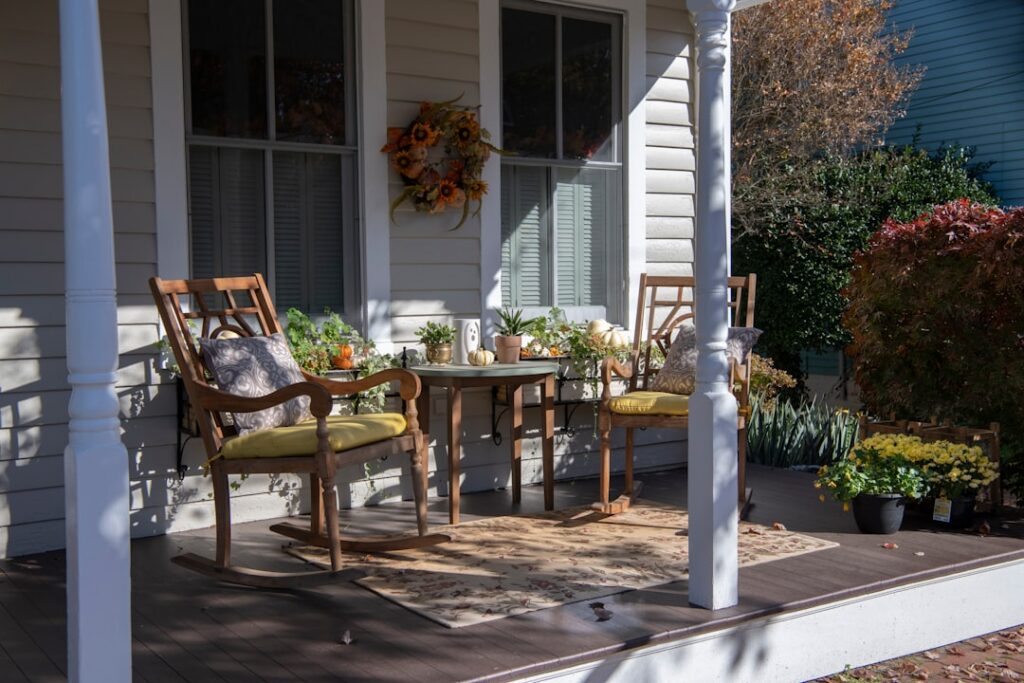
Match the rug’s orientation to your porch. A long, narrow runner suits a deep, slim porch or a covered walkway, while a rectangular rug centered on the door works for typical entries. If you have a porch swing or a pair of rockers, float a larger rug so the front legs of the furniture sit on it, which visually ties the arrangement together. Measure before you buy, because outdoor rugs rarely fold neatly into a car for returns.
Weather Exposure Changes the Rules
Be honest about how much weather your porch actually takes. A fully covered, recessed porch shielded from rain gives you far more freedom, including softer polyester or even properly protected natural-fiber looks. An uncovered stoop that gets direct sun and driving rain demands the toughest, fastest-draining polypropylene with strong UV resistance, or the colors will chalk out within a couple of summers.
Sun is as damaging as water. South and west-facing porches bake for hours, and cheap dyes fade unevenly. Look for rugs specifically labeled UV-stabilized or fade-resistant, and expect to pay a little more for pigments that hold. In snowy climates, roll the rug up and store it dry over winter rather than letting ice and freeze-thaw cycles work it loose from the boards.
Traction and Safety
An entry rug that slides is a genuine trip hazard, especially when wet. Many outdoor rugs have a low, flat weave that grips reasonably well, but adding a rug pad rated for outdoor use dramatically improves both stability and airflow underneath. An outdoor pad lifts the rug slightly, letting water drain and the boards breathe, which prevents the trapped-moisture staining that ruins porch floors.
Skip standard indoor rubber pads, which break down in sun and heat and can discolor decking. Choose an open-weave, UV-stable outdoor pad instead, typically $15 to $30. On a slick tile or painted-concrete porch, this small addition is the difference between a safe welcome and a guest going down on a rainy evening.
Style That Complements Your Entry
Because the rug frames your door, let it either echo or intentionally contrast your home’s palette. A classic coir-look or striped border rug suits traditional and farmhouse exteriors, while bold geometric or Persian-inspired patterns bring life to a plain concrete stoop. Patterns are practical too: a busy design hides dirt, leaves, and paw prints far better than a solid color between cleanings.
Layering is a designer trick worth stealing. Place a durable coir doormat on top of a larger patterned outdoor rug for texture and a defined step-off zone that scrapes shoes clean. Coordinate the rug with a seasonal wreath or a pair of planters and the whole entry looks curated rather than accidental, all for the price of a rug and a couple of pots.
Cleaning and Care
Low maintenance is a big reason synthetic outdoor rugs win. Shake or sweep off debris weekly, and hose the rug down when it looks grimy. For stubborn spots, scrub with a soft brush and a mild dish-soap solution, rinse thoroughly, and lay the rug flat or hang it to dry completely before returning it to the porch. Never leave it damp under furniture, where mildew takes hold.
Twice a season, lift the rug entirely and clean the floor beneath it, then let both fully dry in the sun. This simple habit prevents the discoloration and slick residue that build up when a rug sits untouched for months. Rotate the rug end for end occasionally so foot traffic and sun wear it evenly, and it will hold its looks for three to five years or more.
Budgeting and What to Expect to Pay
Outdoor porch rugs span a wide price range, and knowing the tiers helps you buy smart. Budget polypropylene rugs in a 3-by-5 size start around $30 to $50 and perform surprisingly well for a couple of seasons, making them a low-risk choice if you like to change your look often. Mid-range flatweave and reversible rugs in the $60 to $120 band offer tighter weaves, better UV-stabilized colors, and longer life, which is the sweet spot for most front porches. Premium recycled-PET and designer outdoor rugs run $150 and up, worth it for a large covered porch you want to keep for years.
Reversible rugs deserve a special mention for porches, since a flatweave you can flip effectively doubles both the look and the lifespan, letting you rotate a faded side to the bottom. Watch for end-of-season sales in early fall, when retailers clear outdoor inventory at 30 to 50 percent off, the best time to buy a quality rug for next spring. Whatever your budget, spend a few extra dollars on the matching outdoor rug pad; it protects the rug, the floor, and anyone walking across it, and it is the cheapest insurance in the whole purchase.
The Bottom Line
For nearly every front porch, a UV-stabilized polypropylene rug in a fade-resistant pattern, correctly sized to leave a border of visible floor and paired with an outdoor rug pad, is the best outdoor rug you can buy. Match the material honestly to your weather exposure, keep natural fibers to covered porches only, and commit to a quick seasonal cleaning. Do that, and your entry will greet every visitor with a fresh, welcoming look for years to come.