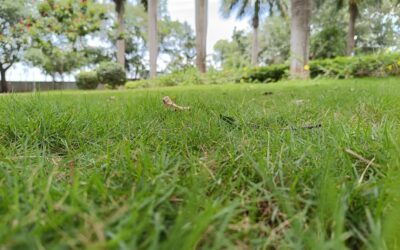
When a homeowner tells me they need grass to come up fast, perennial ryegrass is usually where I point them. The best perennial ryegrass seed germinates in as little as five days, establishes a fine, dark-green blade, and stands up to heavy foot traffic better than almost any other cool-season grass. It is the seed you want for quick repairs, overseeding a tired lawn, and winter overseeding of dormant Bermuda. Not all ryegrass is equal, though. The difference between a bag of cheap contractor mix and a certified turf-type variety shows up in color, disease resistance, and how the lawn looks two years down the road.
- Why Choose Perennial Ryegrass
- Understand Turf-Type vs. Forage Ryegrass
- Top Perennial Ryegrass Varieties and Products
- Seeding Rates for Perennial Ryegrass
- When and Where to Plant It
- Sun, Shade, and Soil Needs
- Mowing and Maintenance
- Understanding the Seed Label
- Coated vs. Uncoated Seed
- Overseeding an Existing Lawn With Ryegrass
Why Choose Perennial Ryegrass
Perennial ryegrass earns its place through a handful of standout traits. First is germination speed. While Kentucky bluegrass can take three weeks to sprout, ryegrass is up in 5 to 10 days, which makes it the fastest cool-season grass you can buy. That speed also makes it a natural “nurse grass” in seed blends, quickly holding soil while slower grasses establish.
Second is wear tolerance. Ryegrass has a tough, wear-resistant crown, which is why it dominates sports fields and high-traffic yards. Third is color and texture: turf-type varieties produce a fine blade and a deep green that rivals bluegrass. Its main limitation is that it grows in bunches rather than spreading by runners, so it does not self-repair bare spots the way bluegrass does. That is why it is often blended.
Understand Turf-Type vs. Forage Ryegrass
The single most important thing to check on the bag is whether you are buying turf-type or forage/annual ryegrass. They are very different plants.
- Turf-type perennial ryegrass is bred for lawns: fine blades, dense growth, dark color, and improved disease resistance. This is what you want.
- Annual ryegrass is cheap, coarse, light green, and dies after one season. It is sold for erosion control and quick temporary cover, not for a permanent lawn. Cheap “quick lawn” mixes often hide it.
- Forage ryegrass is grown for grazing animals, coarse and not meant for turf.
If a bag is suspiciously cheap and just says “ryegrass,” it is probably annual. Look for named turf-type cultivars on the label.
Top Perennial Ryegrass Varieties and Products
Certified varieties are tested through the National Turfgrass Evaluation Program (NTEP), so you are not guessing. Here are picks I trust.
- Barenbrug Turf Blue with Yellow Jacket: Actually a bluegrass-rye leaning blend, but Barenbrug’s turf-type ryegrass lines are consistently top NTEP performers with excellent color. Their coating holds moisture for faster germination.
- Pennington Smart Seed Perennial Ryegrass: A reliable retail pick, drought-improved and self-fertilizing coating; about $35 to $45 for a bag covering 1,700 sq ft new or 3,400 sq ft overseeding.
- Jonathan Green Black Beauty (rye component): Their premium blends include elite turf-type ryegrass with deep root systems and a waxy blade coating for drought and disease resistance.
- Scotts Turf Builder Perennial Ryegrass Mix: Widely available and coated for moisture; a solid mainstream choice for repairs and overseeding.
- GreenView Fairway Formula Perennial Ryegrass Blend: A multi-cultivar blend, which spreads genetic risk against disease and gives more uniform performance.
Whenever possible, buy a blend of two to four named cultivars rather than a single variety. Blends resist disease better because no single pathogen can wipe out the whole stand.
Seeding Rates for Perennial Ryegrass
Applying the right amount of seed is critical, and ryegrass is one of the heavier-seeded grasses. Too little leaves it thin; too much creates weak, overcrowded seedlings.
- New lawn (bare soil): 5 to 9 pounds per 1,000 sq ft.
- Overseeding an existing lawn: 3 to 5 pounds per 1,000 sq ft.
- Winter overseeding of dormant Bermuda: 8 to 12 pounds per 1,000 sq ft for a dense, green winter carpet.
Split the seed into two passes with your spreader, going in perpendicular directions, to get even coverage without stripes.
When and Where to Plant It
Perennial ryegrass is a cool-season grass, so it thrives where summers are moderate and winters are cool, the Northeast, Pacific Northwest, Midwest, and the transition zone. It struggles in the deep South’s summer heat except as a temporary winter overseed.
Seed it in early fall for the best results, when soil temperatures are 50 to 65°F and there is plenty of moisture. Early spring is the second-best window. For overseeding dormant warm-season lawns in the South, sow ryegrass in October or November as the Bermuda goes brown; the ryegrass keeps the lawn green all winter and fades out naturally as the Bermuda wakes up in spring.
Sun, Shade, and Soil Needs
Ryegrass performs best in full sun to light shade and prefers well-drained, fertile soil with a pH around 6.0 to 7.0. It is not the most shade-tolerant grass, in deep shade fine fescue does better, but it handles partial shade acceptably. Because it germinates and grows fast, it is hungry: apply a starter fertilizer at seeding and keep the soil consistently moist for the first two weeks. Once established, it responds strongly to regular feeding and will reward you with rapid, lush growth.
Mowing and Maintenance
Keep perennial ryegrass mowed at 1.5 to 2.5 inches. It grows quickly, so during peak spring and fall growth you may mow twice a week to keep up. Never remove more than a third of the blade in a single cut. Because it is a bunch grass and does not fill bare spots on its own, plan to overseed thin areas each fall to keep the stand dense.
The payoff for that upkeep is a fast, tough, handsome lawn. Choose a blend of named turf-type cultivars, avoid the cheap annual ryegrass traps, seed at the right rate in early fall, and keep it fed and watered, and the best perennial ryegrass seed will give you a dense green lawn faster than any other cool-season grass on the shelf.
Understanding the Seed Label
The seed tag on the back of the bag tells you everything you need to know, if you can read it. Look at four numbers. Purity tells you the percentage that is actually the grass you want; aim for 95 percent or higher. Germination rate indicates the percentage of seeds expected to sprout, look for 85 percent or better. Other crop and weed seed should be as close to zero as possible; anything over 0.5 percent weed seed means you are sowing problems along with your lawn. Finally, the inert matter figure is filler, coating, and chaff, some coating is fine, but a very high inert number on a cheap bag can mean you are paying for very little actual seed.
Also check the test date to make sure the seed is fresh, germination drops as seed ages, and confirm the named cultivars are listed. A quality turf-type perennial ryegrass bag will list specific varieties rather than just “perennial ryegrass.” If it only says the generic name with no cultivars and a suspiciously low price, treat it with caution.
Coated vs. Uncoated Seed
Many premium ryegrass products now come coated, wrapped in a thin layer that may hold moisture, contain fungicide, or include a starter nutrient. Coated seed germinates more reliably in marginal conditions because the coating keeps the seed from drying out, which is genuinely helpful for spring seeding or spots you cannot water constantly. The tradeoff is that coating adds weight and bulk, so a coated bag contains fewer actual seeds per pound than an uncoated one; account for that when comparing prices and calculating your seeding rate. For most homeowners the germination boost is worth it, but seasoned overseeders on a budget often prefer uncoated seed for the higher seed count per dollar.
Overseeding an Existing Lawn With Ryegrass
One of ryegrass’s best uses is thickening a thin lawn. Mow the existing grass short, about 1.5 inches, and rake or dethatch to expose bare soil so seed reaches the ground. Spread perennial ryegrass at 3 to 5 pounds per 1,000 sq ft, apply a starter fertilizer, and keep the soil consistently moist. Because ryegrass germinates in under a week, you will see green fill in fast, making it the ideal grass for quick repairs and fall overseeding. Time it for early fall in the North, and the new ryegrass establishes before winter and thickens the lawn come spring.
A final tip for buyers: blends usually beat single varieties for a home lawn. A bag combining three or four elite turf-type cultivars spreads the genetic risk, so if one variety proves susceptible to a disease that hits your region, the others carry the stand. Blends also tend to perform more uniformly across a lawn’s varied sun, shade, and soil conditions. Pair a quality blend with proper watering and a fall seeding date, and perennial ryegrass will reward you with the fastest, toughest green-up of any cool-season grass you can plant.