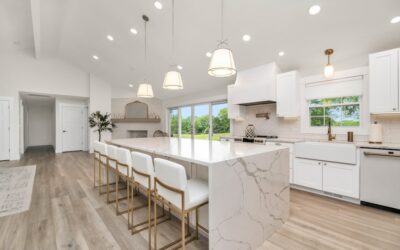
Quartz has overtaken granite as the most requested countertop in American kitchens, and for good reason: it’s nonporous, never needs sealing, and resists stains and scratches better than most natural stone. But not every slab is created equal, and choosing among the best quartz brands comes down to color range, warranty, manufacturing quality, and price. Whether you’re chasing a marble look-alike or a bombproof work surface, knowing how the major players differ saves you from buyer’s remorse on a $3,000-plus investment.
Part of our Countertops guide — explore the full guide →
What Makes Quartz Quartz
Engineered quartz is roughly 90 to 95 percent ground natural quartz crystals bound with about 5 to 10 percent resins and pigments. That composition is consistent across brands, but the quality of the resin, the pigment technology, and the patterning process separate premium names from budget ones. Better brands use advanced printing to create realistic veining that runs through the slab rather than sitting only on the surface.
Premium Tier: Cambria and Caesarstone
Cambria is the only major quartz brand made entirely in the United States, manufactured in Minnesota. It carries a lifetime limited warranty for residential installs and offers some of the most convincing marble-look designs, like Brittanicca and Skara Brae. Expect $70 to $120 per square foot installed, putting it at the top of the price range.
Caesarstone, an Israeli company that pioneered engineered quartz in 1987, is known for durability and a strong color library spanning solid concretes to dramatic veined patterns. It backs residential slabs with a lifetime limited warranty and typically runs $60 to $100 per square foot installed.
Mid Tier: Silestone and LG Viatera
Silestone, made by Cosentino in Spain, offers one of the broadest color selections and pioneered antimicrobial protection on its surfaces. Its newer HybriQ technology incorporates recycled materials and lowers the silica content. Pricing lands around $50 to $90 per square foot installed, with a 25-year transferable warranty on many lines.
LG Viatera, produced by LG Hausys in South Korea, delivers excellent value with realistic patterns and a strong fade-resistant finish. It carries a 15-year limited warranty and generally costs $45 to $75 per square foot installed, making it a smart pick for homeowners who want a recognizable brand without premium pricing.
Value Tier: MSI Q Quartz and Others
MSI Q Quartz is a fixture in home centers and stone yards because it balances price and selection. With a wide range of marble-look and solid colors, it typically runs $40 to $70 per square foot installed and carries a residential lifetime limited warranty. It’s a frequent choice for flips and budget-conscious remodels.
- Vicostone: A Vietnamese brand with bold patterns and competitive pricing.
- HanStone: Made in Canada and Korea, NSF-certified, with a strong mid-range value.
- Corian Quartz (formerly Zodiaq): DuPont’s quartz line, reliable and widely available.
How to Compare Warranties
A warranty is only as good as its terms. Look for these distinctions:
- Lifetime vs. years: Cambria, Caesarstone, and MSI offer lifetime limited residential warranties; Viatera offers 15 years; many Silestone lines offer 25 years.
- Transferable: Some warranties stay with the home if you sell, which adds resale value.
- Registration: Several brands require you to register the install within 30 to 60 days, so keep your fabricator’s paperwork.
- Coverage scope: Read whether labor and fabrication defects are covered, not just the material.
Quartz vs. Granite and Marble
Knowing why quartz wins for many kitchens helps you commit to the investment. Unlike granite and marble, engineered quartz is nonporous, so it never needs annual sealing and won’t absorb wine, oil, or coffee that can stain natural stone. It’s also more consistent in color and pattern, what you see in the showroom is what arrives, with none of the slab-to-slab surprises that come with natural stone.
The trade-offs are real, though. Quartz isn’t heatproof; setting a hot pan directly on it can scorch the resin, so trivets are a must, whereas granite shrugs off heat. And quartz can fade or yellow under constant direct sunlight, making it a poor choice for an outdoor kitchen. Marble offers a beauty quartz only imitates, but it etches and stains easily and demands far more care. For a busy indoor kitchen where low maintenance matters most, quartz is usually the smartest long-term choice.
Edge Profiles and Finishes
The brand sets the slab, but the edge and finish shape the final look and the price. Standard eased or straight edges are typically included in a quote, while premium profiles add cost:
- Eased/straight: Clean, modern, usually no upcharge.
- Beveled and bullnose: Softer, traditional looks, modest upcharge.
- Ogee and waterfall: Dramatic, high-end profiles that can add $10 to $40 per linear foot or more.
Most quartz comes in a polished finish, but many premium brands now offer matte (honed), suede, and textured surfaces. A honed finish hides fingerprints and water spots better than high gloss, a practical perk in a high-traffic kitchen, though it can show more if not cleaned regularly. Discuss edge and finish options with your fabricator up front, since they affect both the look and the bottom-line quote.
Choosing the Right Slab for Your Kitchen
Always view a full slab, not just a sample chip, because patterning and veining vary across the surface. Designs with bold movement need careful seam planning so the pattern flows across joints. For a busy family kitchen, a mid-tone speckled pattern hides crumbs and water spots far better than a solid white or jet black.
Get at least three fabricator quotes, since installed price depends heavily on edge profile, cutouts, and labor in your market. Ask whether the quote includes templating, removal of the old top, and plumbing reconnection. Among the best quartz brands, the right choice is the one whose colorway you love, backed by a warranty you understand, at a price your kitchen budget can absorb without cutting corners on fabrication quality.
One last piece of advice: don’t let brand name alone drive the decision. A skilled local fabricator working with a mid-tier slab like LG Viatera or MSI Q Quartz will deliver a better finished countertop, with tighter seams and a cleaner edge, than a rushed installer working with premium Cambria. Visit the slab yard, see the actual material in person, ask to see the fabricator’s recent work, and confirm exactly what the quote includes. The combination of a slab you love and a craftsman who installs it well is what makes a countertop last for decades.