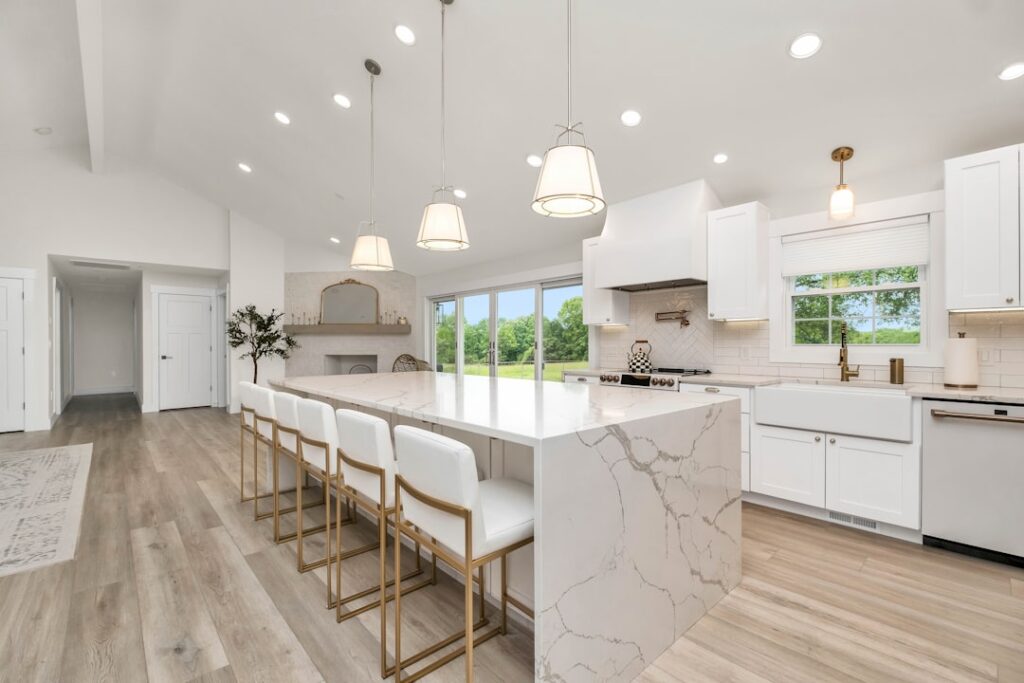
If you have been shopping for engineered countertops, you may have come across giotto quartz and wondered what sets it apart from the dozens of other quartz options on the showroom floor. Giotto is the name of an engineered-quartz color or pattern, typically marketed for its bold, marble-inspired veining over a light background. This guide explains what to expect from this style of quartz, how it performs in real homes, and what to consider before you order.
Part of our Countertops guide — explore the full guide →
Because Giotto is a specific look within the broader engineered-quartz category, much of what applies to quartz in general applies here too. Understanding how engineered quartz is made will help you judge whether this material fits your kitchen, bathroom, or laundry room.
What Is Giotto Quartz
Engineered quartz is a man-made surface created by combining crushed natural quartz with resins and pigments, then forming the mixture into dense, non-porous slabs. Giotto refers to a particular decorative pattern within that family, generally characterized by a pale base with flowing, dramatic veining meant to echo the look of natural marble.
The appeal is straightforward. You get the high-drama veined appearance many homeowners love about marble, paired with the practical durability and lower maintenance of engineered quartz. Because the pattern is manufactured, the veining tends to be more consistent from slab to slab than a quarried natural stone, though you should still view the actual slabs before buying.
The Look and Where It Works
Veined quartz patterns like this one read as elegant and contemporary, and they pair well with both modern and transitional kitchens. The light background reflects light and helps small spaces feel larger, while the veining adds movement so the surface never looks flat or sterile.
Common applications include:
- Kitchen countertops and islands, where a large slab shows off the veining.
- Full-height backsplashes, which create a continuous, book-matched statement wall.
- Bathroom vanities and shower surrounds, taking advantage of quartz’s water resistance.
- Fireplace surrounds, waterfall island edges, and accent shelving.
Because the pattern is bold, it tends to be the visual centerpiece of a room. Many homeowners keep cabinetry and hardware relatively simple so the countertop stays the star. Soft white, warm gray, and natural wood cabinets all let the veining read clearly, while busy backsplashes or heavily patterned floors can compete with it and make the space feel cluttered.
Lighting also influences how the pattern looks. Under-cabinet lighting and bright overhead fixtures bring out the depth of the veining, while warm bulbs can shift the perceived tone of the base. If you can, view a sample under the same kind of lighting you have at home before committing, since showroom lighting is often brighter and cooler than a typical kitchen.
Durability and Performance
One reason engineered quartz has become so popular is its toughness. The resin binder makes the slab non-porous, which means it resists staining far better than most natural stone and does not require sealing. It also stands up well to everyday scratches and chips under normal kitchen use.
That said, quartz is not indestructible. The resin can be damaged by high heat, so you should always use trivets or hot pads rather than setting pots straight from the stove onto the surface. Prolonged direct sunlight can fade some quartz over time, which makes it better suited to indoor use than outdoor kitchens. Sharp knives can dull the surface and your blades, so a cutting board is still the smart habit.
Edge profiles and slab thickness affect durability too. Thinner slabs and delicate edge details are slightly more vulnerable to chipping at corners, especially near sinks and dishwashers where impacts happen. A simple eased or beveled edge tends to hold up better in a busy kitchen than a thin, ornate profile, so weigh looks against everyday wear when you choose.
How It Compares to Marble and Granite
Homeowners drawn to Giotto’s veining are often choosing it instead of natural marble. Marble is genuinely beautiful but porous and soft, so it etches from acids like lemon juice and wine and needs regular sealing. Engineered quartz gives you a similar look with much lower maintenance and far better stain resistance.
Compared with granite, quartz offers more pattern consistency and no sealing requirement, while granite offers natural one-of-a-kind variation and excellent heat tolerance. Neither is strictly better. Your choice comes down to whether you prioritize a predictable, low-maintenance veined look, which is exactly what a pattern like Giotto delivers.
Cost and Budgeting
Quartz pricing depends on the brand, the slab thickness, the complexity of your layout, and your local labor market, so it is impossible to quote an exact figure. As a general estimate, installed engineered quartz commonly falls into the mid to upper range of countertop materials, often more than basic laminate and comparable to or slightly above many granite options.
When budgeting, remember that the slab price is only part of the total. Fabrication, edge profiles, cutouts for sinks and cooktops, delivery, and installation all add to the final number. Request a detailed written quote from a local fabricator, and ask whether the price covers template measurement and old-counter removal. Always treat any online prices as ballpark ranges rather than firm quotes.
Care and Cleaning
Maintaining quartz is refreshingly simple. For daily cleaning, wipe the surface with warm water, a soft cloth, and a small amount of mild dish soap or a cleaner labeled safe for quartz. Rinse and dry to avoid streaks.
Keep these habits in mind to protect the finish:
- Wipe up spills like wine, coffee, and oil promptly even though quartz resists staining.
- Avoid abrasive scrubbing pads and harsh chemicals such as bleach, oven cleaner, or high-alkaline degreasers, which can dull the surface.
- Never place hot cookware directly on the counter; use trivets every time.
- Scrape off dried food with a plastic scraper rather than a metal blade.
Always follow the manufacturer’s specific care instructions, and never mix cleaning products together. If you are unsure about a new cleaner, test it on a hidden area first.
Is Giotto Quartz Right for Your Home
For homeowners who crave the dramatic, marble-like veining of giotto quartz but want a surface that shrugs off daily life, this style of engineered quartz is a strong contender. You get a light, luminous background, eye-catching movement, excellent stain resistance, and no sealing chores, all in a material built for busy kitchens and baths. Before you commit, view the actual slabs in person so you know the exact veining you are getting, confirm the pattern works with your cabinets and lighting, and gather local installation quotes. With realistic expectations and a little everyday care, this veined quartz can serve as a beautiful, hardworking centerpiece for years to come.