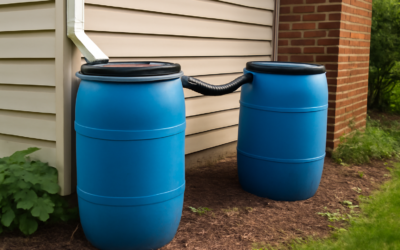
Most rain barrels that end up cracked, green with algae or buzzing with mosquitoes failed for reasons a buyer could have spotted in the store. The best rain barrels are not the prettiest ones; they are the ones with thick UV-stable walls, a lid that seals tight against insects, a spigot that will not snap off, and an overflow that sends extra water somewhere useful. Get those four details right and a barrel can water your garden for a decade or more.
A single 1-inch rainfall on a 1,000 sq ft roof section produces roughly 600 gallons of runoff, so even a small downspout fills a 50-gallon barrel in minutes. That math shapes nearly every buying decision: capacity, how you handle overflow, and whether you plan to link more barrels later. Price matters less than build quality, because a cheap barrel that leaks at the spigot gasket after one season costs more in the long run than a well-made one.
- How to Judge the Best Rain Barrels: The Core Criteria
- Capacity and Shape: Sizing a Rain Barrel System for Your Garden
- Stands, Linking Kits and Diverters
- Step-by-Step Setup
- Troubleshooting Common Rain Barrel Problems
- Water Quality and Filtration
- Cost Ranges for Rain Barrels
- When to Call a Pro
- Frequently Asked Questions
Use the criteria that follow as a checklist. Each one is something you can confirm on a product page or by looking at the barrel in person, and together they separate a dependable rain barrel system from a short-lived plastic drum.
How to Judge the Best Rain Barrels: The Core Criteria
Start with material. Nearly every residential barrel is made from high-density polyethylene (HDPE) or a similar polyethylene resin, and that is a good thing: it is food-safe in most formulations, light, and tough. What varies is UV stabilization and wall thickness. Look for a barrel described as UV-stabilized or UV-resistant resin, because unprotected plastic turns chalky and brittle after a few summers in full sun. Thicker walls also hold their shape when full, which matters because a full 55-gallon barrel weighs about 460 pounds.
Color plays a role beyond looks. Dark or opaque barrels block sunlight, which slows algae growth inside. A black rain barrel or a deep brown or gray one usually stays cleaner than a translucent or light-colored drum. Metal rain barrels, including stainless steel and galvanized models, exist too; they resist UV entirely and look sharp next to modern homes, but they cost more, get hot in direct sun, and galvanized versions should be checked for coating quality if you plan to water edible plants.
Lid and Mosquito Screen
An open barrel becomes a mosquito nursery within a week of warm weather. The best rated rain barrels use a sealed or closed top with a fine mesh screen (often stainless or fiberglass insect screen) under the inlet basket. The screen should be fine enough to stop adult mosquitoes from reaching the water, and it should be removable so you can rinse out leaves. Avoid designs where the downspout simply drops into an open hole with no screen.
Spigot and Fittings
Brass spigots outlast plastic ones by years. Check that the spigot sits a few inches above the bottom so sediment stays behind, and that it threads into a molded boss or uses a rubber gasket with a backing nut. A second, lower drain plug makes cleaning easier. Standard 3/4-inch hose threads let you attach a garden hose or a soaker line directly.
Overflow Port
Every barrel overflows eventually. A good one has an overflow port near the top that accepts a hose or a linking fitting, so excess water travels away from your foundation or into a second barrel. A barrel without an overflow will spill over the lid, often right against the house wall, which defeats much of the purpose.
Capacity and Shape: Sizing a Rain Barrel System for Your Garden
Most single barrels hold 40 to 65 gallons, and the best rain barrels for typical yards sit in the middle of that range, with 50 to 60 gallons being the sweet spot. That covers a small vegetable bed or a few containers through a dry week. If you are watering a larger garden, plan on a rain barrel system for garden use with two or more linked barrels or a single larger tank in the 80 to 100 gallon range.
Shape matters more than many buyers expect when comparing the best rain barrels side by side. A flat back rain barrel or a rectangular rain barrel sits tight against the wall and takes up far less of a narrow side yard or patio. Square rain barrel designs also fit neatly into corners. Round barrels hold more water for the footprint but stick out farther. Modern rain barrel styles with planters built into the top add a little growing space and hide the lid, though planter tops can complicate cleaning.
- Small patio or balcony: 35 to 50 gallon slim or flat-back barrel.
- Typical backyard bed: 50 to 65 gallon barrel, possibly two linked.
- Large garden or lawn edges: two to four linked barrels or a 100+ gallon tank.
Stands, Linking Kits and Diverters
Gravity drives a rain barrel, and every foot of height adds roughly 0.43 psi of pressure. A barrel sitting on the ground gives you barely enough flow to fill a watering can. Raising it 12 to 24 inches on a stand or a stable base of solid concrete blocks makes the spigot easier to reach and pushes water through a short hose. The stand must be level, rated for the full weight, and set on compacted soil or pavers; a tipping 450-pound barrel can injure someone, especially a child.
Linking kits connect the overflow of one barrel to the inlet or lower fitting of the next, so they fill in sequence. Look for kits that use flexible tubing with snug barbed or threaded fittings. Downspout diverters are the other option: instead of cutting the downspout to drop into the barrel, a diverter sends water into the barrel until it is full and then returns flow to the downspout. Diverters are cleaner and keep overflow channeled the way it always was.
Step-by-Step Setup
- Choose a downspout that drains a decent roof area and sits near the beds you want to water.
- Level a base of compacted gravel or pavers at least as wide as the stand.
- Set the stand and barrel in place, then mark the downspout where it needs to be cut or where the diverter will go.
- Cut the downspout with a hacksaw or tin snips and add an elbow, or install the diverter following its instructions.
- Connect the overflow hose and route it at least 5 to 6 feet away from the foundation, or link it to a second barrel.
- Confirm the screen is seated and the lid is locked, then test with a garden hose before the next storm.
Troubleshooting Common Rain Barrel Problems
Mosquito larvae in the water: the screen has a gap or tear. Replace it and check that the lid seals. Some gardeners also add mosquito dunks labeled for water containers.
Algae or bad smell: sunlight is reaching the water, or organic debris is breaking down. Move to an opaque barrel, add a first-flush diverter or leaf screen on the gutter, and drain and rinse the barrel once or twice a year.
Spigot leaks: tighten the backing nut, add plumber’s tape to the threads, or replace the gasket. Plastic spigots that crack should be swapped for brass.
Weak flow: raise the barrel, shorten the hose, or use a wider-diameter hose. Some owners add a small pump made for rain barrel watering systems when they need drip irrigation pressure.
Winter damage: in freezing climates, drain the barrel, leave the spigot open, and reconnect the downspout before the first hard freeze. Ice can split even thick resin.
Water Quality and Filtration
Roof runoff picks up dust, pollen, bird droppings and shingle grit, so harvested water is meant for plants, not people or pets. A rain barrel filtration system usually means a coarse leaf screen at the gutter plus a fine mesh at the barrel inlet, and sometimes a first-flush diverter that dumps the first dirty gallons of each storm. Many gardeners use barrel water on ornamentals and lawns and apply it to the soil, not the leaves, for vegetables. Older roofs with treated wood shakes or certain coatings may shed chemicals, so match your use to your roof material.
Some states and cities regulate rainwater collection, and many offer rebates. Check with your local water utility before buying several barrels.
Cost Ranges for Rain Barrels
Basic plastic barrels in the 40 to 55 gallon range generally fall in the low tens to around one hundred dollars. Better-built 50 to 65 gallon barrels with brass spigots, sealed screens and overflow fittings commonly land in the mid range, roughly one hundred to two hundred dollars. Decorative resin barrels shaped like urns or stone, plus metal and stainless steel barrels, often run higher. Stands, diverters and linking kits add modest amounts each. Cheap rain barrels can work well if they still meet the core checklist, and some of the best rain barrels for the money are plain, well-built drums; the problem is the ones that skip the screen or use thin, non-stabilized plastic.
When to Call a Pro
A single barrel on a downspout is a classic DIY afternoon project. Bring in a gutter or drainage contractor if your downspouts are damaged, if you want a large cistern or underground tank, if you need a pump-fed irrigation setup with backflow protection, or if overflow water already pools near the foundation. A pro can also regrade soil or add a buried drain line so the overflow from multiple barrels goes somewhere it will not cause problems.
Frequently Asked Questions
What size rain barrel should I buy?
For most backyard beds, a 50 to 65 gallon barrel is a practical starting point. If you water a large garden or live where rain comes in big bursts followed by dry spells, plan for two or more linked barrels so you capture more of each storm.
Are black rain barrels better than light-colored ones?
Dark, opaque barrels block sunlight, which slows algae growth inside. They do warm up in full sun, but that rarely matters for garden water. Translucent barrels tend to grow algae faster.
How do I keep mosquitoes out of a rain barrel?
Choose a barrel with a sealed lid and a fine mesh screen under the inlet, keep the screen intact, and make sure no openings are larger than the mesh. Mosquito dunks labeled for water containers add a second layer of protection.
Do I need a stand for my rain barrel?
A stand is not required, but raising the barrel 12 to 24 inches improves water pressure and makes it easier to fill a watering can. The stand must be level and strong enough to hold several hundred pounds.
Can I drink or cook with rain barrel water?
No. Water from a roof carries debris and contaminants and is not treated, so use it for watering plants, rinsing tools and similar outdoor tasks only.
What should I do with a rain barrel in winter?
In areas with freezing temperatures, drain the barrel, leave the spigot open, store or turn it upside down, and reconnect the downspout so water flows away from the house normally.