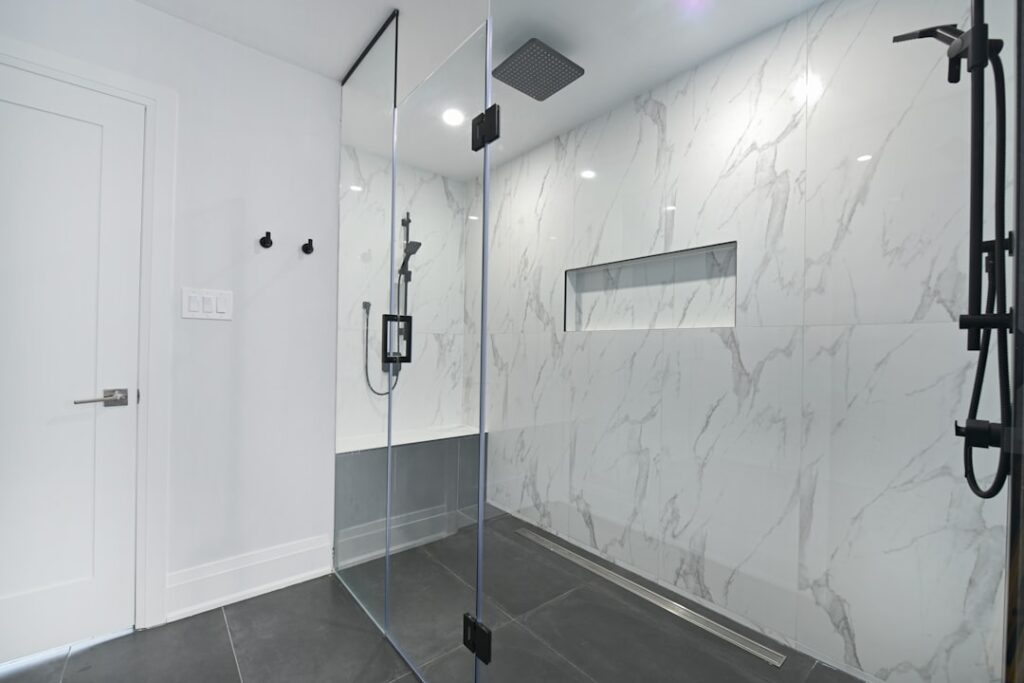
Nothing makes a kitchen or bathroom feel as sleek and dramatic as a wall of dark, reflective tile. Black glass tile delivers exactly that: a deep, glossy surface that reads as modern, luxurious, and a little bit daring. Because glass reflects light, black glass avoids the heavy, cave-like feeling you might expect from a dark surface, instead bouncing light around and adding depth. It is a favorite for contemporary backsplashes, striking shower accents, and feature walls. Before you commit to the drama, though, it helps to understand the styles, costs, and the real trade-offs of living with a dark, high-shine tile. This guide covers all of it.
Part of our Tile & Grout guide — explore the full guide →
Why Choose Black Glass Tile
Black glass tile makes a statement that few other materials can match. The combination of a bold dark color and a reflective glass surface creates instant sophistication, and the glossiness keeps the space from feeling closed-in the way flat black paint or matte stone might. Because glass is nonporous, it resists water, grease, and stains, making it a practical choice for the messiest zones behind a stove or in a shower. It pairs beautifully with white counters, light wood, brass or gold fixtures, and metallic accents, creating high contrast that photographs and shows well. For anyone chasing a modern, high-end look, black glass is a strong contender.
Popular Styles and Finishes
Black glass comes in a wide range of formats, and the one you choose sets the entire vibe:
- Glossy subway: the classic 3×6 in black, sleek and timeless with a modern edge.
- Mosaic sheets: small squares, pennies, or linear strips on mesh, ideal for backsplashes and accent bands.
- Linear and stacked: long, thin planks laid horizontally or vertically for a contemporary, elongating effect.
- Beveled and textured: faceted or wavy surfaces that catch and scatter light for extra dimension.
- Iridescent and smoke: black glass with a subtle shimmer or slightly translucent depth that shifts with the light.
Finish matters as much as color. High-gloss black is the most dramatic but shows every water spot and fingerprint, while a satin or frosted black hides smudges better at the cost of some shine.
Common Sizes
You will find black glass tile from tiny 1-inch mosaics up to large planks. The most common backsplash and wall formats are the 3×6 subway, 2×8 and 3×12 planks, and mosaic sheets built from 1×1, 1×2, or 2×2 pieces. Smaller mosaics add texture and are easiest to fit around corners and outlets, while larger fields create a cleaner, more seamless expanse of dark glass with fewer grout lines. For a bold accent stripe or a shower niche, mosaic sheets are the most forgiving to install; for a full statement wall, larger tiles keep the look uninterrupted.
What Black Glass Tile Costs
Glass tile sits in the mid-to-upper price range, and the numbers are similar across colors. Expect roughly:
- Basic black glass subway or field tile: about $7 to $15 per square foot.
- Mosaic sheets: around $10 to $25 per square foot depending on pattern.
- Premium, iridescent, or specialty textured glass: $25 to $40 or more per square foot.
Installation typically adds $8 to $15 per square foot. Dark glass can actually be trickier to set than light glass because the translucent tile shows any adhesive inconsistency, so a skilled installer and the right setting material matter. For a 30 to 40 square foot backsplash, budget a few hundred dollars in materials plus labor if you hire it out.
Pros and Cons to Weigh
The upsides are compelling: a dramatic, high-end look, a nonporous surface that never needs sealing, excellent stain and water resistance, and light-reflecting depth that keeps a dark tile from feeling oppressive. The trade-offs are just as real. High-gloss black is the most demanding surface in the house for showing water spots, dust, fingerprints, and soap film, so it needs frequent wiping to look its best. It can chip on impact and must be cut carefully with a glass blade. And because dark colors absorb rather than reflect in low light, a black backsplash needs good lighting to shine rather than disappear into shadow. Know your tolerance for upkeep before you commit.
Where It Works Best
Black glass tile is most at home on vertical surfaces in well-lit rooms. As a kitchen backsplash it creates striking contrast against white or light cabinets and counters, and its wipe-clean surface handles grease with ease. In bathrooms it makes a dramatic shower accent, a feature wall, or a niche surround, especially paired with lighter field tile. It also works as a fireplace surround or a bar backsplash for a moody, upscale feel. On floors, reserve it for small textured mosaics rated for floor use, since large glossy black glass can be slippery and shows every speck of dust. As a rule, use it where light and design intent make the drama pay off.
Cleaning and Maintenance
Living with black glass means embracing a simple wiping routine. A daily pass with a soft microfiber cloth and a mild glass or all-purpose cleaner keeps the surface streak-free, and in a shower a quick squeegee after use prevents the water spots that show so clearly on dark glass. Avoid abrasive pads and gritty cleansers that scratch the finish, and skip anything that leaves a film. For hard-water buildup, a diluted vinegar solution cuts through it without harming the glass. Because the tile is nonporous, nothing soaks in, so even the dramatic look stays low-effort as long as you keep up with wiping.
The Bottom Line
Black glass tile is the choice for homeowners who want bold, modern drama with a luxurious, reflective finish, and it rewards that boldness with a nonporous, stain-resistant surface that suits kitchens and baths. The catch is upkeep: glossy black shows every smudge and water spot, so it demands regular wiping and good lighting to look its best. Choose the finish and size that fit your room, pair it with the right setting material and a skilled installer, and you will have a dramatic feature that anchors the whole space with modern sophistication.
Prefer to explore on your own?
See how new flooring looks in your actual room in seconds — free, no signup.
Try the free Floor Studio →