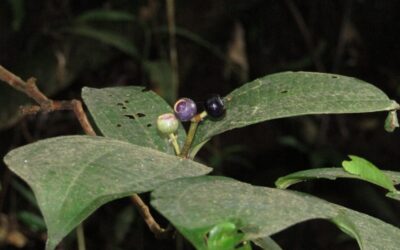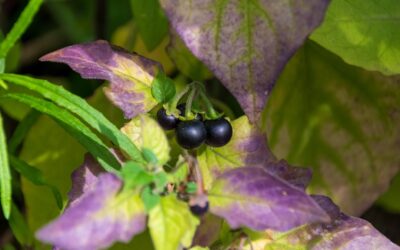
Confusing these two plants is more common than it should be, and the stakes are high because one is far more dangerous than the other. The black nightshade vs deadly nightshade question comes up constantly among gardeners, foragers, and worried parents who spot dark berries in the yard. Both belong to the nightshade family, both produce small dark fruit, and both carry a fearsome reputation. But they are different species with very different toxicity profiles, and learning to tell them apart is worth the few minutes it takes.
Two Different Plants, Two Different Names
Black nightshade is Solanum nigrum, a low, branching annual weed found across North America, Europe, and much of the world. Deadly nightshade is Atropa belladonna, a taller perennial native to Europe, North Africa, and western Asia, less common in the wild United States but grown ornamentally and occasionally escaped.
Despite sharing the “nightshade” label, they sit in different genera. That distinction matters because their chemistry, growth habit, and danger level diverge sharply. Calling both “nightshade” is technically true but obscures how unalike they are.
Telling the Berries Apart
Berries are the feature most people notice first, and they offer the clearest clue. Black nightshade produces clusters of small berries, each about 1/4 inch across, that grow in drooping bunches of 5 to 10 fruits. When ripe they turn dull black.
Deadly nightshade berries grow singly or in pairs, not clusters, and are larger, roughly the size of a small cherry at about 1/2 inch. They ripen to a glossy, shiny black-purple and sit in a distinctive five-pointed green calyx that flares behind the fruit. If you see large, individual, shiny berries with a star-shaped collar, treat it as deadly nightshade and do not touch.
Flowers and Leaves
The flowers differ noticeably. Black nightshade has small, white, star-shaped blossoms with five petals and a prominent yellow center, blooming in small clusters. Deadly nightshade produces solitary, bell-shaped flowers in a dull purplish-brown to greenish color, hanging down individually rather than in clusters.
Leaf shape overlaps more, which is why berries and flowers are better identifiers. Both have oval, pointed leaves with smooth or slightly wavy edges. Deadly nightshade tends to grow larger leaves, up to 7 inches long, on a plant that can reach 4 to 5 feet tall, while black nightshade usually stays under 2 to 3 feet and looks more like a sprawling weed.
Toxicity: The Critical Difference
This is where the comparison matters most. Deadly nightshade fully earns its name. Every part of Atropa belladonna contains tropane alkaloids, primarily atropine, scopolamine, and hyoscyamine. As few as two to five berries can be fatal to a child, and the toxins cause dilated pupils, blurred vision, racing heart, hallucinations, and respiratory failure. It is one of the most poisonous plants in the Western hemisphere.
Black nightshade is also toxic, but to a much lesser and more variable degree. Its unripe green berries and foliage contain solanine, the same glycoalkaloid found in green potatoes. Ingesting significant quantities of unripe fruit or leaves can cause nausea, vomiting, and cramping. However, the fully ripe black berries are eaten cooked in many cultures worldwide and are widely considered safe when mature, though raw consumption is still risky.
Where You Will Find Each Plant
Black nightshade is a common garden and field weed. You will encounter it in disturbed soil, vegetable beds, along fences, and in compost piles across most of the United States. It pops up uninvited every summer for many gardeners.
Deadly nightshade is far less common in North American gardens. It prefers shaded, chalky, or limestone-rich soils and woodland edges, and is more often seen in Europe. In the U.S., it usually appears as an intentional ornamental planting or an occasional escapee, so a black-berried weed in your tomato bed is far more likely to be black nightshade.
Safety Guidelines for Gardeners and Parents
Regardless of which species you suspect, follow a simple rule: never eat wild nightshade berries unless you are absolutely certain of the identification and the preparation. If you have young children or pets, remove any nightshade you cannot confidently identify. The safest assumption is that an unknown dark berry is dangerous.
- Wear gloves when pulling either plant to avoid sap contact with broken skin.
- Do not compost the berries where seeds can spread.
- Teach children never to taste wild berries.
- If ingestion is suspected, call Poison Control at 1-800-222-1222 in the U.S. immediately.
Other Look-Alikes to Know
The confusion does not stop with these two species. Several other plants in the broader nightshade family produce dark berries and add to the identification challenge. Bittersweet nightshade (Solanum dulcamara) is a climbing vine with purple star-shaped flowers and bright red, egg-shaped berries that is also toxic and common in North America.
Even garden vegetables muddy the picture, since tomatoes, potatoes, eggplant, and peppers all belong to the nightshade family. Their unripe fruit and green parts contain the same solanine found in black nightshade, which is why you should never eat a green potato or the leaves of a tomato plant. The family connection is a useful reminder that “nightshade” spans both deadly poisons and dinner-table staples.
What to Do If You Are Unsure
When you genuinely cannot tell which plant you are looking at, the safest path is to treat it as the dangerous one and avoid contact. Take clear, close-up photographs of the berries, flowers, leaves, and overall growth habit, and consult a local extension office, a botanist, or a reputable plant-identification resource before drawing any conclusions.
Never rely on a single feature, since leaf shape and berry color overlap between species. Look at the whole package: berry clustering, flower shape and color, plant height, and growth habit together. And never, under any circumstances, taste a wild berry to test it. With genuinely lethal plants like deadly nightshade in the picture, certainty is the only acceptable standard before any plant goes near your mouth.
Quick Identification Summary
To recap the most reliable markers: clustered dull-black small berries with white star flowers point to black nightshade, the common, mildly toxic weed. Single or paired shiny black berries the size of a cherry, sitting in a five-pointed green collar with purplish bell flowers, point to deadly nightshade, the genuinely lethal one. When the two are confused, err on the side of extreme caution and assume the more dangerous identification until an expert confirms otherwise.