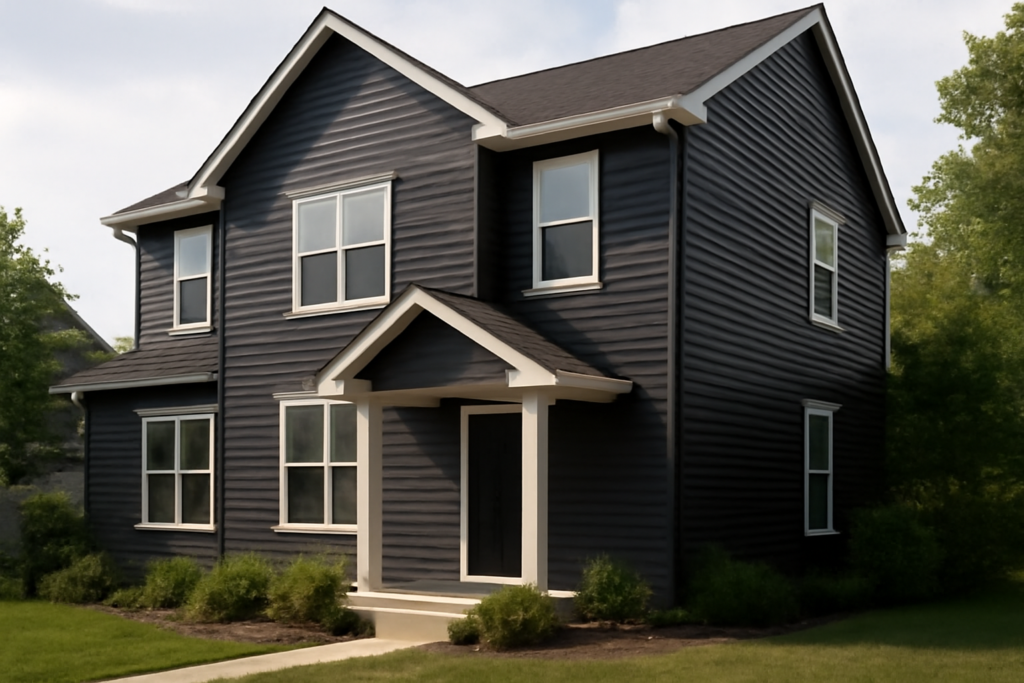
Black vinyl siding has surged in popularity as homeowners chase the dramatic, modern farmhouse and contemporary looks all over design feeds. It delivers striking curb appeal and pairs beautifully with white trim, wood accents, and black-framed windows. But dark siding behaves differently from light siding, and there are real concerns about heat absorption, warping, and fading that you should understand before committing. Going in informed lets you enjoy the look without the headaches.
This guide covers the benefits, the genuine technical challenges of dark vinyl, costs, and how to make a black siding project succeed.
The Appeal of Black Vinyl Siding
Black exteriors feel sophisticated, bold, and current. They make architectural details stand out and create high contrast that photographs and shows beautifully in person.
- Modern statement: Black reads as upscale and contemporary, instantly elevating curb appeal.
- Versatile pairings: It works with white, gray, wood, stone, and metal accents.
- Hides certain dirt: Unlike white, it does not show every speck of grime, though it can show dust and pollen.
- Lower maintenance than paint: Vinyl never needs repainting the way a dark-painted wood house would.
The Heat and Warping Concern
Here is the most important thing to know: dark colors absorb significantly more solar heat than light ones. Black vinyl siding can reach much higher surface temperatures in direct summer sun, and standard vinyl can soften, warp, or buckle when it gets too hot.
For this reason, do not use ordinary dark vinyl. Reputable manufacturers make heat-resistant formulations specifically for dark colors, often using special pigments and a process that reflects more infrared heat. These products carry warranties that cover dark colors. Always confirm the specific siding you choose is rated and warrantied for dark color use, and follow the manufacturer’s installation guidance to the letter, since improper nailing that prevents normal expansion makes warping far more likely.
Fading and Color Retention
Dark colors historically faded faster than light ones because UV exposure breaks down pigment. Modern dark vinyl has improved dramatically thanks to advanced UV-stable pigments and protective capstock layers, but some gradual lightening over many years is still possible, especially on the sunniest, south-facing walls.
Choose a premium product with a strong fade warranty, and read what that warranty actually covers, since some prorate the value over time. Quality black vinyl siding holds its color far better than budget options, so this is not the place to cut corners.
Cost of Black Vinyl Siding
Black and other dark vinyl typically cost a bit more than standard light colors because of the specialized heat-resistant formulations. Expect material and installation together to run roughly $4 to $9 per square foot, with premium dark products at the higher end.
For an average single-story home of around 1,500 square feet of wall area, a full black vinyl siding project commonly falls between $8,000 and $18,000 depending on the product grade, trim work, and regional labor rates. Get multiple quotes and confirm each includes the dark-rated product, not a standard line.
Installation Considerations
Proper installation matters more with dark vinyl than with any other color because of the thermal movement involved. Vinyl expands and contracts with temperature, and dark panels move more.
Installers must leave the manufacturer-specified gaps at panel ends and nail loosely enough that panels can slide as they expand. Over-driving nails or butting panels tight against trim is the leading cause of buckling. Hire a contractor experienced specifically with dark vinyl, and ask to see prior dark siding jobs. This is not a project where you want someone learning on your house.
Caring for Black Vinyl Siding
Maintenance is light but worth doing. Rinse the siding once or twice a year with a garden hose to remove dust, pollen, and cobwebs, which show more on dark surfaces.
For heavier grime, use a soft-bristle brush with a mild soap-and-water solution, working from the bottom up and rinsing top down. Avoid abrasive pads and harsh solvents that can dull the finish. Pressure washing is acceptable if you use low pressure and a wide tip, keeping the spray angled downward so water does not get forced behind the panels.
Design Pairings That Make Black Siding Shine
Black siding works because of contrast, so the trim, roof, and accents you pair with it determine whether the look feels striking or heavy. White trim around windows, doors, and corners is the most popular choice, creating crisp definition that reads as modern farmhouse or contemporary.
Natural wood accents on doors, soffits, or porch posts warm up the black and prevent the exterior from feeling cold. Black-framed windows reinforce the bold aesthetic, while metal roofing or matte black hardware ties the look together. For landscaping, green foliage and light-colored hardscape pop dramatically against a black backdrop. Avoid pairing black siding with too many other dark elements, which can make the home feel like a single heavy mass rather than a designed composition.
Partial Use and Accent Walls
You do not have to clad an entire home in black to get the look. Many homeowners use black vinyl siding on a single accent section, such as a gable, a dormer, or the front face, while keeping the rest light.
This approach delivers contemporary contrast while reducing both the heat load and the cost. It also lets you test the look on your own home before committing to a full wrap. Pairing black siding on the upper level with stone or lighter siding below is another popular combination that breaks up the mass and adds architectural interest. Whichever approach you choose, still insist on a heat-rated dark product for the black portions.
Is Black Vinyl Siding Right for You?
If you love the bold, modern look and live in a climate without relentless intense sun, black vinyl siding can be a fantastic choice, provided you buy a heat-rated product and hire a skilled installer. In extremely hot, sunny regions, weigh the choice carefully and lean on manufacturer guidance about suitability.
Done right with the correct materials, black vinyl siding gives you the dramatic curb appeal you want with the low maintenance vinyl is known for. Cut corners on product grade or installation, though, and the warping and fading risks become very real. Choose quality, install it correctly, and the look will reward you for years.
Prefer to explore on your own?
See how new flooring looks in your actual room in seconds — free, no signup.
Try the free Floor Studio →