
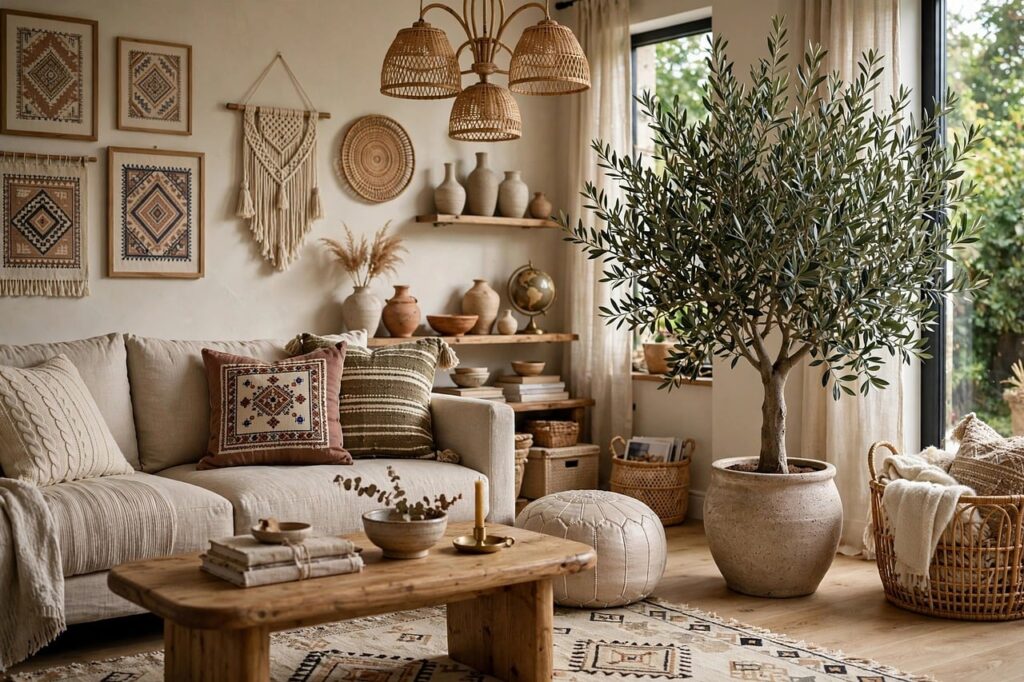
Bohemian kitchens slide into kitsch quickly when homeowners pile on every Pinterest trend at once. Successful boho kitchen decor is restrained — three or four signature elements layered with intention, not a flea market explosion. The style works because it celebrates natural materials, handcrafted texture, and warm earth tones, but it falls apart when those elements compete instead of complement. Done right, a boho kitchen reads collected and personal, like the homeowner spent years gathering pieces from estate sales and trips abroad. Done wrong, it looks like an Anthropologie photo shoot that never got cleaned up.
Part of our Kitchen Remodeling guide — explore the full guide →
Start With a Warm Earth-Tone Palette
The boho color palette skews warm. Terracotta, ochre, rust, sage green, mustard, and creamy whites form the core. Avoid cool grays and pure whites — they fight the warmth that defines the style. Sherwin-Williams Accessible Beige SW 7036, Benjamin Moore Pale Oak OC-20, and Farrow and Ball Slipper Satin all hit the right warm neutral background.
For accent walls or upper cabinets, deeper colors like Benjamin Moore Cushing Green HC-125, Sherwin-Williams Cavern Clay SW 7701, or Farrow and Ball India Yellow 66 add depth without going jarring. Pick one accent color and use it sparingly across the kitchen.
Open Shelving Replaces Upper Cabinets
Open shelving is essentially required for boho kitchens. Replace some or all upper cabinets with floating shelves in solid wood — white oak, walnut, or reclaimed pine all read appropriate for the style. Two to three shelves on each wall, 12 inches deep and spaced 14 to 16 inches apart vertically, works for most kitchens.
Shelf brackets should be either invisible (floating with internal bracket) or visible cast iron. Stay away from chrome or polished brass brackets, which clash with the natural-material aesthetic. Plan on $80 to $200 per linear foot for solid wood shelving installed.
Curate the Display Carefully
Open shelving forces curated styling. Display useful and beautiful pieces only — handmade ceramics, woven baskets, copper pots, wooden cutting boards, glass jars of dry goods. Avoid plastic anything, branded cereal boxes, and crowd of mismatched mugs.
The 60-30-10 rule helps. 60 percent of the displayed items should be neutral (whites, woods, naturals), 30 percent in one accent color, and 10 percent in a contrasting pop. This creates balance and lets the eye rest as it scans the shelves.
Rattan, Cane, and Natural Fiber Accents
Boho leans heavily on natural fiber materials. Hanging rattan light pendants over the island or breakfast bar are the single most defining element — Serena and Lily, McGee and Co, and West Elm all offer quality versions in $200 to $600 range. Avoid synthetic rattan, which yellows and cracks under kitchen heat and humidity.
Add a sisal or jute runner in front of the sink. Woven storage baskets corral fruit, snacks, or kids art on counters and shelves. Cane-front cabinets are a pricier option for a unified statement — expect $1,200 to $2,500 to retrofit cane fronts onto existing cabinets.
Vintage and Handmade Textiles
Boho kitchens layer textiles. A vintage Turkish or Moroccan rug placed in front of the sink — even an aged kilim runner — adds pattern and grounding. Look for genuine vintage pieces on Etsy, Loom and Mill, or estate sales. Expect $200 to $800 for a quality 3 by 5 foot vintage runner.
Linen tea towels in muted natural colors hang from cabinet handles or oven bars. Avoid synthetic dish towels with bright graphics — they fight the aesthetic. Cotton flour-sack towels in cream, oatmeal, or natural linen work best.
Hardware in Aged Brass or Black Iron
Cabinet hardware sets the tone. Aged brass, unlacquered brass, oil-rubbed bronze, and matte black iron are the four finishes that work in boho kitchens. Skip polished chrome, brushed nickel, and modern matte gold finishes — they read too contemporary.
Mix and match knobs and pulls intentionally. Round knobs on upper cabinets paired with bin pulls or cup pulls on lower drawers create traditional layered detail. Plan on $5 to $25 per piece, with high-end Rejuvenation and Schoolhouse pulls running $30 to $60.
Plants Are Non-Negotiable
Boho kitchens need real plants — fake greenery reads as clearly fake under kitchen lighting. Easy options include pothos in macrame hangers (cascading vines on shelves), small herb pots on the windowsill, a snake plant in the corner, and a fiddle leaf fig if natural light supports one. Plan on $60 to $200 in plants for a typical kitchen and refresh annually as needed.
Terracotta pots hand-thrown by local potters or sourced from Mexican imports look better than uniform big-box pottery. Group pots in odd numbers and varying heights for natural arrangement.
Avoid These Common Mistakes
Skip the temptation to add macrame everywhere. One wall hanging or one plant hanger maximum — beyond that, the look goes from collected to cluttered. Avoid mass-produced boho-themed prints and signs. Live edge wood slabs as floating shelves often warp and crack — finished hardwood lasts longer.
Most importantly, edit ruthlessly. The most stunning boho kitchens have less stuff than you would expect, with each remaining piece carefully chosen. Boho kitchen decor done well looks like a lifelong collection, not a single shopping trip — give yourself 6 to 18 months to gather pieces gradually rather than buying everything at once. Estate sales, antique malls, and small craft fairs are your best sourcing channels. Big-box stores carry pieces that look right in the showroom but lack the patina, weight, and slight irregularity that makes genuine handcrafted ceramics, woven baskets, and brass hardware read as collected over time. Set a small monthly budget — $40 to $80 — and add one or two pieces a month rather than trying to finish the room in a single weekend.


