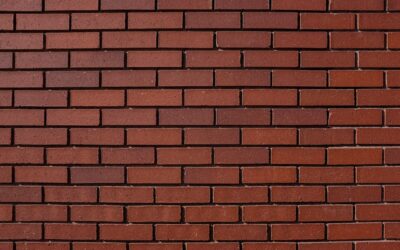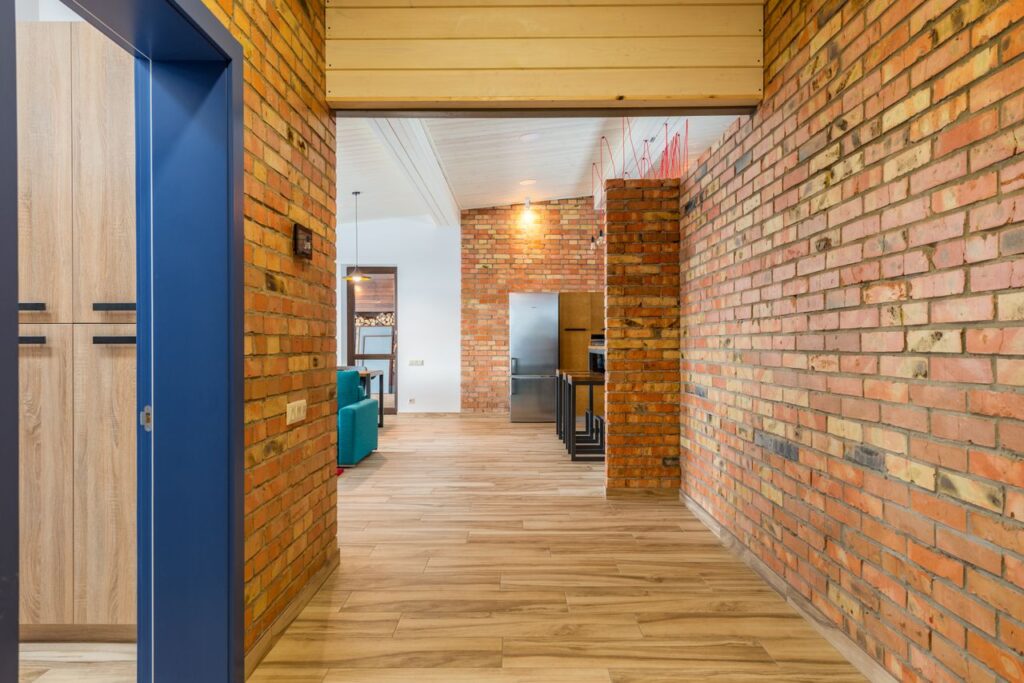
Real interior brick costs $14-$20 per sq ft installed, weighs 6 lbs per square foot, and demands a structural review before you load it onto a second-floor kitchen. Brick vinyl flooring sidesteps every one of those problems by printing a high-resolution brick visual onto a rigid-core LVP plank or tile, then engineering a textured surface that mimics the irregular face of fired clay. The result lands at $3-$6 per sq ft and installs over a normal wood subfloor with zero engineering drama.
What Brick Vinyl Flooring Actually Is
The category lives within rigid-core LVP. A 5mm-12mm SPC or WPC plank carries a printed brick visual under a clear wear layer, with embossing that follows the simulated mortar joints and brick face. Some products are sold as planks (think 7-by-48 inches with several bricks per plank), others as tiles (12-by-24 inches in a herringbone-friendly format), and a few as larger sheets for full-room coverage.
Wear layers run from 12 mil (entry tier) to 30 mil (premium). Mortar-line embossing is the visual tell, and depth varies dramatically between brands. Cheap product gives you a faint texture; premium product creates a 1-2mm depth differential that catches light convincingly.
The Pros That Earn It Space
Visual fidelity has crossed a threshold in the past five years. Modern brick LVP from Mannington, Karndean, and Shaw can fool a guest from six feet away. The mortar lines look real, color variation runs across multiple plank repeats, and embossing aligns with the printed image rather than running cross-grain.
- Waterproof core handles kitchen and entry spills indefinitely
- Floor weight of 1.5-2.5 lbs per sq ft (vs 6+ for real brick)
- Click-lock or glue-down install over most subfloors
- Soft underfoot compared to genuine brick
- $10-$15 per sq ft cheaper than real brick installed
The Cons Worth Weighing
Pattern repeat is the biggest tell. Even on premium product, you will see the same brick visual recur every 8-12 planks. In a 200 sq ft kitchen, that means a sharp eye spots the repetition. Order from multiple boxes and shuffle planks aggressively during install to disguise it.
Texture depth varies wildly. A $3 per sq ft brick LVP often has a smoother face than the marketing photos suggest, while $5+ product delivers genuine 1-2mm relief. Order samples from at least three brands and feel them under fingertip pressure before committing.
Aesthetic suitability is also narrower than typical wood-look LVP. Brick visual works in farmhouse, industrial loft, and certain transitional designs. It looks out of place in clean modern interiors and traditional formal spaces. Test the look with a 4-by-4 sample mock-up taped to your floor for a week before ordering full quantities.
Best Use Cases
Mudrooms and entries are the natural fit. The visual reinforces the transition from outdoors, the wear layer handles boot grit, and the waterproof core shrugs off snowmelt. Kitchens are the second-most common application, particularly in farmhouse-style remodels where shaker cabinets and apron sinks complete the look.
Kitchens that open to a brick patio benefit doubly because the visual flows indoor-outdoor convincingly. Sunrooms, bar areas, and basement rec rooms also work. Skip brick LVP for bedrooms unless you are committed to the industrial look across the whole home.
Top Brands Worth Sampling
Mannington Adura Max Apex Brick: $4.99-$5.99 per sq ft. 30 mil wear layer, deep embossing, color line includes vintage red and weathered gray. The benchmark for visual quality.
Karndean Korlok Brick: $5.99-$7.49 per sq ft. Premium import, glue-down required for warranty, but the texture and color depth justify the price for owner-occupied spaces.
Shaw Floorté Brick: $4.49-$5.49 per sq ft. Mid-tier sweet spot. 22 mil wear layer with believable mortar lines.
NuCore Brick (Floor and Decor): $2.99-$3.99 per sq ft. Value pick, 12-20 mil wear layer, less depth in the embossing but acceptable for rentals or budget remodels.
Installation Methods Compared
Click-lock floating installs are the easiest DIY approach. A 200 sq ft kitchen takes 10-14 hours including cuts and trim. Subfloor flatness must be 3/16 inch over 10 feet. Acclimate planks 48 hours flat-stacked before install.
Glue-down delivers the most authentic feel. Adhesive (typically a urethane like Mapei Ultrabond ECO 360) bonds the plank fully to the subfloor, eliminating hollow-tap echoes that betray the LVP underneath. Cost adds $0.85-$1.30 per sq ft for adhesive plus more labor time. Best for high-end installs where the brick look needs to read as authentic.
Loose-lay (peel-and-stick) is rare in brick LVP and not recommended above entry-level use. Skip it for kitchens or any high-moisture area.
Mortar Line Detail That Matters
The width of the printed mortar joint changes the entire vibe. Narrow 1/4-inch mortar reads as tight modern tumbled brick. Wide 1/2-inch mortar with weathered gray fill reads as historic farmhouse. Order samples in both ranges and lay them in your room’s actual lighting.
Some brands offset the mortar line to align across multiple planks. Mannington Adura nails this; cheaper imports often break the line at plank seams, which the eye picks up as a fault. Inspect sample edges side-by-side before buying.
Cost Summary
- Entry-tier brick LVP: $2.99-$3.99 per sq ft material
- Mid-tier (22 mil): $4.49-$5.49 per sq ft material
- Premium (30 mil): $5.99-$7.49 per sq ft material
- DIY install: free, 12-18 hours per 300 sq ft
- Pro install (floating): $1.75-$2.75 per sq ft
- Pro install (glue-down): $2.50-$3.75 per sq ft
Maintenance That Preserves the Look
Sweep or vacuum (no beater bar) twice weekly. Damp-mop monthly with a pH-neutral LVP cleaner like Bona Pro Series Stone, Tile and Laminate Cleaner. Skip steam mops because pressurized moisture can lift the wear layer at seams. Felt pads on chair and table legs prevent point-load scratches.
Direct sunlight will fade printed visuals over years. UV-blocking window film extends life by 3-5 years in heavy-sun rooms. Rotate area rugs seasonally to even out exposure.
Final Verdict
Brick vinyl flooring delivers 90% of real brick’s visual impact at 30% of the cost, with none of the structural or weight concerns. Pick a 22 mil or higher wear layer, sample at least three brands in your actual room lighting, and commit to glue-down install if you want the authentic feel. For farmhouse kitchens, mudrooms, and industrial-leaning interiors, this is one of the best value plays in current LVP. Skip it for modern minimalist or traditional formal rooms where the look misfires.
Prefer to explore on your own?
See how new flooring looks in your actual room in seconds — free, no signup.
Try the free Floor Studio →