The tar-and-gravel roof has been protecting flat and low-slope buildings in the US for over 150 years, and it still covers millions of squares of commercial and residential roof deck. A built up roof (BUR) is exactly what the name says: a waterproof membrane built up on site from alternating layers of bitumen (asphalt or coal tar) and reinforcing felts, finished with a protective surfacing — traditionally a flood coat of bitumen with embedded gravel. Understanding the layer anatomy is the key to everything else about BUR: why it lasts, how it fails, whether yours can be repaired, and when a modern single-ply makes more sense.
Part of our Roofing guide — explore the full guide →
The Layer Anatomy of a BUR System
From the deck up, a typical hot-applied BUR stacks like this:
- Deck. Structural concrete, steel, or wood — the substrate everything else depends on.
- Vapor retarder (conditional). Over conditioned space in cold climates, a vapor retarder keeps interior moisture out of the insulation.
- Insulation. Polyiso or perlite board, mechanically fastened or set in bitumen, often with a coverboard on top to give the membrane a firm, fastener-free base.
- Base sheet. The first ply, typically a heavier fiberglass sheet, nailed or set in bitumen depending on the deck.
- Ply sheets (the “plies”). Two to four layers of fiberglass or organic felt, each shingled into a mopping of hot bitumen at roughly 25 lb per square. The plies are the tensile reinforcement; the bitumen between them is the actual waterproofing. Each interply mopping is a complete waterproof layer, which is why a 4-ply BUR has genuine built-in redundancy — water has to defeat four membranes, not one.
- Flood coat and surfacing. A heavy 45–60 lb/square pour of bitumen with 400 lb/square of gravel or slag embedded in it, or alternatively a mineral-surfaced cap sheet or a reflective coating. The surfacing is sacrificial UV and traffic armor — bitumen exposed to sun oxidizes and cracks, so the gravel’s whole job is to keep sunlight off it.
Naming follows ply count: a “3-ply” or “4-ply” BUR refers to the ply sheets over the base sheet. More plies mean more redundancy, more weight (a graveled 4-ply runs 5–6 lb per square foot), and more years.
Asphalt vs Coal Tar
Most modern BUR uses oxidized roofing asphalt. Coal tar pitch — the original “tar” in tar-and-gravel — has a lower softening point and famously self-heals minor cracks in hot weather, and coal tar roofs on dead-flat decks have run 40–50+ years. But coal tar’s fumes are nastier, fewer crews handle it, and it can only be used on slopes below about 1/4 in 12 or it slowly flows. If you own an old coal tar roof that’s still dry, maintain it; don’t rush to replace it.
How Long Does a Built Up Roof Last?
| System | Typical lifespan | Notes |
|---|---|---|
| 2-ply BUR, smooth surfaced | 10–15 yrs | Budget install; coating upkeep required |
| 3-ply BUR, gravel surfaced | 15–20 yrs | Common light-commercial spec |
| 4-ply BUR, gravel surfaced | 20–30 yrs | The classic long-life spec |
| 4-ply coal tar, gravel | 30–50 yrs | Dead-flat decks; self-healing pitch |
The rule of thumb the industry has used for decades — about five years per ply under decent maintenance — holds up well. What shortens BUR life is nearly always one of four things: ponding water (deflected decks or clogged drains cooking and freeze-cycling the membrane), lost gravel exposing bitumen to UV, unrepaired blisters that eventually break, and foot traffic or dropped tools puncturing plies. A twice-yearly walk-over plus drain cleaning is genuinely worth 5–10 years on this system.
How BUR Fails: What to Look For
- Blisters. Pockets of trapped moisture or air between plies expand in the sun into spongy bubbles. Small, intact blisters are usually left alone and monitored; broken blisters admit water and need cut-and-patch repair now.
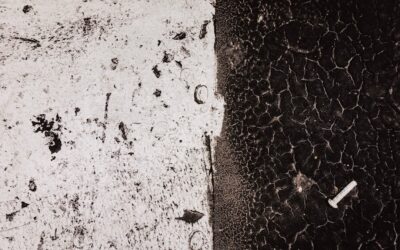
- Alligatoring. Exposed bitumen (where gravel has scoured away) oxidizes into a cracked, alligator-hide pattern. Early alligatoring is coatable; deep cracks that reach the felts are leaks in progress.
- Open laps and fishmouths. Ply edges that never sealed or have crept open — direct water paths into the system.
- Ridging/wrinkling. Long raised ridges tracking insulation joints below, caused by moisture movement; they crack at the crown over time.
- Flashing failures. As with every roof system, most leaks start at base flashings, penetrations, and edge metal rather than in the field. Splits at wall base flashings are the classic BUR leak.
- Ponding. Water still standing 48 hours after rain. It magnifies every other failure mode and voids many warranties.
Repair vs Replace
BUR is among the most repairable membranes ever made — a competent crew can cut out a wet area, dry it, and mop new plies into the surrounding roof almost invisibly. Use these decision lines:
- Repair when leaks are localized, a core cut shows the insulation dry over most of the field, and the roof is under ~20 years old. Typical patch repairs run $400–$1,200; flashing rework $15–$25 per linear foot. Small emergency patches with plastic roof cement and membrane are legitimate stopgaps — our roofing cement guide covers the right way to use it.
- Restore when the field is sound but the surfacing is tired: a spud-and-recoat or a fluid-applied restoration coating ($2–$4.50/sq ft) buys 10–15 years and keeps the old roof out of the landfill.
- Replace when a moisture survey (infrared or nuclear) shows widespread wet insulation, ridging is systemic, or you’re chasing a new leak every rain. Wet insulation cannot be coated over — it must come out.
A moisture survey ($500–$2,000) before any big decision is the best money you’ll spend; it turns “the whole roof is shot” into a map of exactly what’s wet.
BUR vs Modern Flat Roof Systems
New low-slope roofs today are mostly single-ply (TPO, EPDM, PVC) or modified bitumen, and we compare all of them in depth in our flat roofing guide. The short version for a BUR owner:
| Factor | BUR (4-ply gravel) | Modern single-ply/mod-bit |
|---|---|---|
| Installed cost | $6–$10/sq ft | $5–$9/sq ft |
| Redundancy | Multiple waterproof layers | One membrane (mod-bit: two) |
| Puncture/traffic resistance | Excellent (gravel armor) | Fair to good |
| Weight | 5–6 lb/sq ft | 0.3–1.5 lb/sq ft |
| Leak location difficulty | Hard (gravel hides membrane) | Easier |
| Install hazards | Hot kettle, fumes, fire risk | Low (adhered/fastened) |
| Crew availability | Shrinking | Everywhere |
BUR’s redundancy and toughness under foot traffic remain genuinely superior; its weight, installation hazards, and the shrinking pool of kettle-experienced crews are why the market moved on. Modified bitumen — effectively a factory-made 2-ply BUR in roll form — is the natural successor when you like BUR’s philosophy but want a cleaner install.
Costs
Expect these 2026 ballparks for professional work on an accessible low-slope roof:
- New 3-ply BUR: $5.50–$8.00 per sq ft
- New 4-ply gravel BUR: $6.50–$10.00 per sq ft
- Tear-off of existing graveled BUR: add $1.50–$3.00 per sq ft (it’s heavy — disposal costs are real)
- Restoration coating over sound BUR: $2.00–$4.50 per sq ft
- Annual maintenance contract: $0.05–$0.15 per sq ft
A typical 1,500 sq ft residential flat roof therefore lands around $10,000–$15,000 for a new 4-ply system, or $3,000–$6,500 for a restoration.
Maintenance That Actually Extends BUR Life
- Clean drains and scuppers every spring and fall. Ponding is the #1 killer, and it’s usually just clogged drains.
- Redistribute or replace lost gravel on scoured bare spots before the bitumen alligators.
- Walk the flashings. Check every wall base, curb, and pipe boot; recoat or re-strip splits early.
- Restrict traffic to walkway pads. HVAC techs with dropped tools cause a remarkable share of BUR leaks.
- Trim overhanging trees. Debris dams water; limbs abrade surfacing.
FAQ
Can you walk on a built up roof?
Yes — a graveled BUR is the most walkable membrane there is, which is one reason it persists on roofs with heavy equipment traffic. Still use walkway pads on regular service routes.
Can you install BUR over an existing roof?
Code (IBC/IRC) allows a maximum of two roof coverings. A recover over one existing dry roof is sometimes legal and viable; over wet insulation, never. Core cuts decide it.
Is a tar-and-gravel roof the same as a built up roof?
Yes — “tar and gravel” is the colloquial name for gravel-surfaced BUR, though modern systems use asphalt rather than true coal tar.
How do I find a leak under gravel?
Start at flashings and penetrations uphill of the interior stain, not in the field. Pros spud back gravel in suspect zones or use infrared scans at dusk, when wet insulation shows warm. Random caulking of the field wastes money and, done badly, traps water in the system.