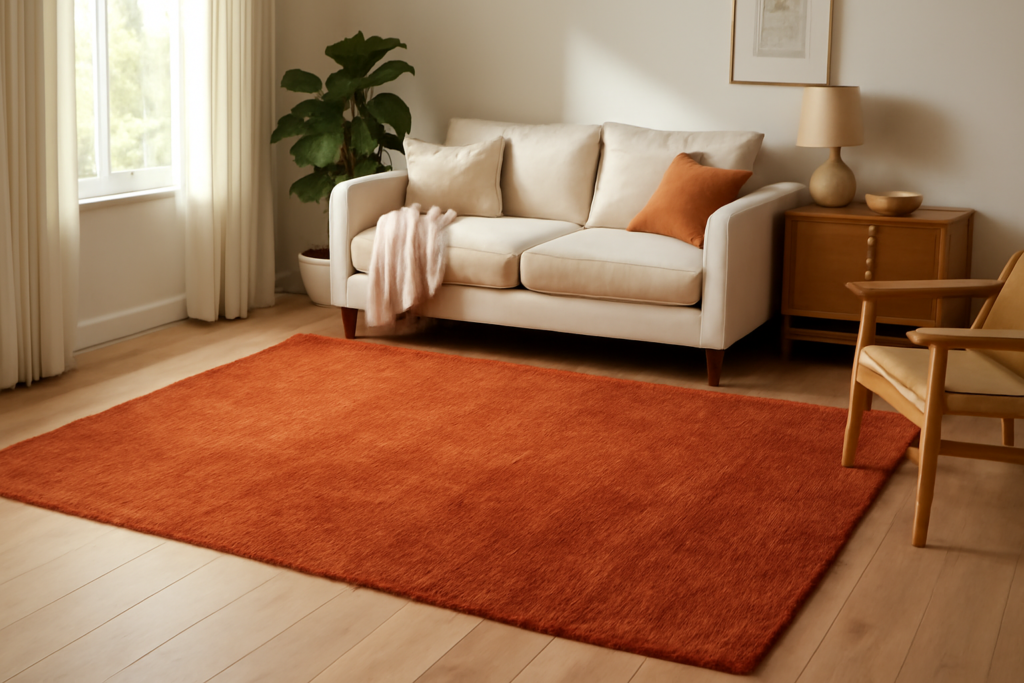
Warm, earthy, and full of character, a burnt orange rug brings the cozy energy of autumn into a room year-round, which is exactly why it has become a designer favorite for grounding both modern and bohemian spaces. Burnt orange is a sophisticated, muted version of orange with brown and red undertones, so it feels rich rather than loud. That makes it far more livable than people expect. This guide walks through choosing the right shade and material, pairing colors, sizing, and keeping a burnt orange rug looking its best.
- Why Burnt Orange Works So Well
- Choosing the Right Shade
- Picking the Right Material
- Colors That Pair Beautifully With Burnt Orange
- Where a Burnt Orange Rug Works Best
- Choosing the Right Size
- Styling Tips That Work
- Keeping a Burnt Orange Rug Clean
- What to Expect to Pay
- Seasonal Styling and Versatility
- Choosing a Pattern or Solid
- Final Thoughts
Why Burnt Orange Works So Well
Unlike bright, candy-colored orange, burnt orange leans toward terracotta, rust, and amber, drawing its warmth from earth tones rather than neon brightness. That subtlety lets it act almost like a warm neutral, adding personality without overwhelming a room. It pairs naturally with wood, leather, and greenery, which is why it feels at home in mid-century, boho, southwestern, and modern rustic interiors.
Because the color radiates warmth, a burnt orange rug makes a space feel instantly more inviting, ideal for rooms that can read cold or flat.
Choosing the Right Shade
Burnt orange spans a useful range, and the exact tone changes the mood. Pick based on how bold you want the room to feel.
- Rust and terracotta: Earthy and grounded, easy to live with and very versatile.
- True burnt orange: Warm and confident, a clear focal point.
- Amber and copper-leaning: Rich and slightly luminous, great with metallics.
- Muted clay: Soft and sophisticated, blending into neutral palettes.
Remember a rug covers a large area, so a tone that looks soft on a small swatch will feel stronger across a whole floor.
Picking the Right Material
Material shapes both the look and the longevity of the rug. Wool renders burnt orange with depth and a slightly heathered richness, resists soil naturally, and wears beautifully, making it excellent for living and dining rooms. Synthetic fibers like polypropylene produce vivid, saturated tones and clean easily, which suits busy households with kids and pets.
For texture, a flat-woven wool kilim or a jute-blend in rust adds organic, earthy character, while a plush pile in burnt orange brings cozy depth to a bedroom. In sunny rooms, ask about fade resistance so the warm tone stays true.
Colors That Pair Beautifully With Burnt Orange
Burnt orange is generous with its partners, especially earthy and cool counterpoints. Deep teal and navy create a striking, balanced contrast, while olive and forest green echo its natural warmth. Cream, beige, and warm white keep the look light and let the rug glow.
For a layered, collected feel, pair burnt orange with charcoal, brown leather, and brass accents. Wood tones and houseplants amplify its organic appeal, perfect for a relaxed boho or mid-century space.
Where a Burnt Orange Rug Works Best
Because it warms and grounds, burnt orange suits rooms where you want energy and coziness. In a living room, it anchors neutral furniture and becomes a confident focal point. In a bedroom, a muted clay or rust tone adds warmth underfoot without overstimulating.
It also shines in home offices, reading nooks, and dining rooms, bringing life to spaces that lean neutral. A burnt orange runner adds personality to an entryway or hallway and hides everyday traffic well.
Choosing the Right Size
Size determines whether the rug feels intentional. In a living room, choose one large enough that at least the front legs of all seating rest on it, commonly an 8-by-10 or 9-by-12 foot rug. Under a dining table, the rug should extend about 24 inches past the table on every side so chairs stay on it.
A 5-by-7 or 5-by-8 foot rug works in bedrooms and smaller seating areas, and a runner of roughly 2.5 by 8 feet suits halls and kitchens. When unsure, size up; an undersized rug shrinks the whole room.
Styling Tips That Work
Let the burnt orange rug lead and keep surrounding pieces calmer. Echo the tone in a throw pillow, blanket, or piece of art so it feels woven through the room rather than dropped in. Layer a smaller burnt orange rug over a large jute or natural-fiber rug for texture and a designed, collected look.
In a minimalist or neutral space, a burnt orange rug delivers warmth and personality instantly, softening a cool palette and giving the eye a place to land.
Keeping a Burnt Orange Rug Clean
Regular care preserves the rich color. Vacuum often to keep grit from dulling the fibers, and blot spills immediately with a clean white cloth, working from the outside in. Test any cleaner on a hidden corner first, since some solutions can shift dye.
For wool, avoid harsh chemicals and over-wetting; for synthetics, a mild soap solution lifts most stains. Rotate the rug periodically so sun and traffic wear it evenly, and use a rug pad to prevent slipping and cushion the fibers.
What to Expect to Pay
Pricing varies with material and size. A synthetic burnt orange rug in a standard room size typically runs $80 to $300, while a quality wool rug ranges from $300 to $1,000 or more. Flat-woven kilims and smaller accents sit at the lower end, and plush wool at the higher. For high-traffic rooms, invest in a durable fiber that holds its warm color.
Seasonal Styling and Versatility
One concern people raise is whether burnt orange will feel too autumnal in spring and summer, but its earthy, muted nature keeps it versatile year-round. In warmer months, pair it with crisp whites, fresh greenery, and light linen textures to keep the room feeling airy. In fall and winter, lean into the coziness with chunky throws, warm woods, and candlelight. Because the tone is grounded in terracotta and rust rather than bright pumpkin, it reads as a warm neutral rather than a holiday color, so you can leave it down through every season without it feeling out of place.
Choosing a Pattern or Solid
Burnt orange comes in both solid and patterned rugs, and each suits a different goal. A solid or subtly textured burnt orange rug makes a clean, modern statement and pairs easily with patterned pillows and art. A patterned rug, such as a Persian-style, kilim, or boho geometric in rust tones, hides traffic and spills better and adds visual interest on its own. If your furniture and walls are busy, a solid rug calms the room; if the space is mostly neutral, a patterned burnt orange rug becomes a rich, eye-catching anchor.
Final Thoughts
A burnt orange rug is one of the easiest ways to add warmth, depth, and personality to a home. Choose the shade that suits your mood, pick a durable material, size it generously, and pair it with greens, neutrals, or wood tones. With simple care, your burnt orange rug will keep a room feeling cozy and inviting for years.