The best cabinet ideas do double duty: they look current and they solve real storage problems. Cabinets are the single largest visual element in a kitchen and the biggest line item in a remodel, often 30 to 40 percent of the budget, so a smart design choice pays off in both daily function and resale value. The mistake homeowners make is choosing cabinets on looks alone, then living with drawers that jam and corners you can’t reach.
Part of our Kitchen Remodeling guide — explore the full guide →
From color schemes to interior organization, here are cabinet ideas grounded in what actually works, with the costs and details you need to plan rather than just admire.
Two-Tone Cabinets for Depth
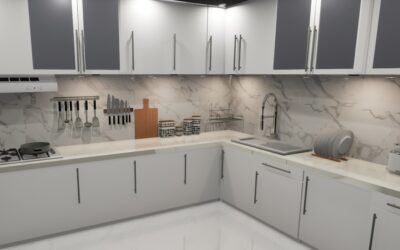
One of the most popular cabinet ideas of the past several years is the two-tone kitchen, pairing one color on the upper cabinets with a different, usually darker, shade below. A common execution puts crisp white or light gray uppers over a navy, forest green, or charcoal base, which grounds the room and hides the scuffs that lower cabinets inevitably collect.
An island in a contrasting color is the easiest entry point to this look, since it isolates the bold choice to a single element you can repaint later if trends shift. Two-tone designs add visual depth and let you experiment with color without committing the entire kitchen to a trend. Keep the countertop and hardware consistent across both tones so the scheme reads intentional rather than mismatched.
Door Styles That Define the Look
The cabinet door does more to set a kitchen’s style than any other single choice. Shaker doors, with their clean recessed center panel, are the most versatile and enduring option, working in traditional, transitional, and modern kitchens alike. Flat-panel or slab doors read distinctly modern and minimalist, especially in wood grain or a matte finish, and they’re the easiest to clean with no crevices to trap grease.
For a warmer, more textured look, fluted or reeded cabinet fronts have surged in popularity, adding vertical lines that catch light beautifully on an island or a pantry wall. Glass-front upper cabinets break up a wall of solid doors and give you a spot to display dishware, though they demand you keep the contents tidy. Whatever style you choose, prioritize solid plywood boxes and soft-close hardware over the door design, because construction determines how long they last.
Hardware as Jewelry
Cabinet hardware is the fastest, cheapest way to change a kitchen’s personality, and swapping it is a legitimate weekend project. Matte black pulls against light cabinets deliver a crisp, modern contrast, while brushed brass or champagne bronze brings warmth that pairs beautifully with white, navy, or green cabinets. Brushed nickel remains the safe, timeless neutral.
Match the hardware scale to the cabinet: longer pulls, 5 to 8 inches, suit larger drawers and doors, while smaller knobs work on upper cabinets. A common designer move is using pulls on drawers and knobs on doors for subtle variation. Budget $3 to $15 per piece for quality hardware; a typical kitchen needs 30 to 50 pieces. Going handleless with push-to-open or integrated finger-pull cabinets creates the most minimalist look but sacrifices some everyday convenience.
Storage Upgrades That Change Daily Life
The best cabinet ideas often live inside the boxes. Deep pot-and-pan drawers with full-extension glides beat traditional lower cabinets with a single shelf, because you pull the whole contents out instead of crouching to dig into the back. A pull-out trash and recycling cabinet keeps bins hidden and eliminates the freestanding can that clutters the floor.
Corner cabinets are notoriously wasteful; a lazy Susan or a swing-out pull-out system reclaims that dead space. Vertical dividers store baking sheets and cutting boards upright, a pull-out pantry maximizes a narrow gap, and drawer inserts organize utensils and spices so nothing gets lost. These upgrades add $50 to $400 each but transform how efficiently the kitchen works. Prioritize them over decorative flourishes; you’ll appreciate them every single day.
Open Shelving and Mixed Media
Replacing some upper cabinets with open wood shelves has become a defining modern kitchen idea, breaking up the mass of cabinetry and adding warmth. A pair of floating oak or walnut shelves flanking a range hood or a window feels airy and displays everyday dishes and a plant or two. The tradeoff is honesty: open shelves demand you keep things tidy and expose everything to cooking grease and dust.
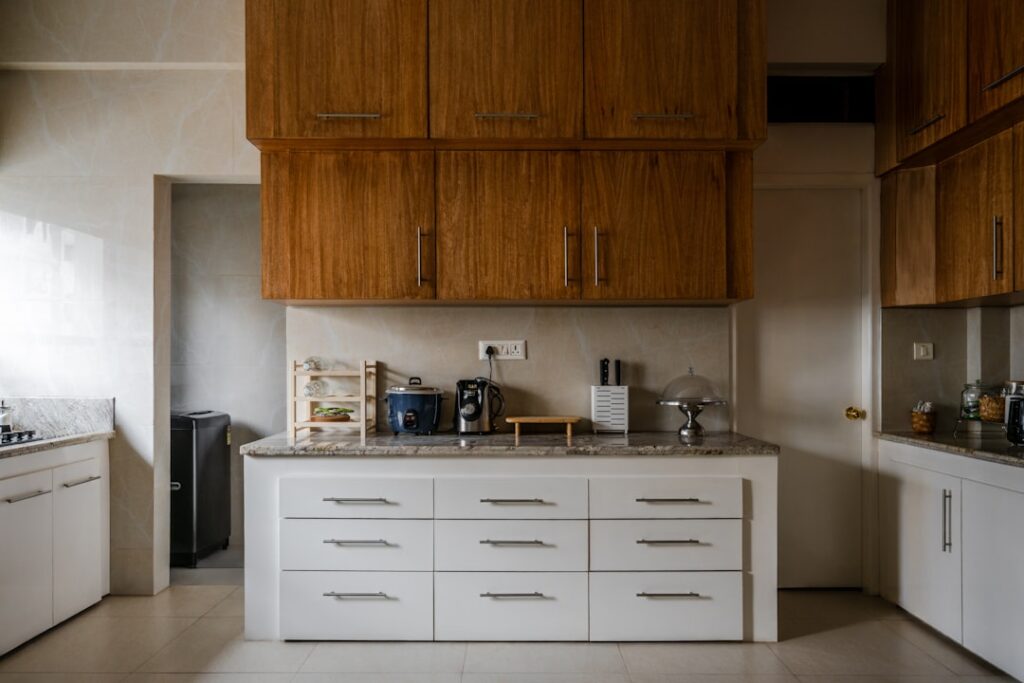
Use open shelving in moderation, one section rather than the whole room, so you retain enclosed storage for the clutter you’d rather hide. Mixing materials also adds interest: a wood-tone island against painted perimeter cabinets, or a stone slab backsplash running up behind glass-front uppers. The key is balance. One or two focal moments read as designed; too many competing elements read as busy.
Color Choices That Age Gracefully
Color is where homeowners either play it safe or chase a trend they’ll regret. White remains the most popular and resale-friendly cabinet color because it brightens the room and works with any counter or backsplash. Warm neutrals like greige and soft taupe have overtaken stark white in newer kitchens, feeling cozier while staying flexible.
If you want color, the reliable move is confining it to lower cabinets or an island, where it’s dramatic but easy to change later. Deep greens and navy blues have proven surprisingly durable as choices, reading as sophisticated rather than faddish. Very bold or unusual colors carry more risk; they date faster and can shrink your buyer pool at resale. When in doubt, keep the perimeter neutral and let hardware, backsplash, and accessories carry the personality.
Statement Islands and Tall Cabinets
Two structural cabinet ideas deliver outsized impact. The first is treating the island as a design centerpiece rather than a matching extension of the perimeter. Painting it a contrasting color, wrapping it in a wood-tone or fluted panel, or extending the countertop into a waterfall edge that runs to the floor turns a utilitarian workspace into the visual anchor of the kitchen. An island also offers a prime spot for deep drawers, a microwave drawer, or open shelving for cookbooks on the seating side.
The second is going tall. Extending upper cabinets to the ceiling, rather than stopping at the standard height and leaving a dust-collecting gap above, adds significant storage and a built-in, custom appearance. The top row can hold seldom-used items, reached with a step stool, while glass fronts up high keep the wall from feeling heavy. Stacking a shorter cabinet above a standard 30-inch upper, or running a single 42-inch cabinet to a 9-foot ceiling, both work. Floor-to-ceiling pantry cabinets flanking a refrigerator create a furniture-like, built-in look that reads high-end and dramatically increases usable storage in the same footprint.
Refacing and Painting to Save Money
Not every cabinet idea requires new boxes. If your existing cabinets are structurally sound but dated, refacing, applying new veneer to the boxes and installing new doors and drawer fronts, costs 30 to 50 percent less than full replacement and delivers a completely new look. Expect $4,000 to $10,000 for a typical kitchen, versus $12,000 or more for new cabinets.
Painting is the ultimate budget transformation. Properly prepped and sprayed cabinets, using a durable enamel and quality primer, look factory-fresh for a fraction of replacement cost, often $2,000 to $5,000 for a pro job or a few hundred in materials for a careful DIYer. The critical steps are thorough degreasing, sanding, and priming, since cabinets endure grease and heavy use. Add new hardware and you’ve reinvented the kitchen without touching the layout, the smartest cabinet idea of all for many homeowners.
Lighting Your Cabinets
Cabinet lighting is the finishing touch that makes a kitchen feel custom, and it does real work beyond looks. Undercabinet LED strips, installed on the bottom of upper cabinets, throw even light directly onto the countertop where you prep and cook, eliminating the shadows that overhead fixtures cast when you stand at the counter. A quality plug-in or hardwired LED strip runs $20 to $80 per section and consumes almost no energy, making it one of the highest-impact, lowest-cost upgrades in the room.
Interior and accent lighting elevate the effect further. LED puck lights or strips inside glass-front cabinets turn them into a display, casting a warm glow over dishware and glassware in the evening. Toe-kick lighting along the base of the cabinets adds a soft nightlight and makes the whole run appear to float. Choose warm LEDs around 2700K to 3000K to complement wood and painted finishes, and put the lights on a dimmer so you can shift from bright task light for cooking to a low ambient glow for entertaining. Well-planned cabinet lighting ties the whole design together.