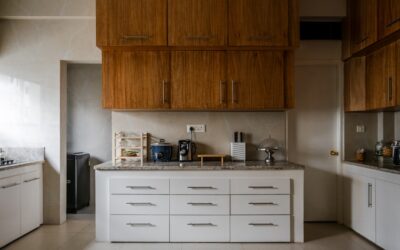
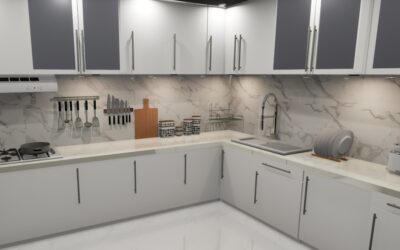
A full cabinet replacement runs $8,000 to $25,000 installed, which is exactly why so many homeowners chase a weekend transformation instead. The best diy kitchen cabinets ideas deliver a custom look for a few hundred dollars by working with the boxes you already own. Whether you paint, reface, add open shelving, or build a few units from scratch, the right approach can shave thousands off a kitchen refresh.
Part of our Kitchen Remodeling guide — explore the full guide →
- Paint Existing Cabinets for the Biggest Impact
- Cabinet Refacing on a Budget
- Open Shelving for a Modern Look
- Upgrade Hardware and Add Trim
- Build Cabinets From Scratch
- Refresh the Look With New Doors Only
- Add Function With Inserts and Lighting
- Two-Tone and Color-Blocking Ideas
- Avoiding the Most Common DIY Mistakes
- The Bottom Line
Paint Existing Cabinets for the Biggest Impact
Nothing changes a kitchen faster than paint. For under $200 in materials, you can transform dated oak into a clean modern look. Remove the doors, label every hinge with painter’s tape, and clean everything with a degreaser like TSP substitute. Sand lightly with 220-grit, prime with a bonding primer such as Zinsser B-I-N, then apply two coats of a durable enamel like Benjamin Moore Advance or Sherwin-Williams Emerald Urethane.
Trending colors include warm whites like Alabaster, soft sage greens, and deep navy on a lower island with white uppers. Always brush or spray in thin coats and allow 16 to 24 hours of cure time between coats for a hard, chip-resistant finish.
Cabinet Refacing on a Budget
Refacing keeps your cabinet boxes and swaps only the visible parts: doors, drawer fronts, and a thin veneer over the face frames. A professional reface costs $4,000 to $9,000, but a DIY peel-and-stick veneer kit with new doors runs $1,000 to $2,500 for an average kitchen. New slab or Shaker doors from unfinished suppliers cost $15 to $40 each.
This route makes sense when your boxes are solid but the doors are damaged or hopelessly dated. Measure each opening carefully, order doors to within 1/16 inch, and use a self-adhesive wood veneer in 24-inch rolls for the face frames.
Open Shelving for a Modern Look
Removing a few upper cabinets and replacing them with open shelves creates an airy, custom feel for very little money. Use 1-inch-thick solid wood or 3/4-inch plywood with a hardwood edge band, finished with a wipe-on polyurethane. Mount with heavy-duty floating shelf brackets rated for at least 50 pounds per shelf, anchored into studs.
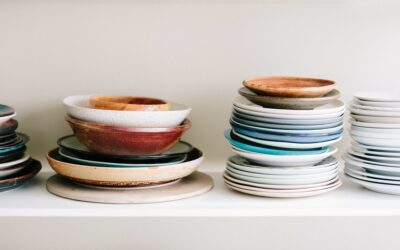
Keep open shelving near the sink or coffee station where you store everyday dishes. Reserve closed cabinets for clutter and small appliances, since open shelves demand tidy, curated styling to look intentional rather than messy.
Upgrade Hardware and Add Trim
Swapping knobs and pulls is the cheapest meaningful upgrade you can make. A set of 25 modern matte-black or brushed-brass pulls costs $40 to $90. Use a hardware jig to drill consistent holes, and choose 5-inch pulls for drawers and 3- to 4-inch pulls for doors.
For more polish, add applied molding to plain slab doors to mimic Shaker style, or install crown molding across the tops of upper cabinets to close the gap to the ceiling. Both tricks make builder-grade cabinets read as custom millwork.
Build Cabinets From Scratch
Confident woodworkers can build full cabinet boxes from 3/4-inch plywood for roughly $60 to $120 per linear foot in materials, a fraction of custom shop pricing. A frameless “Euro” box is the simplest design: cut sides, top, bottom, and a back panel, join with pocket screws, and add a face frame or full-overlay doors.
Start with a single base cabinet or a pantry unit before committing to a whole kitchen. A track saw or a circuit shop’s panel cuts keep your plywood square, and concealed European hinges make door alignment forgiving.
Refresh the Look With New Doors Only
If your cabinet boxes are sound but the doors are dated, swapping doors alone, without full refacing, splits the difference on cost and effort. Unfinished Shaker doors run $15 to $40 each, and slab doors even less, letting you modernize a kitchen for a few hundred dollars in doors plus paint. Measure each opening to within 1/16 inch and order full-overlay doors for a clean contemporary look.
This works especially well on flat-panel 1980s and 1990s cabinets, where a set of crisp white Shaker doors transforms the room instantly. Keep the existing boxes, paint the visible face frames to match the new doors, and the upgrade reads as a far more expensive renovation than it was.
Add Function With Inserts and Lighting
- Pull-out shelves: Retrofit slide-out trays for $25 to $60 each to tame deep base cabinets.
- Under-cabinet LED strips: A plug-in or hardwired kit runs $30 to $80 and instantly elevates the space.
- Drawer organizers: Bamboo dividers keep utensils and spices in order for under $20 a drawer.
- Toe-kick drawers: Reclaim wasted space below base cabinets for flat items like baking sheets.
Two-Tone and Color-Blocking Ideas
One of the strongest trends in kitchen design costs nothing extra: using two colors instead of one. Pair white or cream uppers with a deeper base color, navy, forest green, charcoal, or warm walnut stain, to ground the room and add visual interest. An island in a contrasting color becomes a natural focal point, and the approach hides everyday scuffs better than an all-white scheme.
For the most current look, keep uppers light to maintain an airy feel and reserve the bold color for lowers and the island. If you want to test a color commitment cheaply, paint just the island first; it’s a small surface, a quick weekend project, and easy to repaint if you change your mind.
Avoiding the Most Common DIY Mistakes
Most failed cabinet projects share the same root causes. Skipping degreasing and proper priming is the biggest one, because kitchen cabinets carry years of cooking grease that prevents paint from bonding. Always clean with a degreaser, scuff-sand, and use a bonding primer before color coats.
- Rushing cure time: Enamel needs days to fully harden; reassembling too soon leaves fingerprints and chips.
- Brushing instead of spraying or rolling smooth: Use a fine foam roller and a quality brush, or a sprayer, for a factory-smooth finish.
- Forgetting to label doors and hinges: Numbering each piece saves hours during reassembly.
- Mismatched hardware holes: A drilling jig keeps every pull perfectly aligned across dozens of doors.
Take your time on prep and the finish will last 8 to 10 years; cut corners and you’ll be repainting within two.
The Bottom Line
The smartest diy kitchen cabinets ideas match effort to budget: paint for the biggest bang under $200, reface when doors are shot, and build from scratch only if you have the tools and patience. Combine a fresh color, new hardware, a strip of under-cabinet lighting, and a touch of trim, and you’ll get a near-custom kitchen for a tenth of replacement cost.