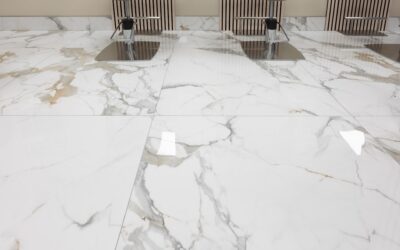
Most white countertops play it safe. Calacatta viola quartz does the opposite, with thick wine-colored and plum veins sweeping across a bright white background like brushstrokes. It is an engineered surface designed to mimic a rare Italian marble known for its purple-burgundy breccia pattern, and it gives you that dramatic look without the etching, staining, and sealing schedule real marble demands. It works best as a statement piece, so cabinet color, hardware finish, and backsplash choices matter more than they do with a quiet gray-veined slab.
Part of our Countertops guide — explore the full guide →
If you love the look but worry about committing to purple in the kitchen, the answer is usually to let the slab carry the color and keep everything around it calm. White, cream, deep green, black, and warm walnut all frame the burgundy veining well. Busy patterned tile, red-toned woods, and competing colored appliances fight it.
- What Calacatta Viola Quartz Looks Like
- Quartz vs the Real Marble
- Cabinet Pairings That Work
- Hardware, Faucets, and Backsplash
- Daily Care and Cleaning
- Cost Range and What Affects It
- Where Burgundy Veining Works Best
- Installation and Silica Safety
- When to Call a Licensed Professional
- Frequently Asked Questions
What Calacatta Viola Quartz Looks Like
The natural marble that inspired calacatta viola quartz is a breccia, meaning it formed from broken fragments of white stone cemented together by mineral-rich veins. That is why the pattern looks fractured and angular rather than wispy. Engineered versions recreate this with large, chunky white islands outlined by veins that range from soft lavender to deep oxblood, often with gray or taupe shadows inside the darker lines.
Designs vary between manufacturers and even between product lines. Some slabs have bold veins every few inches; others leave wide open fields of white with just a few dramatic strokes. Look at a full slab, or at least a large photo of one, before deciding. A 4 by 4 inch sample can make a bold pattern look tame, or a quiet one look busier than it is.
Finishes you will find
- Polished: glossy and reflective, makes the veining look deeper and more like real marble. Shows fingerprints and water spots a little more.
- Honed or matte: soft, velvety surface with a more natural stone feel. Hides smudges but can show metal marks from pots, which usually clean off with a soft cleanser approved for quartz.
- Textured or leathered: less common for this pattern, but available in some lines. Adds grip and hides fingerprints.
Quartz vs the Real Marble
Real purple-veined marble is beautiful and expensive, and it behaves like any calcite stone. Lemon juice, tomato sauce, and wine etch dull spots into a polished finish within minutes. It must be sealed regularly and still stains if spills sit. Each slab is unique, which is part of the appeal, but it also means matching slabs for a long island can be difficult and costly.
Engineered quartz is nonporous, so it does not need sealing and resists staining from coffee, oil, and wine. It also offers more consistent slabs, which makes seam placement and vein matching easier. The trade-off is heat: the resin binder can scorch or yellow if a hot pan sits directly on it. Quartz is also not rated for outdoor use, since UV light can fade pigments over time.
Cabinet Pairings That Work
With a pattern this strong, cabinet color sets the mood of the room. These combinations consistently look intentional:
- Bright white or soft white cabinets: the safest pairing. The veining becomes the only color in the room, and the kitchen reads clean and gallery-like.
- Deep forest or olive green: green sits opposite red-violet on the color wheel, so the burgundy veining pops without clashing. Works especially well on an island with white perimeter cabinets.
- Black or charcoal: creates a moody, high-contrast look. Pair with a polished finish and plenty of lighting so the space does not feel dark.
- Warm walnut or white oak: wood tones soften the drama. Choose woods without strong red undertones, since cherry and mahogany compete with the veins.
- Muted mauve or dusty pink: a bolder choice that picks up the lighter lavender tones. Best in small doses, like a butler’s pantry or bar.
Avoid bright navy, red, or orange cabinets. They pull attention away from the slab and can make the purple look muddy.
Hardware, Faucets, and Backsplash
Metal finishes change the personality of a burgundy-veined counter. Warm brass and champagne bronze bring out the gold undertones some slabs carry and give the kitchen a vintage, European feel. Polished nickel and chrome keep things crisp and modern. Matte black works with white or wood cabinets but can feel heavy against dark green or black ones.
For backsplash, the simplest and often best move is to run the same quartz up the wall as a full-height slab backsplash. It shows off the pattern and eliminates grout lines. If budget does not allow that, choose a plain white or cream tile with a subtle texture: handmade-look subway tile, zellige-style squares, or a simple matte finish. Skip tile with its own strong veining or colored pattern. Grout color should be white or light warm gray.
Daily Care and Cleaning
Care is simple compared with real marble. Wipe spills with a soft cloth and warm water mixed with a little mild dish soap. For a streak-free shine, a cleaner made specifically for quartz countertops works well and will not leave residue. Dry polished surfaces after cleaning to prevent water spots.
- Use trivets and hot pads for anything from the stove or oven. Sudden heat can damage resin.
- Cut on boards. Quartz is scratch resistant, but knives dull quickly on it and deep cuts can mark the surface.
- Avoid harsh chemicals such as oven cleaner, paint thinner, nail polish remover, drain cleaner, and bleach-heavy products. They can dull or discolor the finish.
- Scrape, do not scour. Dried food comes off with a plastic scraper. Steel wool and abrasive powders leave dull patches.
- Watch for permanent marker and dye. Hair dye, food coloring, and markers can tint light quartz if left for hours. Wipe promptly.
Cost Range and What Affects It
Calacatta viola quartz generally sits in the mid to upper tier of engineered stone pricing because bold, realistic veining requires more complex manufacturing. As a general range, expect roughly $70 to $130 per square foot installed, depending on the product line, slab thickness, edge profile, and your region. A 2 cm slab costs less than a 3 cm slab, though 3 cm is common for kitchens because it does not need a built-up edge.
Several things push the price up: waterfall island ends, full-height backsplashes, mitered edges, multiple sink or cooktop cutouts, and careful vein matching across seams. Ask your fabricator whether the slab has a directional pattern and how they plan to lay out seams. A poorly placed seam across a bold vein is the most common disappointment with patterned quartz.
Where Burgundy Veining Works Best
Not every room needs a bold slab, and placement can make or break the look. An island is the classic spot: it gives the veining a large, uninterrupted canvas, and you can keep the perimeter counters in a plain white quartz to control cost and calm the room. Waterfall ends on an island let the pattern spill down to the floor, which looks spectacular if the fabricator matches veins at the mitered corner.
Powder rooms are another strong choice. A small vanity top in a purple-veined pattern feels like jewelry, and the limited square footage keeps the price reasonable. Bars, coffee stations, and fireplace surrounds also suit it, though quartz should stay a safe distance from the firebox because of heat sensitivity. Large open kitchens where the counters run 30 feet or more can feel overwhelming in this pattern, so consider limiting it to one feature surface.
Lighting changes the color more than most people expect. Warm bulbs around 2700K push the veins toward red and brown, while cooler 3500K to 4000K light brings out the lavender and gray. Look at a sample under your actual kitchen lighting at night before you sign off.
Installation and Silica Safety
Quartz slabs are heavy, often 20 to 25 pounds per square foot in 3 cm thickness, and installation is usually a professional job. Fabricators template your cabinets, cut the slab with water-cooled saws, and set it with adhesive and color-matched seam filler. Engineered quartz has a very high crystalline silica content, and dry cutting or grinding releases dust that can cause serious lung disease. If you trim or drill any piece yourself, use wet cutting, an N95 or P100 respirator, and HEPA vacuum cleanup.
When to Call a Licensed Professional
Leave templating, cutting, and setting to an experienced fabricator. If the project involves moving the sink, adding a pot filler, or relocating a dishwasher, hire a licensed plumber and check permit rules with your city. New island outlets or appliance circuits belong to a licensed electrician, with GFCI protection at counter outlets. Gas cooktop changes are for a licensed gas fitter only.
Frequently Asked Questions
Is calacatta viola quartz real marble?
No. It is engineered quartz designed to imitate a purple-veined Italian marble. It is made from crushed quartz, resin, and pigments, so it does not etch or need sealing.
What cabinet color goes best with burgundy veining?
White cabinets are the safest choice. Deep green, black, and warm wood tones without red undertones also pair well and make the veining stand out.
Does purple-veined quartz go out of style?
Bold stone has a long history in European design. Pairing it with classic cabinets and simple tile keeps the look grounded so it ages well rather than feeling trendy.
Can I use it in a bathroom?
Yes. It works well on vanities, shower curbs, and benches. Avoid prolonged exposure to hair dye and harsh drain or tile cleaners.
Does it need sealing?
No. Engineered quartz is nonporous. Regular cleaning with mild soap or a quartz-safe cleaner is all it needs.