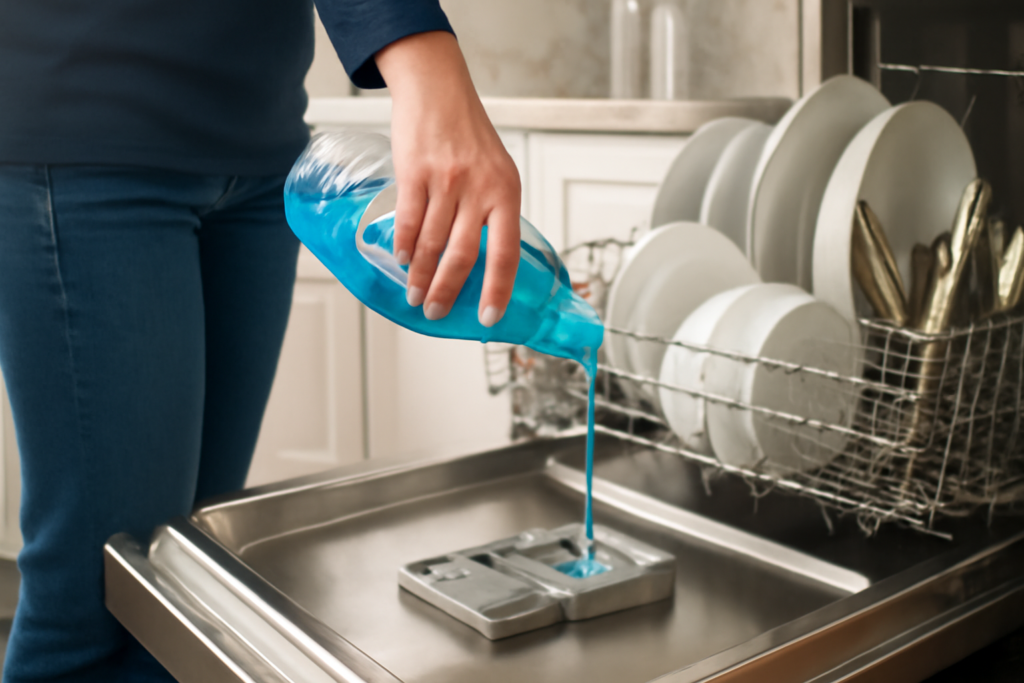
The short answer is no, and the reason is a soap-bubble flood spilling across your kitchen floor within 20 minutes. If you’re wondering can you use Dawn dish soap in a dishwasher, the honest answer from anyone who has cleaned up the aftermath is an emphatic no. Dishwasher detergent and hand dish soap are engineered to do opposite things when it comes to foam. Hand soap like Dawn is built to create thick, lasting suds; dishwasher detergent is specifically formulated to be low-sudsing because a dishwasher is a sealed machine that sprays water at high pressure.
- Why Dawn Turns Your Kitchen Into a Bubble Bath
- What Actually Happens If You Try It
- How to Stop the Foam If You Already Did It
- What You Should Use Instead
- The DIY Emergency Substitute
- Understanding the Broader Rule
- How Detergent Actually Cleans Your Dishes
- Signs You Used the Wrong Product
- The Bottom Line
Why Dawn Turns Your Kitchen Into a Bubble Bath
Inside a dishwasher, spray arms blast water at 100 to 150 degrees Fahrenheit while the machine tumbles it around a closed cabinet. Drop hand soap into that environment and every bit of agitation whips it into foam. The suds have nowhere to go, so they build until they force their way past the door gasket and pour onto your floor.
Regular dishwasher detergent contains defoaming agents and works chemically rather than mechanically, cleaning through enzymes and alkaline builders instead of scrubbing bubbles. That’s the entire design difference. Dawn is doing exactly what it was made to do; it’s just the wrong tool for a sealed, high-pressure machine.
What Actually Happens If You Try It
Here’s the realistic timeline if you pour a squirt of Dawn into the detergent cup and start a cycle.
- 0 to 10 minutes: The wash cycle begins and foam starts building rapidly.
- 10 to 20 minutes: Suds fill the tub and begin leaking under the door.
- 20 to 30 minutes: A spreading pool of bubbles covers the floor, and the machine keeps producing more with every spray.
Beyond the mess, the excess suds can interfere with the drain pump and leave a soapy residue coating your dishes that requires a full rinse cycle to remove. In rare cases the foam works its way into components it shouldn’t, though most machines survive one incident with just a cleanup.
How to Stop the Foam If You Already Did It
If bubbles are already pouring out, act fast. Panicking and running more cycles only makes it worse.
- Cancel the cycle and open the door to stop the spray arms.
- Scoop out as much visible foam as you can with a cup or towel.
- Sprinkle regular table salt or pour a splash of cooking oil or white vinegar into the tub. All three break down suds.
- Toss down towels to soak up the floor spill.
- Run short rinse-only cycles, pausing to remove foam between each, until the water runs clear.
Expect to run three to five rinse cycles before the last of the suds clears. Table salt is the fastest defoamer most people have on hand.
What You Should Use Instead
Use a product made for automatic dishwashers. Your options fall into a few categories, each with trade-offs.
- Detergent pods (Cascade, Finish): Pre-measured, convenient, best cleaning. About 20 to 30 cents per load.
- Powder detergent: Cheapest per load and lets you adjust the dose for lightly soiled loads.
- Gel detergent: Convenient but generally the weakest cleaner of the three.
Always add a rinse aid like Jet-Dry if your machine has a dispenser. It prevents water spots and helps dishes dry faster, and it costs pennies per load.
The DIY Emergency Substitute
Out of dishwasher detergent and can’t get to the store? Do not reach for Dawn. Instead, make a low-suds substitute.
Combine two tablespoons of baking soda with two tablespoons of borax, or use washing soda if you have it. This mix cleans without foaming. In a pinch, a very small amount of Dawn, meaning one or two drops mixed with baking soda to control suds, can work, but this is risky and easy to overdo. The safer play is the borax-and-baking-soda combination, which mimics how commercial detergents clean.
Understanding the Broader Rule
The lesson extends beyond Dawn. Never use any hand dish soap, laundry detergent, or general cleaner in a dishwasher. All of them either over-suds or contain ingredients that damage the machine’s seals and finish. Dishwasher detergents are a specialized category for a reason.
By the same logic, don’t pour dishwasher detergent into your sink for handwashing. Its high alkalinity and lack of skin-safe surfactants can irritate your hands. The two products live in separate worlds and swapping them causes problems in both directions.
How Detergent Actually Cleans Your Dishes
Understanding why dishwasher detergent works helps explain why Dawn doesn’t belong in the machine. Modern automatic detergents clean through a combination of enzymes, alkaline builders, and surfactants, not scrubbing bubbles. The enzymes, like amylase and protease, break down starches and proteins the way your body’s digestive enzymes do.
Alkaline salts raise the water’s pH to dissolve grease, and only a tiny amount of low-foaming surfactant helps lift food away. That’s a completely different chemistry from hand soap, which relies on heavy surfactants and foam to clean under manual scrubbing. When you swap in Dawn, you lose the enzymes and builders your dishwasher needs and add exactly the foam it’s designed to avoid.
Signs You Used the Wrong Product
If someone in your household used the wrong soap and you’re not sure, a few symptoms give it away. Watch for these after a cycle.
- Bubbles or foam residue around the door gasket or on the floor
- A slippery, soapy film coating supposedly clean dishes
- Water pooling in the bottom because suds clogged the drain
- A lingering perfume smell from hand-soap fragrance
If you spot any of these, run two or three rinse-only cycles with no detergent to flush the suds, then resume normal use with proper dishwasher detergent.
The Bottom Line
Dawn dish soap and dishwashers do not mix. One squirt produces a foaming mess that spreads across your floor, leaves residue on your dishes, and stresses your drain pump. Keep a box of powder detergent or a bag of pods on hand as backup, add a rinse aid for spot-free results, and reserve Dawn for the one job it’s genuinely excellent at, which is scrubbing pots by hand in the sink.