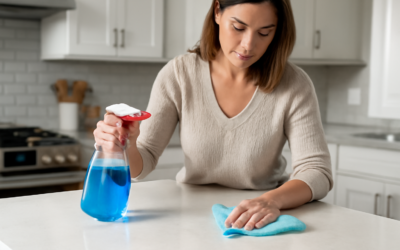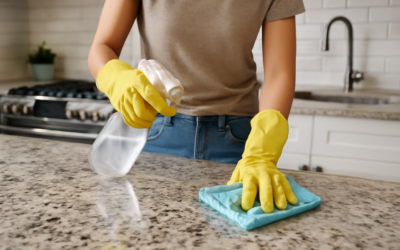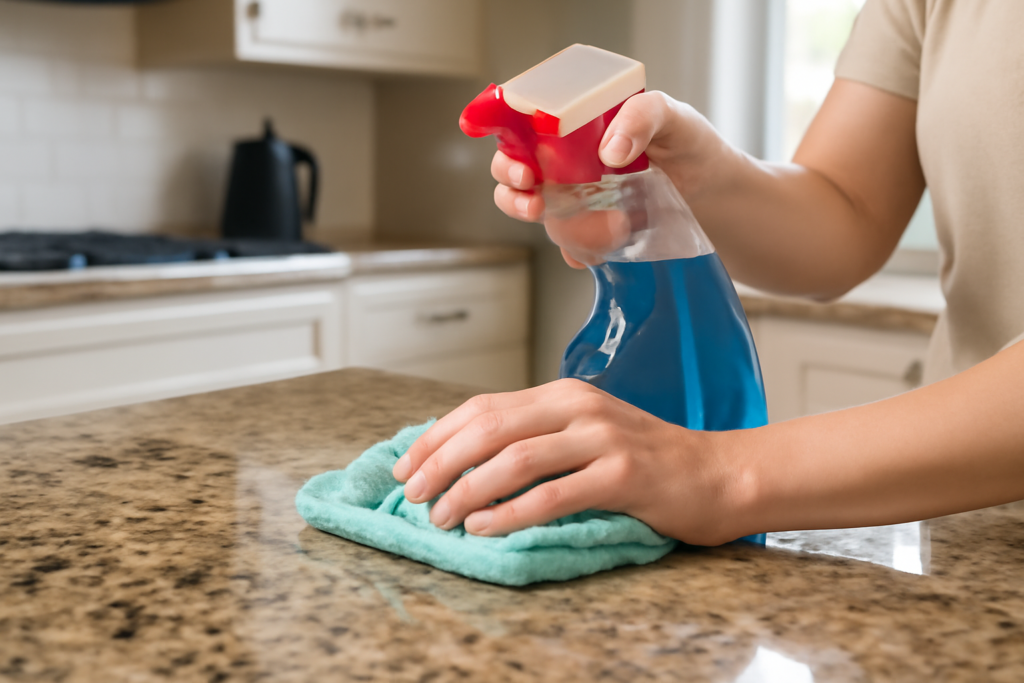
It seems harmless enough: a quick spritz of glass cleaner to wipe down the kitchen counter. But if you are asking can you use Windex on granite countertops, the honest answer is no, you should not. Standard ammonia- and vinegar-based glass cleaners are too harsh for natural stone. Over time they dull the polished surface and degrade the protective sealer that keeps granite stain-resistant. A pH-neutral stone cleaner, or simply mild dish soap and water, is the safer, smarter choice.
Part of our Countertops guide — explore the full guide →
The Short Answer: Avoid It
Granite is a porous natural stone that is sealed to resist stains, and that sealer is sensitive to harsh chemicals. Glass cleaners like the standard blue formula contain ammonia (and some cleaners use vinegar), both of which are too acidic or alkaline for stone. Using them occasionally may not ruin a counter overnight, but repeated use gradually wears down the seal and the shine. Why risk an expensive surface when gentle alternatives clean just as well?
Why Ammonia and Vinegar Harm Granite
The problem comes down to chemistry. Granite is sealed with a penetrating sealer that fills the stone’s microscopic pores and blocks liquids from soaking in. Harsh cleaners attack that barrier:
- Ammonia is alkaline and, with repeated exposure, breaks down the sealer and can etch or dull the polished finish.
- Vinegar and other acids react with the minerals in stone, etching the surface and leaving dull spots over time.
- Loss of seal leaves the granite more porous, so spills like wine, oil, and coffee can soak in and stain.
The damage is cumulative. Each cleaning chips away a little more protection until the stone looks cloudy and stains more easily.
What Happens Over Time
The early signs are subtle. You might notice the counter losing its deep, reflective shine, looking hazy or streaky no matter how you wipe it. As the sealer thins, water stops beading and instead darkens the stone where it sits, a clear sign the seal is failing. Eventually stains set more readily and the surface needs to be professionally polished or resealed. None of that is sudden, which is exactly why people do not connect it to their daily glass cleaner.
What to Use Instead
The good news is that cleaning granite safely is easy and cheap. Two reliable options cover almost every situation:
- pH-neutral stone cleaner: Cleaners specifically formulated for granite and natural stone are pH-balanced so they clean without attacking the sealer. These are the gold standard for routine wiping.
- Mild dish soap and warm water: A few drops of gentle dish soap in warm water on a soft cloth handles everyday grime perfectly. Wipe, then rinse with clean water and dry to avoid soap film buildup.
For both methods, use a soft microfiber cloth rather than anything abrasive, and dry the surface afterward to keep it streak-free and to prevent water spots.
A Simple Daily Routine
Keep granite looking its best with a light, consistent routine. Wipe up spills promptly, especially acidic ones like citrus, wine, and tomato, before they have a chance to sit. For daily cleaning, mist a pH-neutral stone cleaner or your soapy water onto the counter, wipe with a microfiber cloth, then buff dry. Avoid scouring pads, abrasive powders, and any all-purpose spray that does not state it is stone-safe.
Products and Habits to Avoid
Beyond glass cleaner, steer clear of a few common kitchen products on granite: bleach, all-purpose sprays with ammonia, acidic cleaners, abrasive scrubbing powders, and anything containing citrus or vinegar. These either etch the stone, strip the sealer, or scratch the polish. When in doubt, check the label for the words “safe for natural stone” or “pH-neutral,” and if it does not say so, do not use it on the counter.
Keep the Sealer Fresh
Even with gentle cleaning, granite sealer wears down naturally over years of use. Test it periodically by dripping a little water on the surface; if it beads up, the seal is intact, but if it soaks in and darkens the stone, it is time to reseal. Resealing is a simple DIY job with an off-the-shelf granite sealer, and keeping the seal fresh is the single best way to protect your investment and maintain that stain resistance.
What About Disinfecting Granite?
Homeowners often worry about germs on kitchen counters and reach for harsh disinfectants, which is another way granite gets damaged. You can safely sanitize sealed granite with a solution of mild dish soap and water for everyday cleaning, and for occasional disinfecting, a 50/50 mix of water and isopropyl (rubbing) alcohol is stone-safe and evaporates cleanly. Spray it on, let it sit briefly, and wipe with a microfiber cloth. Avoid bleach and undiluted disinfecting sprays, which strip the sealer. Alcohol-based cleaning gives you the germ-killing reassurance you want without the etching and dulling that bleach or ammonia would cause.
Handling Tough Stains Safely
If a spill does soak in before you seal or wipe it, resist the urge to scrub with harsh chemicals. For oil-based stains, a poultice made from baking soda and a little water, applied over the stain, covered with plastic, and left to draw the stain out over a day, is the gentle, effective approach. For organic stains like coffee or wine, a poultice with a touch of hydrogen peroxide can help on lighter stones. These slow methods protect the polish while pulling the stain from the pores, which is exactly the opposite of what an aggressive cleaner would do.
Granite vs Other Countertop Materials
It is worth noting that cleaning rules vary by surface, so the no-Windex guidance is specific to natural stone. Quartz, an engineered material, is more forgiving but still does best with gentle cleaners rather than abrasives. Marble is even more acid-sensitive than granite and etches very easily, so the pH-neutral rule applies doubly. Laminate counters tolerate a wider range of cleaners. Knowing what your counter is actually made of prevents the common mistake of using one all-purpose product everywhere, which is fine for some surfaces and slowly destructive to others like granite.
The Bottom Line
You should not use Windex or other ammonia- or vinegar-based glass cleaners on granite countertops. They dull the polish and break down the sealer over time, leaving the stone hazy, more porous, and prone to staining. Stick with a pH-neutral stone cleaner or mild dish soap and warm water, wipe with a soft microfiber cloth, dry the surface, and reseal when the water stops beading. Treat granite gently and it will stay glossy and stain-resistant for decades.