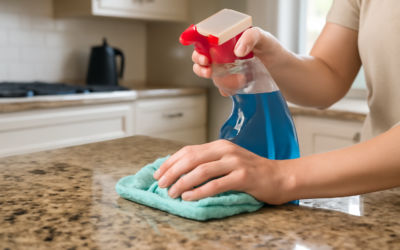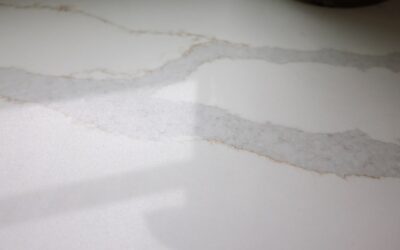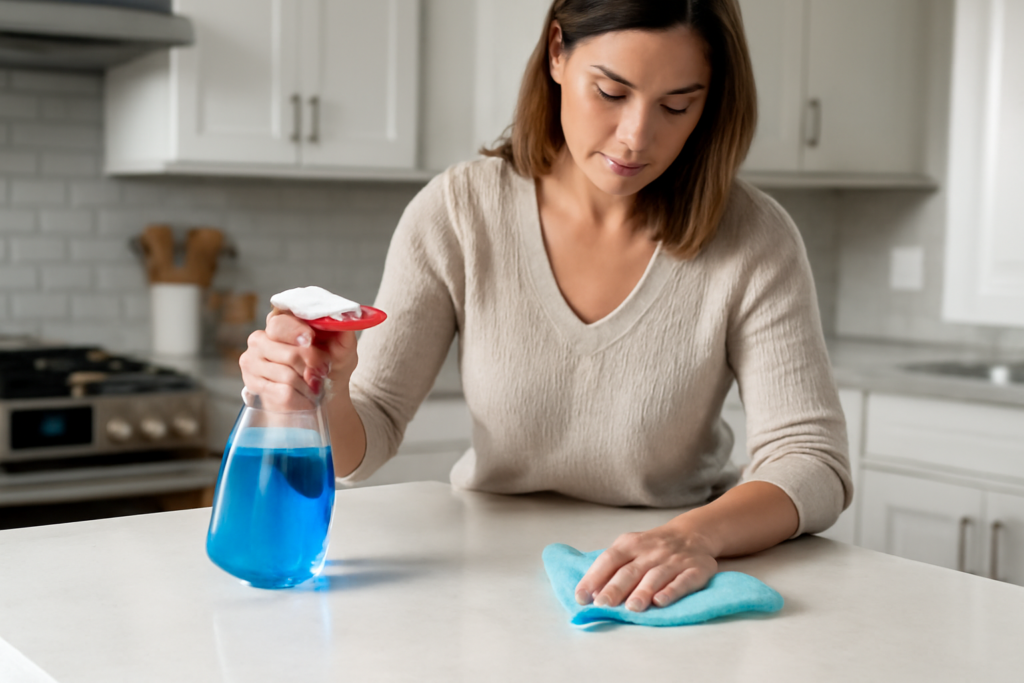
It is the bottle under almost every kitchen sink, so the question comes up constantly: can you use Windex on quartz countertops? The short answer is occasionally, with caution, but it is not the ideal choice. Original blue Windex is mild enough for very occasional use, yet many Windex formulas contain ammonia and other ingredients that, over time, can dull the resin binders that hold engineered quartz together. Here is exactly what is safe and what to reach for instead.
Part of our Countertops guide — explore the full guide →
What Quartz Countertops Are Made Of
Engineered quartz is roughly 90 to 94 percent ground natural quartz bound with about 6 to 10 percent polymer resins and pigments. That resin is what makes quartz nonporous and stain-resistant, but it is also the vulnerable part. Unlike the mineral itself, the resin can react to harsh chemicals.
This is why quartz care differs from granite or solid stone. The surface is incredibly hard and scratch-resistant, but the binding resin is sensitive to high pH cleaners, strong solvents, and prolonged chemical exposure.
The Real Risk With Windex
Original blue Windex has a relatively low ammonia content, and a single wipe will not ruin your counter. The concern is repeated, daily use over months and years. Ammonia is alkaline, and frequent exposure can gradually break down the resin, leading to dullness, discoloration, or a hazy film on the finish.
Some Windex variants, particularly the disinfecting and multi-surface versions, contain additional solvents and higher chemical loads that are riskier still. Most quartz manufacturers, including Caesarstone, Cambria, and Silestone, specifically advise against ammonia and bleach-based cleaners. Using them can even void your warranty.
What to Use Instead
The best daily cleaner for quartz is also the cheapest: mild dish soap and warm water. It cuts grease, lifts everyday grime, and poses zero risk to the resin.
- Add a few drops of dish soap to a bowl of warm water.
- Wipe the counter with a soft microfiber cloth or non-abrasive sponge.
- Rinse with a clean damp cloth to remove soap residue.
- Dry with a fresh microfiber towel to prevent streaks.
For a streak-free shine, a dedicated quartz cleaner like Method Daily Granite, Weiman Quartz Cleaner, or Caesarstone’s own cleaner is pH-balanced and safe for regular use, typically $6 to $12 a bottle.
Handling Stains and Dried Messes
For stuck-on food or dried spills, never scrape with a metal blade. Soak the spot with a warm wet cloth for a few minutes to soften it, then gently lift it with a plastic putty scraper. A non-abrasive sponge and a little dish soap handle most residue.
For stubborn marks like dried grease or ink, apply a small amount of isopropyl alcohol on a cloth, wipe the spot, then rinse thoroughly with water. Alcohol is safe for occasional spot-cleaning and disinfecting, unlike ammonia for everyday use.
What to Avoid Entirely
Several common products can permanently damage quartz, so keep them off the surface.
- Bleach and bleach-based cleaners: cause discoloration and resin breakdown.
- Abrasive scrubbing pads and powders: can scratch the polished finish.
- Oven cleaners and drain cleaners: highly alkaline and corrosive to resin.
- Acetone, paint thinner, and nail polish remover (full strength): attack the binder.
- High-pH degreasers like undiluted Soft Scrub or CLR: too harsh for regular use.
Disinfecting Quartz Safely
Since bleach and many disinfectant wipes are off the table, homeowners often wonder how to sanitize quartz, especially in the kitchen. The safest disinfectant is a solution of 70 percent isopropyl alcohol, used occasionally rather than daily. Spray it on, let it sit for a few minutes, then wipe and rinse with water.
Diluted dish soap and water handles everyday germs for most households, and quartz is naturally nonporous, so bacteria cannot penetrate the surface the way they can with grout or unsealed stone. Avoid disinfecting wipes that contain bleach or citrus acids. If you want a ready-made product, choose a disinfectant specifically labeled safe for engineered stone or quartz.
Quartz vs Granite and Marble Care
Care routines differ by material, and confusing them leads to damage. Granite is porous and needs periodic sealing, but it tolerates a wider range of cleaners and is more heat-resistant than quartz. Marble is the most delicate, etching from anything acidic like lemon juice or vinegar.
Quartz, by contrast, never needs sealing because it is nonporous, but its resin binder makes it sensitive to harsh chemicals and high heat that solid stone shrugs off. The takeaway: do not assume a cleaner that is fine on your neighbor’s granite is safe on your quartz. When you have engineered quartz, stick to pH-neutral, gentle products and protect it from heat above 300°F.
Protecting Your Quartz Long Term
Beyond cleaning, a few habits keep quartz looking new. Always use trivets or hot pads, since quartz can crack or discolor from sudden heat above roughly 300°F, despite its hard surface. Wipe spills promptly, especially wine, coffee, and acidic juices.
Use a cutting board rather than slicing directly on the counter, which protects your knives more than the quartz but prevents micro-scratches over time. With gentle daily cleaning and these simple precautions, a quality quartz counter stays beautiful for 20-plus years.
Daily, Weekly, and Deep-Cleaning Routine
A simple schedule keeps quartz pristine without risk. For daily care, wipe the counter with a damp microfiber cloth and a drop of dish soap, then dry it to prevent water spots. This handles crumbs, splatters, and fingerprints in seconds.
Weekly, give the surface a thorough clean with a pH-neutral quartz cleaner and buff it dry for an even shine. For monthly deep cleaning or after a messy event, tackle any stuck-on spots with a plastic scraper and a non-abrasive sponge, disinfect occasionally with 70 percent isopropyl alcohol, and inspect the seams and edges where grime collects. Sticking to gentle products on this rhythm keeps quartz looking new far longer than aggressive scrubbing ever could.
So, can you use Windex on quartz countertops? In a pinch, the original blue formula will not destroy your counter, but it is not worth the long-term risk to the resin. Stick with mild soap and water or a pH-neutral quartz cleaner, skip the ammonia and bleach, and your investment will keep its showroom shine for decades.