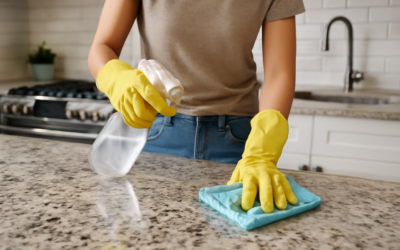
The fastest way to ruin a $3,000 granite counter is to wipe it down with the wrong spray. A proper granite countertop cleaner lifts grease and bacteria without stripping the sealer or dulling the polish, while common household products like vinegar, lemon, and bleach quietly eat away at both the stone and its protective barrier. If your granite looks hazy or feels rough despite regular cleaning, the cleaner is almost always the reason.
Part of our Countertops guide — explore the full guide →
I have seen beautiful slabs turn dull in under a year from acidic sprays. The good news is that keeping granite pristine is simple once you know the rules. This guide covers what to use, what to avoid, and how to keep your stone sealed and gleaming for the long haul.
Why Granite Needs a Special Cleaner
Granite is a natural stone that is slightly porous and almost always finished with a penetrating sealer. That sealer is the invisible shield that keeps oil, wine, and coffee from soaking in and staining. Acidic cleaners, which include vinegar, lemon juice, and many all-purpose sprays, break down that sealer with every wipe. Once the sealer is gone, the stone stains and etches easily.
A dedicated granite countertop cleaner is formulated at a neutral pH, meaning it cleans effectively without chemically attacking the stone or the sealer. That neutral chemistry is the whole point, and it is why generic products so often cause damage over time.
What to Avoid on Granite
Before we talk about what to use, memorize this list of things that damage granite. Avoid them entirely:
- Vinegar and lemon juice: Acidic; strips sealer and etches the surface.
- Bleach and ammonia: Harsh chemicals that dull the polish over repeated use.
- Windex and glass cleaners: Often contain ammonia; not stone-safe despite the streak-free promise.
- Abrasive powders and scrub pads: Scratch the polished finish permanently.
- Disinfecting wipes: Many contain citric acid or other acids that degrade the sealer.
If you have been using any of these, switch now. The damage is cumulative, so stopping today preserves whatever sealer you have left.
Best Commercial Granite Cleaners
Several reliable products are formulated specifically for natural stone. These are the ones I recommend to clients:
- Method Daily Granite Cleaner: Affordable at $4 to $6, plant-based, and available in most grocery stores. Great for daily wiping.
- Weiman Granite Cleaner & Polish: Around $6 to $9; cleans and adds a light protective shine in one step.
- Granite Gold Daily Cleaner: A stone-industry favorite at $7 to $10, pH-neutral and streak-free.
- StoneTech Revitalizer: A premium $12 to $18 cleaner-plus-sealer that maintains protection with each use.
Any of these will keep granite clean without harming it. Buy one, keep it under the sink, and stop reaching for the multi-surface spray.
A Safe DIY Cleaner Recipe
You do not have to buy commercial products. A homemade neutral cleaner works well and costs pennies. Mix:
- 1/4 cup of 70 percent isopropyl rubbing alcohol
- 3 to 4 drops of mild dish soap (Dawn works)
- Warm water to fill a 16-ounce spray bottle
- Optional: a few drops of essential oil for scent
The alcohol disinfects and evaporates cleanly, while the tiny amount of soap cuts grease. Shake gently, spray lightly, and wipe with a microfiber cloth. Never let soap build up, since residue causes a dull film over time, so wipe with a damp cloth afterward if needed.
Daily Cleaning Routine
Keeping granite clean is more about consistency than intensity. My recommended daily routine:
- Wipe up spills immediately, especially acidic ones like wine, citrus, and tomato sauce.
- Spray your stone-safe cleaner lightly across the surface.
- Wipe with a soft microfiber cloth in overlapping strokes.
- Buff dry with a second clean cloth to prevent water spots and streaks.
For stuck-on food, lay a warm damp cloth over the spot for a few minutes to soften it, then wipe. Never scrape with a metal edge or scour with an abrasive pad.
Handling Stains and Deep Cleaning
If something does stain, a poultice draws it out. Mix baking soda with a little water into a peanut-butter consistency, spread it 1/4 inch thick over the stain, cover with plastic wrap, and let it sit 24 hours. As it dries, it pulls the stain from the pores. For oil-based stains, use acetone in place of water in the poultice.
For a periodic deep clean, warm water with a few drops of dish soap and a soft cloth removes built-up grime. Follow with a stone-safe cleaner and a dry buff. Do this monthly and your counters will keep their showroom shine.
Sealing: The Other Half of the Job
Even the best cleaner cannot compensate for a worn sealer. Test yours with the water-drop test: place a few drops of water on the surface and watch. If it beads up, your sealer is intact. If it soaks in and darkens the stone within a few minutes, it is time to reseal.
Most granite needs resealing every one to three years, depending on use and stone porosity. A quality impregnating sealer like StoneTech BulletProof costs $25 to $40 and takes about 30 minutes to apply. Clean the counter first, wipe on the sealer, let it dwell 15 minutes, and buff off the excess. Regular sealing plus a proper granite countertop cleaner is the two-part system that keeps natural stone looking new for decades.
Disinfecting Granite Safely
Kitchen counters need to be sanitary, but the harsh disinfectants people reach for are exactly what damages granite. The safe way to disinfect is with isopropyl rubbing alcohol. Fill a spray bottle with a 50/50 mix of 70 percent alcohol and water, mist the surface, let it sit for three to five minutes, then wipe with a clean cloth and rinse with water. Alcohol kills germs effectively, evaporates cleanly, and will not strip your sealer.
Steer clear of the common shortcuts. Bleach discolors stone and degrades sealer, disinfecting wipes often contain citric acid that etches the surface, and hydrogen peroxide can lighten darker granites over time. For raw meat or heavy food prep, use a dedicated cutting board rather than working directly on the stone; it protects both your knives and your counter. With the alcohol method, you get a hygienic surface without any of the collateral damage.
Everyday Habits That Protect the Finish
Cleaning is only part of keeping granite pristine. A few daily habits do just as much to preserve the surface:
- Use trivets and hot pads. While granite handles heat well, repeated direct contact from hot pans can weaken the sealer over time and, on rare occasions, thermal-shock the stone.
- Wipe spills immediately, especially acidic liquids like wine, coffee, citrus, and tomato sauce that can etch or stain if left to sit.
- Use cutting boards to protect both the sealer and your knife edges.
- Set drinking glasses on coasters, since the ring left by an acidic or alcoholic drink can dull the polish.
- Avoid standing on or sitting on counters, which can crack the slab at unsupported spans like over a dishwasher or near a sink cutout.
These small routines cost nothing and add years to the life of both the finish and the sealer, meaning less frequent resealing and a counter that always looks its best.
The Bottom Line
Protecting your investment comes down to two habits: clean with a pH-neutral, stone-safe product and reseal on schedule. Ditch the vinegar, the bleach, and the disinfecting wipes for good. With a gentle daily wipe-down and an annual sealing check, your granite will stay glossy, hygienic, and stain-resistant far longer than the counters of neighbors who reach for whatever spray is closest.
Keep your cleaning kit simple and stocked: a bottle of pH-neutral stone cleaner or your homemade alcohol spray, a stack of clean microfiber cloths, a container of baking soda for the occasional poultice, and a quality impregnating sealer for the annual touch-up. That modest arsenal handles everything granite can throw at you without a single acidic or abrasive product in sight. Granite is one of the most durable surfaces you can put in a kitchen, and treated correctly it will outlast most of the appliances around it. Respect its chemistry, wipe up spills promptly, and reseal on schedule, and your investment will keep its deep color and mirror polish for the life of your kitchen.