Reach for the bottle of glass cleaner under your sink and you may be slowly stripping the sealer off a slab that cost you $50 to $100 per square foot. Knowing what to use to clean granite countertops comes down to one rule: pH-neutral cleaners only, and never anything acidic or abrasive. Granite is tough enough to survive a hot pan, but the invisible sealer riding on top is far more delicate. Get the daily routine right and a granite top will stay glossy and stain-resistant for 15 years or more without a professional touch.
Part of our Countertops guide — explore the full guide →
- Why Acidic and Harsh Cleaners Ruin Granite
- The Best Everyday Cleaner: Warm Water and Dish Soap
- Store-Bought Granite Cleaners Worth Buying
- A Safe DIY Granite Cleaner Recipe
- How to Handle Stains and Stuck-On Grime
- Disinfecting Granite Without Bleach
- Keep the Seal Intact With a Simple Water Test
- Daily Habits That Extend the Life of Granite
- Cleaning Granite in the Bathroom vs. the Kitchen
- Quick Reference: Do and Don't
Why Acidic and Harsh Cleaners Ruin Granite
Granite is a natural igneous stone packed with quartz, feldspar, and mica. It resists scratches beautifully, but the polished surface and its penetrating sealer react badly to acids and strong solvents. Vinegar, lemon juice, bleach, ammonia, and most bathroom scrubs sit at pH extremes that eat into the sealer over repeated use.
Once the sealer thins, the stone underneath becomes porous again. Water rings, oil stains, and coffee marks start soaking in because the barrier that used to bead liquid is gone. You will not see the damage after one wipe; it shows up months later as dull patches and stains that refuse to lift. That slow erosion is exactly why the cleaner you grab out of habit matters so much.
The Best Everyday Cleaner: Warm Water and Dish Soap
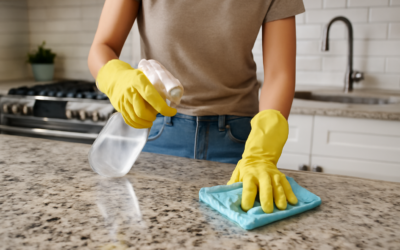
For daily cleanup, nothing beats a few drops of mild dish soap in warm water. It is cheap, gentle, and pH-neutral enough to lift grease without touching the sealer. Use a soft microfiber cloth, wipe the surface down, then follow with a second cloth dampened in clean water to rinse away soap film.
Soap residue is the one drawback of this method. If you skip the rinse step, a hazy buildup dulls the shine over a few weeks. Wring the cloth well so you are wiping with a damp, not soaking, surface. Dry the counter with a clean towel afterward to prevent streaks and to keep standing water out of any hairline seams.
Store-Bought Granite Cleaners Worth Buying
When you want a grab-and-spray option, buy a cleaner labeled specifically for natural stone. These are formulated pH-neutral and often include a light sealer boost. Reliable choices in most hardware stores and online run $8 to $15 a bottle and last for months:
- Weiman Granite & Stone Cleaner: streak-free spray with a mild polish, good for daily use.
- Method Daily Granite Cleaner: plant-based, light citrus scent, safe on sealed stone.
- Granite Gold Daily Cleaner: pH-balanced and widely recommended by fabricators.
- Therapy Stone Cleaner & Polish: adds a protective shine along with the clean.
Avoid anything marketed as a “scouring” or “heavy-duty degreaser,” even if the label mentions countertops. If the ingredient list shows citric acid, vinegar, ammonia, or bleach, put it back on the shelf.
A Safe DIY Granite Cleaner Recipe
You can mix an effective cleaner for pennies. Combine the following in a clean spray bottle:
- 1 1/2 cups warm water
- 1/4 cup rubbing alcohol (70 percent isopropyl)
- 3 drops mild dish soap
- Optional: 2 drops essential oil for scent
The rubbing alcohol disinfects and evaporates fast, which cuts streaking, while the tiny amount of soap handles grease. Shake gently before each use, spray a light mist, and wipe with microfiber. This mix is pH-neutral and safe on sealed granite for daily wiping. Skip vinegar and lemon entirely no matter what a viral cleaning video tells you.
How to Handle Stains and Stuck-On Grime
Dried food or sticky spills should be lifted, not scrubbed off. Lay a warm, damp cloth over the spot for a few minutes to soften it, then wipe gently. For a hardened drip, a plastic putty knife or an old credit card scrapes it free without scratching the polish. Never use steel wool or a green scouring pad.
Deeper stains that have soaked into the stone call for a poultice. Mix baking soda with a little water into a paste the texture of peanut butter, spread it about a quarter inch thick over the stain, cover with plastic wrap, and tape the edges. Leave it 24 hours so it draws the stain up as it dries, then scrape it off and rinse. Oil stains may need a poultice made with baking soda and hydrogen peroxide instead of plain water.
Disinfecting Granite Without Bleach
Kitchen counters need occasional sanitizing, especially after raw meat. Skip the bleach and reach for 70 percent isopropyl alcohol. Spray it undiluted on the surface, let it sit for 3 to 5 minutes, then wipe with a damp microfiber cloth. Alcohol kills most household bacteria and is gentle on the sealer.
Hydrogen peroxide at 3 percent is another safe disinfectant for granite. Both options do the job that bleach would, without the pH punch that strips protection. If you prefer a commercial product, several stone-safe sprays now carry an EPA disinfecting claim; those are worth the few extra dollars for a busy family kitchen.
Keep the Seal Intact With a Simple Water Test
The best cleaning routine still depends on a healthy sealer underneath. Test it every few months with the water-drop test: pour a tablespoon of water on the counter and wait 15 minutes. If it beads up, the seal is fine. If the granite darkens where the water sat, it is soaking in and the stone needs resealing.
Resealing is a 20-minute DIY job. Wipe the surface clean and dry, apply a granite sealer such as Granite Gold or Miracle 511 Impregnator with a soft cloth, let it soak per the label (usually 15 minutes), then buff off the excess. Most kitchen counters need this once every 1 to 3 years depending on use. A well-sealed slab resists the coffee, wine, and oil that would otherwise stain it.
Daily Habits That Extend the Life of Granite
Cleaning is only half the battle; a few habits do the rest. Wipe spills as they happen rather than letting acidic foods like citrus, wine, or tomato sauce sit on the surface. Use cutting boards to protect both the knife edge and the polish, and set hot pans on trivets even though granite tolerates heat, because thermal shock over years can cause micro-cracks near seams.
Coasters under glasses, a quick daily wipe with your soap-and-water cloth, and a monthly check of the sealer will keep the counter looking like the day it was installed. Now that you know exactly what to use to clean granite countertops, the whole routine takes about two minutes a day and costs almost nothing.
Cleaning Granite in the Bathroom vs. the Kitchen
The same pH-neutral rules apply everywhere, but the daily threats differ by room. In the kitchen, grease, oil, coffee, wine, and acidic foods are the enemies, so your focus is prompt spill cleanup and a degreasing wipe with dish soap. Keep a microfiber cloth within arm’s reach of the stove and wipe splatter before it bakes on.
In the bathroom, the culprits are toothpaste, hairspray overspray, and harsh cleaning products meant for tile and toilets. Those bathroom cleaners are often acidic or bleach-based and can drift onto a granite vanity, so cover or wipe the counter after using them elsewhere. Hard-water mineral spots from a dripping faucet also dull bathroom granite; wipe standing water and dry the surface after use. Both rooms reward the same two-minute routine, just aimed at different messes.
Quick Reference: Do and Don’t
- Do use: warm water and dish soap, stone-specific cleaners, rubbing alcohol, hydrogen peroxide.
- Don’t use: vinegar, lemon, bleach, ammonia, Windex, abrasive powders, or scouring pads.
- Do: wipe spills fast, reseal every 1 to 3 years, dry the surface after cleaning.
- Don’t: let acidic foods sit, drag pots across the polish, or scrub with anything rough.
Stick to gentle, pH-neutral products and the sealer that protects your investment stays right where it belongs. Granite rewards a light touch with decades of easy-care beauty.