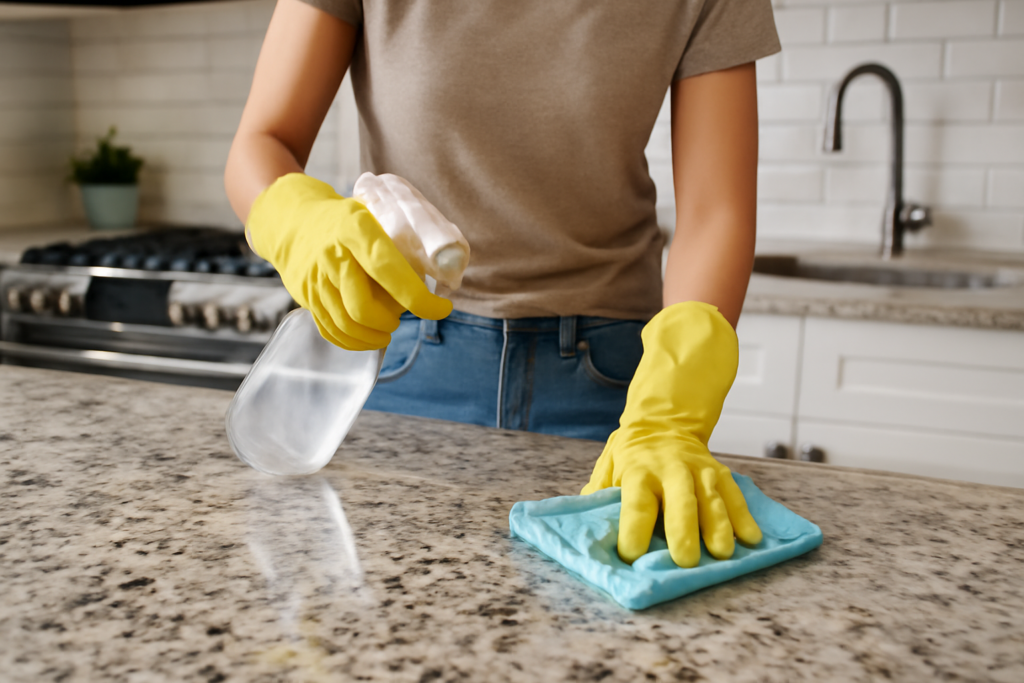
Knowing how to clean granite countertops the right way is what keeps that glossy, just-installed look for decades, and the rules are simpler than most people think. The golden principle is to use only pH-neutral cleaners and to avoid anything acidic or abrasive, because acids quietly break down the sealer and etch the stone over time. With the right routine, granite is one of the most hygienic and low-effort surfaces in the kitchen. This step-by-step guide walks through daily cleaning, disinfecting, stain removal, and sealing.
Part of our Countertops guide — explore the full guide →
Why Technique Matters With Granite
Granite is a hard, durable natural stone, but it is also porous and chemically sensitive to acids. Vinegar, lemon juice, and many all-purpose or glass cleaners are acidic enough to wear down the protective sealer and eventually dull the stone itself. Abrasive powders and scouring pads scratch the polished finish. The good news is that gentle, correct cleaning is fast and cheap, and it is the foundation of a granite countertop that lasts a lifetime.
What You Need
You do not need specialty products to clean granite well day to day, though stone-safe cleaners do make it easier.
- Soft microfiber cloths for wiping and buffing
- Mild dish soap and warm water, or a pH-neutral stone cleaner
- A non-abrasive sponge, never a scouring pad
- Isopropyl alcohol for occasional disinfecting
Step-by-Step Daily Cleaning
For everyday cleaning, this gentle routine handles spills, crumbs, and grease without harming the surface.
- Wipe away crumbs and loose debris with a damp microfiber cloth
- Add a few drops of mild dish soap to warm water, or use a stone-safe spray
- Wipe the surface gently with a soft cloth or non-abrasive sponge
- Rinse with a clean damp cloth to remove any soap film
- Dry and buff with a fresh microfiber cloth for a streak-free shine
Drying is the secret to that polished look, since letting granite air-dry leaves water spots and streaks. Wipe spills as they happen, especially acidic ones like wine, coffee, and citrus.
How to Disinfect Granite Safely
Bleach and harsh disinfectants are the wrong tools for granite. To sanitize after handling raw meat or for general germ control, mix isopropyl alcohol with water in roughly equal parts, spray it on, let it sit for a few minutes, then wipe and dry. Alcohol kills germs without attacking the sealer. There are also dedicated stone-safe disinfectants if you prefer a ready-made option. Avoid letting any disinfectant pool on the surface for long stretches.
Removing Stains From Granite
Even sealed granite can occasionally stain if a spill sits too long. The fix depends on the type of stain. For an oil-based stain, make a poultice by mixing baking soda with a little water into a paste, spread it over the spot, cover it with plastic wrap, and let it draw out the stain for 24 hours before wiping clean. For water-based stains, a similar poultice with hydrogen peroxide can help on lighter stones. Always blot rather than scrub, and reseal the area afterward if needed. Stubborn or large stains may call for a professional.
Keep It Sealed
Easy cleaning depends on a good seal, because a sealed surface keeps spills on top where you can wipe them away. Test the seal by leaving a few drops of water on the counter for several minutes: if the water beads, the seal is intact; if it soaks in and darkens the stone, it is time to reseal. Most granite benefits from resealing every one to three years with a quality penetrating stone sealer, with heavy-use areas needing it more often. Sealing is a quick job that pays off in stain protection.
Habits That Protect Granite
A few simple habits prevent most problems before they start. Use cutting boards rather than slicing directly on the stone, set hot pans on trivets even though granite tolerates heat well, and place coasters under glasses to avoid rings and etching. Keep acidic foods and harsh cleaners off the surface, and never use vinegar, lemon, ammonia, or bleach. These small routines, combined with gentle daily cleaning, are all granite needs.
How Often to Clean Granite
Granite responds best to a simple, consistent rhythm rather than occasional deep scrubbing. Wipe the surface down daily with mild soapy water or a stone-safe spray to remove crumbs, grease, and spills before they have a chance to sit. Give it a more thorough cleaning weekly, and disinfect with diluted alcohol whenever you have handled raw meat or want extra peace of mind. Reseal once or twice a year, or whenever the water-bead test shows the seal is fading. This light, regular routine keeps granite hygienic and shining and prevents the buildup that makes cleaning harder later.
Mistakes That Damage Granite
Most granite problems come from a handful of avoidable mistakes. Using acidic cleaners like vinegar or lemon, even occasionally, slowly degrades the sealer and dulls the stone. Reaching for abrasive powders or scouring pads scratches the polished finish permanently. Letting acidic spills like wine or citrus sit invites etching and staining, especially if the seal has worn. Cutting directly on the surface dulls knives and can scratch the stone, and skipping resealing leaves the porous stone vulnerable to stains. Avoid these, and the gentle cleaning routine above is all your granite will ever need.
The Bottom Line
Learning how to clean granite countertops comes down to a few clear rules: use pH-neutral cleaners or mild soapy water, never acids or abrasives, dry and buff for shine, disinfect with diluted alcohol, and keep the stone sealed. Tackle the occasional stain with a poultice, build in protective habits, and your granite will stay glossy, hygienic, and beautiful for many years. Keep the routine light and consistent rather than waiting for grime to build up, and cleaning granite will stay one of the easiest chores in your kitchen. Remember the core rule above all else: pH-neutral cleaners only, never acids or abrasives, and a sealed surface underneath, and your countertops will keep their factory shine for many years to come.