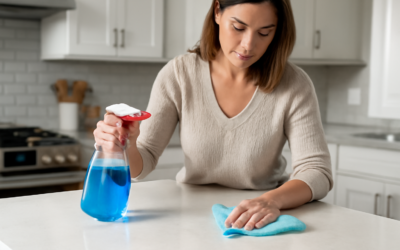
Ran out of the blue stuff at the worst possible moment? Good news: commercial glass cleaner is overrated. Knowing how to clean mirror without Windex comes down to three basic supplies most households already stock, and the results are often better than what you get from a spray bottle of ammonia-based product. Cleaner mirrors, less chemical residue, and no trip to the store.
- Why Skip Windex in the First Place
- The Classic Vinegar and Water Solution
- Rubbing Alcohol for Stubborn Spots
- The Newspaper Trick Your Grandmother Used
- Microfiber Technique That Prevents Streaks
- Cleaners to Avoid on Mirrors
- Quick Deep-Clean Schedule
- Dealing With Hard Water Spots
- Cleaning Without Streaks on Humid Days
Why Skip Windex in the First Place
Windex works, but it leaves a thin ammonia film that attracts dust within days. That is why mirrors look streaky a week after you cleaned them. Homes with kids, pets, or anyone sensitive to fumes have another reason to ditch it. The active ingredients in most blue glass cleaners are ammonium hydroxide and a surfactant, both of which are easy to replicate with pantry staples.
Another practical issue: Windex should not touch tinted mirrors, antique silvered glass, or mirrors with a beveled adhesive edge. The ammonia can seep behind the silvering and cause black spots that never come out.
The Classic Vinegar and Water Solution
Mix one part distilled white vinegar with one part distilled water in a spray bottle. Tap water works in a pinch, but minerals in hard water leave spots on a freshly cleaned mirror. A 16 oz bottle with 8 oz of each liquid covers about 12 bathroom mirrors before you need to refill.
Spray the mirror lightly, not to the point of drips running down the glass. Wipe in tight S-shaped motions with a clean microfiber cloth. Follow immediately with a dry lint-free cloth to buff out any remaining moisture. The vinegar evaporates cleanly and leaves zero residue.
If the smell bothers you, add five drops of lemon or lavender essential oil per cup of solution. The scent dissipates in about two minutes, and by then your mirror is already dry.
Rubbing Alcohol for Stubborn Spots
Toothpaste splatter, hairspray overspray, and greasy fingerprints laugh at vinegar. For these, reach for 70% isopropyl rubbing alcohol. A small amount on a cotton ball lifts most bathroom gunk in under 30 seconds.
For a full-mirror alcohol clean, combine 1 cup rubbing alcohol, 1 cup distilled water, and 1 tablespoon white vinegar in a spray bottle. This three-ingredient mix is the closest DIY match to commercial glass cleaner, and it dries in about 15 seconds because alcohol evaporates fast. No streaks, no smell after a minute.
Never use rubbing alcohol on antique mirrors with exposed silvering edges. The alcohol can wick under the backing and cause the same black-spot damage as ammonia.
The Newspaper Trick Your Grandmother Used
Before microfiber, people cleaned mirrors with crumpled newspaper, and it genuinely works better than paper towels. Newsprint is made from dense, tightly packed fibers that do not shed lint. The slight oiliness of soy-based ink acts as a polishing agent.
Spray the mirror with your vinegar or alcohol solution, then buff with a tight ball of crumpled newspaper. Your hands will turn gray from the ink, so wear dishwashing gloves if you care. The finish is glossy enough that you will not miss your old glass cleaner.
Stick to black-and-white pages. Glossy advertising inserts have a clay coating that can scratch softer silvered surfaces and will not absorb liquid the same way.
Microfiber Technique That Prevents Streaks
Tool choice matters as much as cleaner. Use a microfiber cloth rated 300 GSM or higher, which refers to grams per square meter of fiber density. Cheap microfiber from the dollar store is usually 200 GSM and leaves fuzz on glass.
- Wash new microfiber cloths once before first use to remove factory sizing
- Never add fabric softener to the wash cycle — it coats fibers and causes streaks
- Fold the cloth into quarters so you have eight clean surfaces to rotate through
- Work from the top of the mirror down to catch drips as you go
Replace microfiber cloths every six months or sooner if they start shedding. A ratty cloth will sabotage even the best cleaning solution.
Cleaners to Avoid on Mirrors
Dish soap leaves a film that streaks badly once it dries. Baking soda is abrasive enough to micro-scratch the glass surface over time. Bleach corrodes the silver backing on the mirror’s reverse side, especially on older mirrors mounted with metal clips. Bar Keepers Friend and other acid-based powders do the same damage.
Also avoid paper towels with printed patterns or lotion content. The dye can transfer, and lotion leaves a waxy residue. Plain white paper towels are okay in a pinch but microfiber outperforms them every time.
Quick Deep-Clean Schedule
For most bathroom mirrors, a once-a-week vinegar wipe-down takes under two minutes and prevents buildup. Once a month, do an alcohol deep clean to tackle any soap scum or hairspray that has bonded to the glass. Entry hall and bedroom dresser mirrors usually need cleaning only once a month since they do not get splashed.
Keep a spray bottle labeled and ready under the sink. The hardest part of mirror cleaning is not the technique, it is remembering to do it before the grime becomes a chore. A 60-second weekly pass beats a 20-minute quarterly scrub every time.
Dealing With Hard Water Spots
Homes on well water or in areas with high mineral content often see white cloudy spots on bathroom mirrors. These are calcium and magnesium deposits from water droplets that dried in place. Regular glass cleaner will not touch them because the minerals are bonded to the glass surface.
Mix equal parts white vinegar and warm water, soak a microfiber cloth until it is dripping, and lay it flat against the spots for 10 minutes. The acidic bath dissolves the mineral scale. Wipe clean, buff dry, and the spots are gone. For severe cases, Bar Keepers Friend Soft Cleanser applied sparingly with a damp sponge removes the deposits in seconds — but rinse thoroughly afterward since the oxalic acid in the cleanser can etch the glass with prolonged contact.
Cleaning Without Streaks on Humid Days
High humidity is the enemy of streak-free mirrors. On a muggy summer morning, cleaning solutions evaporate too slowly and leave visible drying lines. If you must clean a mirror in humid conditions, run the bathroom fan or a dehumidifier for 20 minutes first to drop the moisture level, then work fast with a slightly drier cloth than usual. Avoid cleaning immediately after a shower when the mirror is fogged — wait until the surface is completely dry before applying any solution.
Temperature matters too. Cleaning a cold mirror with warm solution causes condensation that streaks as it dries. Let the room come to the same temperature as your cleaning liquid, or use room-temperature solution on a room-temperature mirror for best results every time.