Not every carpet is stretched over tack strips. For glue-down broadloom, carpet tiles, indoor-outdoor carpet, and stair runners, the right carpet glue adhesive is what holds everything securely in place for years. Choosing the wrong product, or applying it poorly, leads to bubbles, lifting edges, and seams that fail within months. This guide explains the types of carpet adhesive, how to match one to your project, and the step-by-step method for a clean, permanent bond.
- When Do You Need Carpet Glue Adhesive?
- Types of Carpet Glue Adhesive
- How to Choose the Right Adhesive
- Estimating How Much Adhesive You Need
- Step-by-Step Application
- Drying and Curing Times
- Safety and Ventilation
- Removing Old Carpet Glue Adhesive
- Troweling and Coverage Tips
- Common Mistakes to Avoid
- Final Thoughts
When Do You Need Carpet Glue Adhesive?
Glue-down installation is preferred in several situations. Commercial spaces and basements use it because there is no cushion to trap moisture and the carpet lies flat and stable under heavy rolling traffic. Carpet tiles rely on adhesive or tacky release film to stay put while allowing individual replacement. Indoor-outdoor carpet on patios and boat decks needs a waterproof bond. And stair installations often use adhesive alongside mechanical fasteners for extra security. If your carpet has an attached cushion backing or you are covering concrete, glue-down is frequently the right method.
Types of Carpet Glue Adhesive
Adhesives are formulated for specific jobs, and using the correct one is critical:
- Multipurpose latex adhesive: The most common water-based glue for direct glue-down carpet over concrete or wood. Easy cleanup and low odor.
- Pressure-sensitive adhesive: Stays tacky rather than curing hard, ideal for carpet tiles that may need repositioning or replacement.
- Outdoor and marine adhesive: Waterproof, weather-resistant formulas for outdoor carpet and damp environments.
- Seam adhesive and seam sealer: A specialized product applied to cut edges to lock fibers and prevent fraying at joins.
- Cove base and repair adhesive: Thicker mastics used for spot repairs, transitions, and securing loose corners.
Always confirm the adhesive is rated for both your carpet backing and your subfloor material, since mismatches are the top cause of bond failure.
How to Choose the Right Adhesive
Start with three questions: What is the carpet backing? What is the subfloor? And will the area get wet? A woven-back commercial carpet over concrete calls for a strong multipurpose latex adhesive, while modular carpet tiles want a releasable pressure-sensitive glue. For any space exposed to moisture, only a waterproof outdoor formula will hold. Check the manufacturer’s coverage rate and read the label’s open time, the window during which the glue stays workable. Buying the adhesive recommended by your carpet’s manufacturer protects your warranty and removes the guesswork.
Estimating How Much Adhesive You Need
Coverage varies by product and trowel size, but a typical gallon of multipurpose carpet adhesive covers roughly 40 to 60 square feet when applied with the recommended notched trowel. A four-gallon pail generally handles a small to mid-size room of 150 to 240 square feet. Rougher subfloors and heavier carpet backings absorb more glue and reduce coverage, so buy about 10 percent extra to avoid running short mid-install. Pressure-sensitive adhesives for tiles usually cover more area, often 200 or more square feet per gallon, because they go on in a thin film.
Step-by-Step Application
A methodical approach produces the cleanest result:
- Prep the subfloor: Clean, dry, and level. Remove old adhesive, dust, and debris; patch any low spots.
- Dry-fit the carpet: Position and trim the carpet, then fold half of it back on itself.
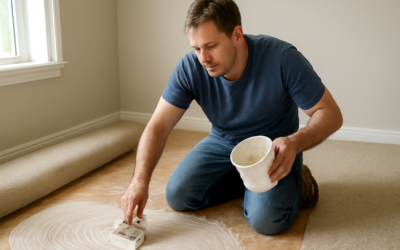
- Spread the adhesive: Using the correct notched trowel, spread an even coat on the exposed subfloor at the angle the label specifies.
- Respect the open time: Some adhesives need a few minutes to become tacky before you lay the carpet in.
- Lay and roll: Set the carpet into the glue, then use a carpet roller to press out air and ensure full contact.
- Repeat: Fold back and glue the other half the same way, and seal any seams.
Drying and Curing Times
Patience protects your work. Most water-based carpet adhesives set enough to walk on lightly within a few hours but need 24 to 72 hours to fully cure before heavy furniture or rolling loads go back on the floor. Cooler temperatures and high humidity slow curing considerably, so keep the room ventilated and ideally between 65 and 85 degrees Fahrenheit during installation and cure. Rushing furniture back too soon is a common mistake that shifts the carpet before the bond has locked in.
Safety and Ventilation
Plan your workspace so you never trap yourself in a glued-in corner. Start spreading adhesive at the far side of the room and work toward the exit, so you are never stepping on fresh glue or newly laid carpet to reach the door. Keep a bucket of clean water and rags close by for immediate cleanup of smears on baseboards and adjacent flooring, since dried adhesive is far harder to remove. Working methodically like this protects both your finished result and your ability to leave the room without damaging your own work.
Even low-odor, water-based adhesives deserve respect. Work in a ventilated space, open windows, and run a fan to move air. Wear gloves to keep glue off your skin and knee pads for comfort during long sessions on the floor. Keep the adhesive off finished surfaces and wipe stray smears immediately while they are still wet, since cured adhesive is far harder to remove. Store leftover product sealed and away from freezing temperatures, which can ruin water-based formulas.
Removing Old Carpet Glue Adhesive
Eventually glued carpet comes up, and the residue must go before new flooring goes down. Scrape off the bulk with a floor scraper, then soften stubborn adhesive with warm water and a bit of detergent for water-based glue, or a citrus-based adhesive remover for tougher mastics. Work in small sections, scrape as the glue softens, and rinse the floor clean. For large areas of hardened adhesive on concrete, a rented floor buffer with an abrasive pad speeds the job considerably. Let the subfloor dry fully before installing anything new.
Troweling and Coverage Tips
The trowel is the unsung hero of a good glue-down job. Adhesive manufacturers specify a notch size, such as 1/16-inch by 1/16-inch, for each product and carpet type, and using the correct notch controls how much glue is deposited and how well the carpet bonds. Too little adhesive starves the bond and leaves loose spots; too much oozes up through the backing and never cures properly. Hold the trowel at a consistent angle and spread in smooth, overlapping passes to avoid bare patches. Replace a trowel once its notches wear down, since worn teeth deposit less glue than the label assumes. Keeping the trowel clean between sections also prevents dried adhesive lumps from creating high spots under the carpet.
Common Mistakes to Avoid
Most glue-down failures trace back to a handful of errors. Installing over a damp or dusty subfloor is the top culprit, since adhesive cannot bond to moisture or loose grit. Ignoring the open time, either laying carpet into glue that is too wet or waiting until it has skinned over, produces weak bonds. Using an interior adhesive in a wet or outdoor area guarantees failure. Skipping the roller leaves trapped air that becomes bubbles. And rushing furniture back before the adhesive cures shifts the carpet before it has locked down. Avoiding these mistakes is largely about patience and preparation, both of which cost nothing but save you from tearing up and redoing the entire floor.
Final Thoughts
The right carpet glue adhesive is the quiet difference between a floor that lies flat and lasts for years and one that bubbles, lifts, and frustrates you within a season. Match the adhesive to your carpet backing, subfloor, and moisture exposure; buy enough with a little to spare; and follow the prep, spread, and cure steps without cutting corners. Respect the drying times, ventilate the space, and you will get a professional-grade bond that keeps your carpet exactly where you put it, whether it is a basement rec room, a busy office, or a sunny outdoor patio.