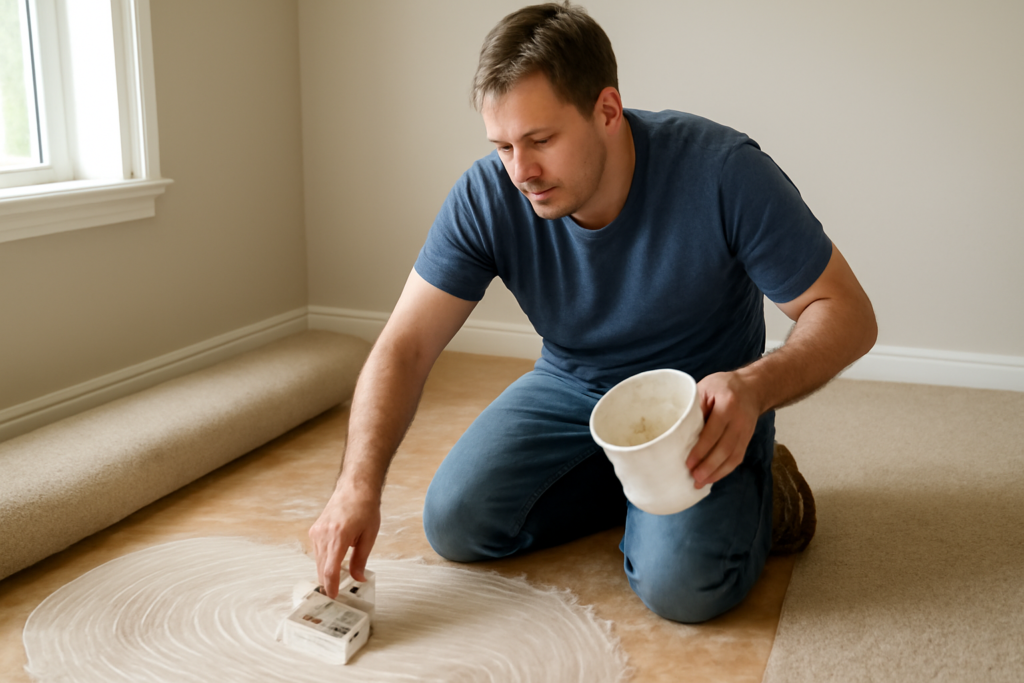
Whether you are gluing down a fresh carpet or scraping up the sticky mess a previous one left behind, understanding carpet glue saves you time and frustration. Adhesive holds carpet firmly to the subfloor, prevents shifting and bubbling, and is the standard method for commercial-style glue-down installations. But the same bonding power that makes it useful also makes old glue stubborn to remove. This guide covers the adhesive types, how to apply them, and the safest ways to get old glue off concrete and wood.
When Carpet Is Glued Down
Not all carpet is glued. Residential carpet over padding is often stretched and tacked, while glue-down installation bonds the carpet directly to the subfloor with no pad. Glue-down is common in basements, commercial spaces, and over concrete, where it resists rippling and handles heavy traffic and rolling loads well. Carpet tiles are also frequently set with adhesive or sticky tabs.
Types of Carpet Adhesive
Several adhesives are used depending on the carpet and subfloor:
- Multipurpose latex adhesive: the most common, water-based, for direct glue-down carpet
- Pressure-sensitive adhesive: stays tacky, used for carpet tiles so they can be lifted and replaced
- Outdoor and marine adhesive: water-resistant, for patios, boats, and damp areas
- Seam adhesive: bonds carpet edges together at seams
Always match the adhesive to your carpet backing and subfloor, and follow the carpet manufacturer’s recommendation to keep any warranty valid.
How to Apply Carpet Glue
A clean, dry, level subfloor is the foundation of a good bond. The general process:
- Clean and dry the subfloor completely, removing dust and debris
- Dry-fit and trim the carpet to size
- Spread adhesive evenly with a notched trowel sized for your carpet backing
- Wait the recommended open time so the glue becomes tacky
- Lay the carpet into the adhesive and press it down firmly
- Roll the carpet with a weighted roller to ensure full contact and remove air pockets
Using the correct trowel notch size matters; too little glue leaves weak spots and too much causes ooze and slow curing.
Working Time and Curing
Most water-based adhesives have an open time during which the glue must be tacky before you lay carpet, plus a longer cure period before heavy traffic or furniture. Stay off the newly glued carpet as directed, often 24 hours or more, and keep the room ventilated to help it cure. Rushing the cure can lead to loose spots and bubbles later.
Removing Old Carpet Glue
Pulling up old glued carpet leaves a layer of dried adhesive that must come off before installing new flooring. The method depends on the subfloor.
From Concrete
Concrete is durable, so you have more aggressive options. Start by scraping with a long-handled floor scraper to remove the bulk. For remaining residue, warm water with a bit of soap can soften water-based glue, or use a citrus-based adhesive remover. Stubborn glue may call for a heat gun to soften it or, for large areas, a floor buffer with an abrasive pad or a power scraper.
From Wood
Wood subfloors need a gentler touch to avoid gouging. Soften the glue with warm water or a citrus remover and scrape carefully with a putty knife or hand scraper, working with the grain. Avoid excessive water that could damage the wood, and skip heavy power tools that can chew into the surface.
How Much Adhesive You Need
Estimating coverage prevents mid-job runs to the store. Adhesive coverage depends heavily on the trowel notch size and the subfloor’s texture, with rougher surfaces drinking up more glue. As a rough guide, a gallon of multipurpose carpet adhesive often covers somewhere in the range of 100 to 150 square feet, but always check the bucket’s stated coverage for your specific trowel. A porous concrete slab will use more than a smooth, sealed one. Buy a little extra so you are not forced to stop spreading partway through a room, which can create a visible cold joint where the first batch has skinned over.
Glue-Down vs Stretch-In Carpet
Understanding the alternative helps you decide if gluing is right for your space. Stretch-in installation uses tack strips around the perimeter and a separate cushion pad, giving a softer feel underfoot and easier future replacement, which is why it dominates bedrooms and living rooms. Glue-down skips the pad and bonds carpet directly to the floor, producing a firmer, more stable surface that resists rippling and handles rolling traffic like office chairs and carts.
Choose glue-down for basements, commercial-style spaces, stairs, and anywhere moisture or heavy use would defeat a stretched installation. Choose stretch-in when comfort and easy swap-outs matter more than maximum stability.
Safety and Ventilation
Adhesives and removers can release fumes, so safety comes first. Keep the space well ventilated by opening windows and running fans, wear gloves to protect your skin, and add a respirator and eye protection when using chemical removers or generating dust with a grinder. Read the product label for specific precautions, and dispose of solvent-soaked rags safely. If you are sensitive to fumes, choose low-VOC, water-based products.
Subfloor Prep Before Gluing
The bond is only as good as the surface under it. Concrete must be fully cured, clean, and dry, with no curing compounds, sealers, or old adhesive that could prevent grip; grind or sand glossy spots if needed. Test a slab for moisture, since excess vapor can break down adhesive over time and cause the carpet to release. Patch cracks and level low spots with a floor patch so the finished carpet does not telegraph imperfections. On wood subfloors, secure any loose panels and sand down high seams. Spending time on a flat, clean, dry base prevents the loose spots and bubbles that plague rushed installations.
Getting It Right
Carpet glue gives you a firm, durable installation when applied to a clean subfloor with the right trowel and proper cure time. When the time comes to remove it, match your method to the subfloor, work patiently, and protect yourself with gloves and ventilation. With the correct product and approach, both installation and removal become straightforward, predictable jobs.