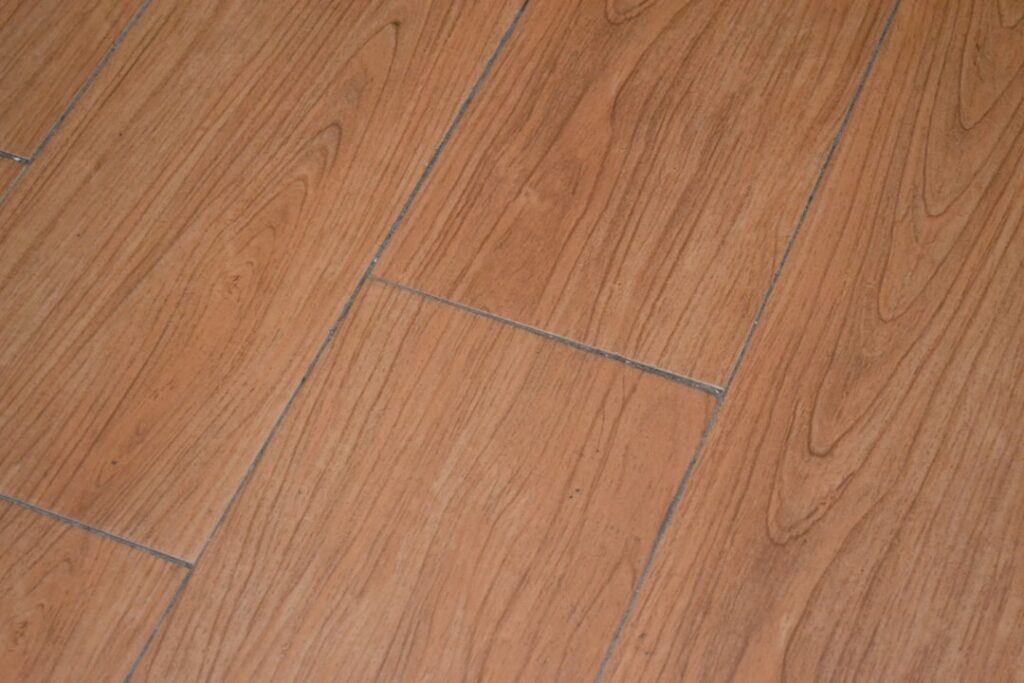
Glue down laminate flooring sits at an interesting crossroads in flooring history: gluing the joints was the original way laminate went down before click-lock systems took over in the late 1990s, and today it survives as a niche method chosen specifically to add water resistance and rigidity that a basic floating floor lacks. Understanding when gluing makes sense, and when it is unnecessary, can save you both money and frustration. At D and G Flooring we clarify this often-misunderstood topic. This guide covers what glue-down laminate means, its pros and cons, and how it is installed.
Two Different Things Called Glue Down
The term causes confusion because it can mean two distinct methods. The first is glued-seam (glued-joint) laminate, where planks still float over an underlayment but glue is applied in the tongue-and-groove joints to bond the seams together. The floor as a whole still floats and is not stuck to the subfloor. The second, less common method is full glue-down, where the laminate is bonded directly to the subfloor with adhesive, like a glue-down vinyl or wood floor. Most discussion of glue-down laminate refers to the glued-seam approach, and most modern laminate is actually designed to be installed dry without any glue at all. Knowing which method applies to your product is the first step.
Why Glue the Seams at All
The main reason to glue laminate seams is water resistance. Laminate’s core is high-density fiberboard, which swells permanently if water penetrates the joints, the material’s biggest weakness. Applying a waterproof PVA glue in the tongue-and-groove seams seals them against surface moisture, helping protect the vulnerable core in areas like kitchens and entryways. A secondary reason is rigidity and joint strength: glued seams resist gapping and separation in high-traffic areas and large rooms. With the rise of water-resistant and waterproof laminate and luxury vinyl, glued seams are less common than they once were, but they still have a place.
Pros of Glue Down Laminate
- Better moisture resistance: Glued seams seal the joints against surface water, protecting the fiberboard core where it is most vulnerable.
- Stronger, tighter joints: Bonded seams resist separation and gapping over time, useful in busy areas.
- More solid feel: A glued floor can feel firmer and quieter, with less of the slight movement floating floors can have.
- Good for high-traffic spaces: The added joint strength suits hallways, kitchens, and commercial-style use.
- Stability in large rooms: Glued seams help control movement across long spans.
Cons and Drawbacks
- More labor and mess: Applying glue to every joint is slower, stickier, and requires cleanup of squeeze-out as you go.
- No easy disassembly: A glued floor cannot be taken apart and reused like a dry click floor, and individual board replacement is difficult.
- Cure time: Glued seams need time to set before the floor takes full traffic, slowing the project.
- Not truly waterproof: Glued seams resist surface moisture but standing water and below-grade dampness can still damage laminate.
- Often unnecessary: Modern click systems and water-resistant laminates have made glued seams obsolete for many installs.
- Skill required: Applying the right amount of glue and cleaning squeeze-out cleanly takes care; sloppy work shows.
Glue Down Laminate vs Click Floating Laminate
Most laminate sold today uses a dry click-lock system that snaps together with no glue, floats over an underlayment, installs quickly, and can be disassembled. Glued-seam laminate trades that speed and reusability for sealed joints and added rigidity. For a typical dry bedroom or living room, a quality click floating floor is faster, cleaner, and perfectly adequate. Glued seams make the most sense when you want extra moisture protection in a kitchen or entry, or extra joint strength in a heavy-traffic area, and your product is rated for it. Always check whether your specific laminate is designed for gluing, because not all are.
Choosing the Right Glue
If you glue the seams, use the correct adhesive. A waterproof PVA wood glue formulated for laminate flooring is the standard for glued joints, since it seals against moisture and bonds the tongue and groove. Do not substitute construction adhesive or general-purpose glue, which can be too rigid, too messy, or incompatible. For a full glue-down to the subfloor, you need a flooring adhesive rated for laminate and your subfloor type, applied with the specified notched trowel. In every case, follow the laminate manufacturer’s adhesive recommendation to keep the floor performing and the warranty intact.
Installation Overview (Glued Seams)
- Acclimate the planks in the room for the time the maker specifies so they match the home’s conditions.
- Prep the subfloor so it is clean, dry, and flat within tolerance, then lay the underlayment, including a vapor barrier over concrete.
- Plan the layout, balancing the first and last rows and staggering end joints.
- Apply glue in the joints, running a continuous bead of waterproof PVA along the top of the groove as directed, not too much and not too little.
- Lock the planks together, tapping them tight with a block so glue fills the seam, and maintain expansion gaps at the walls since the floor still floats.
- Wipe squeeze-out immediately with a damp cloth before it dries, since cured glue on the surface is hard to remove.
- Let the floor cure per the instructions before heavy traffic, then install transitions and trim.
Even with glued seams, the floor floats, so the perimeter expansion gap is still essential to prevent buckling.
Maintenance and Care
Caring for glued-seam laminate is much like any laminate. Sweep or vacuum regularly to remove grit, and clean with a barely damp microfiber and a laminate-safe cleaner; never wet-mop or let water pool, because even sealed seams are not a license to flood the floor. Wipe spills promptly. Use felt pads under furniture and mats at entrances. The sealed seams give you extra peace of mind against splashes, but laminate remains a moisture-sensitive product, so keep standing water off it and address leaks quickly.
Cost Considerations
Laminate is a value-oriented floor, with material commonly running roughly $1 to $4 per square foot for many products and more for premium water-resistant lines. Gluing the seams adds the cost of the PVA adhesive and more labor or installation time, so a glued install costs a bit more than a dry click floor. A full glue-down to the subfloor adds flooring adhesive and trowel work, raising labor further. Weigh whether the added moisture protection or rigidity justifies the extra cost versus simply choosing a water-resistant click laminate or a waterproof vinyl for wet areas.
The Bottom Line
Glue down laminate, usually meaning glued seams on a floating floor, is a niche method that seals the vulnerable fiberboard joints against surface moisture and strengthens the seams for high-traffic and kitchen-adjacent areas. The trade-offs are a slower, messier install, no easy disassembly, and the fact that modern click and water-resistant laminates have made gluing unnecessary for many homes. Confirm your product is rated for gluing, use a waterproof PVA adhesive, keep the perimeter expansion gap, and clean squeeze-out as you go. The team at D and G Flooring can help you decide whether glued seams are worth it or whether a click or waterproof option better fits your room.
Prefer to explore on your own?
See how new flooring looks in your actual room in seconds — free, no signup.
Try the free Floor Studio →