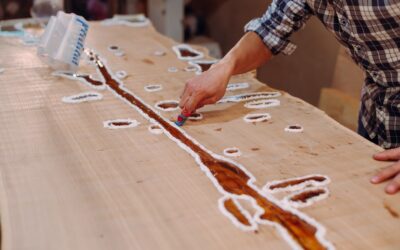
River tables, deep bar tops, and clear cast art all rely on one specialized product, and choosing the wrong type guarantees a sticky, cloudy, or cracked mess. Casting epoxy resin is engineered for thick, deep pours where standard coating epoxy would overheat and fail. Understanding the difference, and how to mix, pour, and cure it correctly, is what separates a flawless crystal-clear casting from an expensive disaster. This guide walks through the fundamentals every DIYer needs before that first deep pour.
Part of our Epoxy, Concrete & Garage Floors guide — explore the full guide →
Casting Resin vs. Coating Resin
The most important distinction in the whole hobby is the one most beginners miss. Coating (tabletop) epoxy is formulated for thin layers, usually 1/8 to 1/4 inch, and cures fast while generating significant heat. Casting resin is formulated for deep pours, often 1 to 2 inches or more in a single pour, and cures slowly and cooler precisely so that thick volumes don’t overheat. Use coating epoxy for a deep pour and the chemical reaction can run away, building enough internal heat to yellow, crack, or even smoke. Match the resin to the job.
Why Pour Depth Controls Everything
Epoxy cures through an exothermic reaction, it generates its own heat. The thicker the pour, the more heat is trapped in the mass, and the faster the reaction accelerates. Casting resins are designed with longer working times and lower peak temperatures to keep deep pours under control. Every casting resin has a maximum pour depth on the label, commonly 2 inches per layer for deep-pour formulas. Exceed it and you risk cracking, yellowing, and bubbling. When in doubt, pour in multiple layers, letting each reach a firm gel before adding the next.
Mixing: Get the Ratio Exactly Right
Epoxy is unforgiving about ratios. Each product specifies a mix by volume or by weight, often 2:1 or 1:1 for casting formulas, and deviating throws off the cure.
- Measure resin and hardener precisely with graduated cups or a scale, never eyeball it.
- Pour both parts into a clean mixing container and stir slowly and thoroughly for the full time on the label, usually 3 to 5 minutes.
- Scrape the sides and bottom of the container as you stir, unmixed resin clinging to the walls cures soft and tacky.
- For best clarity, pour into a second clean container and stir again, the double-cup method ensures no unmixed material slips through.
Work at the temperature the manufacturer recommends, typically around 70 to 75°F. Cold resin is thick, traps bubbles, and cures poorly.
Defeating Bubbles
Bubbles are the most common complaint with deep pours. A few techniques keep castings crystal clear:
- Stir slowly to avoid whipping air into the mix in the first place.
- Warm the resin slightly before mixing to lower its viscosity so bubbles rise out more easily.
- After pouring, pass a heat gun or torch briefly over the surface, the heat breaks surface bubbles. Keep it moving and don’t scorch the resin.
- For deep pours, give the resin time, slow-curing casting formulas let bubbles float out over hours before the resin gels.
Cure Times and Patience
Casting resin trades speed for safety. A deep-pour formula may take 24 to 72 hours to gel and several days to a full week to reach hard cure, much longer than a fast coating epoxy. Resist the urge to demold or sand early, working green resin gums up sandpaper and leaves dents. Full chemical cure, where the casting reaches maximum hardness and clarity, can take a week or more. Plan your project timeline around the slow cure rather than fighting it.
Common Mistakes That Ruin a Casting
Most failures trace back to a handful of errors:
- Wrong resin type: Using coating epoxy for a deep pour, the number-one cause of cracking and yellowing.
- Bad ratio: Sloppy measuring leaves the surface forever tacky.
- Pouring too deep: Exceeding the layer maximum traps heat and cracks the casting.
- Cold conditions: Low temperatures trap bubbles and slow or stall the cure.
- Contaminated mold: Dust, moisture, or the wrong release agent ruins clarity and makes demolding a nightmare.
Coloring and Embedding Objects
Much of casting resin’s appeal is what you can do with it beyond clear pours. To tint resin, add specialized epoxy pigments, mica powders, or alcohol inks, and keep the total colorant under about 5 to 6 percent of the resin volume; too much pigment interferes with the cure and leaves soft spots. Mica powders give a pearlescent, swirling effect prized in river tables, while opaque pigments deliver solid color. Add colorant after the resin and hardener are fully combined, then mix again. Embedding objects, flowers, photos, bottle caps, coins, is another popular use, but each comes with cautions. Organic items like flowers and leaves should be fully dried first, since trapped moisture clouds the resin and can rot. Porous objects may trap air, so a thin seal coat of resin over them before the main pour prevents bubbles from escaping into the casting. Pour a thin base layer, let it gel, position your objects, then pour the remaining resin to lock them in place at the depth you want.
Working Safely
Liquid epoxy and hardener can irritate skin and lungs. Wear nitrile gloves and work in a well-ventilated area, and use a respirator rated for organic vapors when sanding cured resin, the dust is fine and shouldn’t be inhaled. Cover your work surface, cured epoxy drips are nearly impossible to remove. Keep the resin off skin; once cured it’s inert and safe to handle, but the liquid components deserve respect.
Casting epoxy resin opens the door to river tables, deep clear castings, and bar tops that look like glass, but only if you respect its rules. Match the resin to your pour depth, measure the ratio precisely, manage bubbles and temperature, and let the slow cure do its work. At D and G Floors we remind first-timers that patience is the single most important ingredient in a flawless casting, the resin will reward you for not rushing it.