
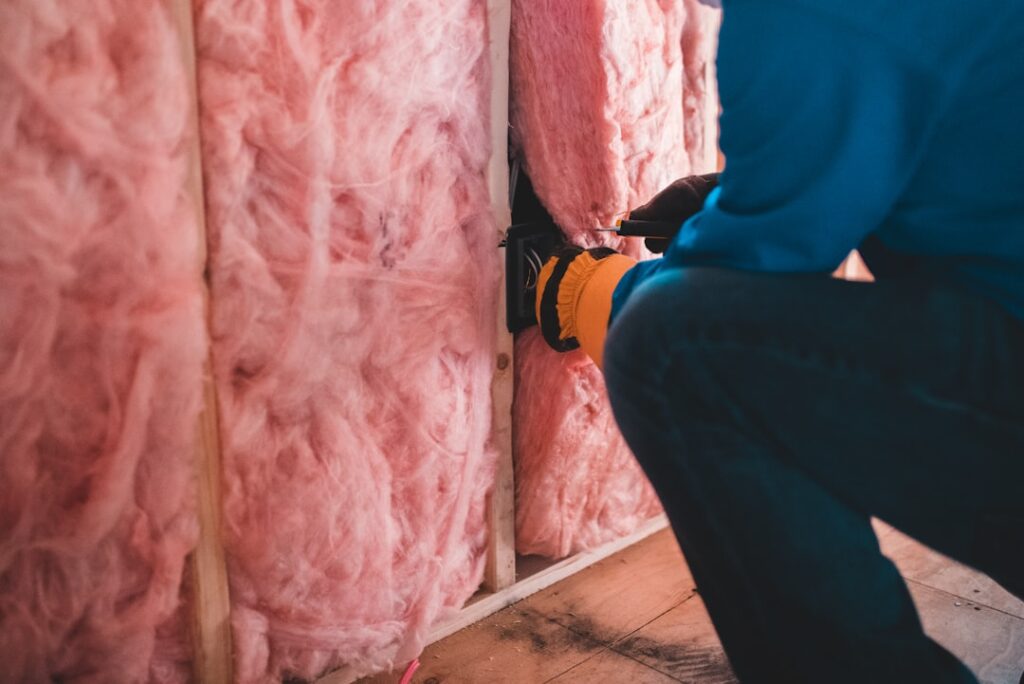
When you are choosing insulation for an attic or wall cavity, the number that decides how well it slows heat flow is its R-value, and cellulose is one of the strongest performers per inch among common materials. The cellulose insulation r value runs roughly 3.2 to 3.8 per inch, which edges out standard fiberglass and helps explain why this recycled-paper product remains a favorite for attics. This guide explains what that number means, how much depth you need to hit code, how cellulose stacks up against other options, and the settling and moisture factors that affect real-world performance.
- What R-Value Actually Measures
- Cellulose R-Value Per Inch
- How Cellulose Compares to Other Insulation
- Settling and Why It Matters
- Moisture and Fire Considerations
- Coverage, Cost, and Installation
- Common Mistakes to Avoid
- Is Cellulose Right for Your Home?
- Dense-Pack vs. Loose-Fill
- Air Sealing Comes First
- Environmental and Health Considerations
What R-Value Actually Measures
R-value quantifies thermal resistance: the higher the number, the more the material resists heat passing through it. It is expressed both per inch and as a total for a given thickness. So a material rated R-3.5 per inch installed at 12 inches deep delivers roughly R-42 total. Your climate zone dictates the total R-value you should target, not the per-inch figure alone. That is why insulation is ultimately about achieving the right total, and per-inch performance simply determines how much thickness gets you there.
Cellulose R-Value Per Inch
Loose-fill cellulose typically delivers R-3.2 to R-3.8 per inch, with most installations figured around R-3.5. Dense-packed cellulose in walls performs at the higher end and resists settling. To translate that into attic depth:
- R-30: roughly 8.5 to 9 inches
- R-38: roughly 10.5 to 12 inches
- R-49: roughly 14 to 16 inches
- R-60: roughly 17 to 19 inches
The U.S. Department of Energy recommends attic insulation of R-38 to R-60 for most of the country, with colder northern zones at the high end and warm southern zones lower. Check your specific climate zone before deciding how deep to blow.
How Cellulose Compares to Other Insulation
Understanding cellulose means comparing it to the alternatives you will see on the shelf:
- Fiberglass loose-fill: about R-2.2 to R-2.7 per inch, so cellulose insulates better per inch and blocks air movement more effectively.
- Fiberglass batts: about R-3.1 to R-3.4 per inch, comparable per inch but prone to gaps around obstructions where blown cellulose fills completely.
- Open-cell spray foam: about R-3.5 to R-3.7 per inch, similar R but adds an air seal at higher cost.
- Closed-cell spray foam: about R-6 to R-7 per inch, the highest performer per inch but the most expensive by far.
Where cellulose shines is its density and coverage. Because it is blown in and packs tightly around wires, pipes, and framing, it reduces air leakage better than batts that leave gaps. That real-world air-blocking often makes cellulose feel warmer than its rated R-value alone suggests.
Settling and Why It Matters
Loose-fill cellulose settles over time as gravity compresses the fluffy fibers, and settled material has a slightly higher R-value per inch but less total depth. Reputable installers account for this by blowing in extra to reach the labeled “settled” thickness. If a bag says a certain coverage at a settled R-value, the installer should blow to a taller initial height so it settles to the target. A common mistake is measuring insulation depth years later, finding it shallower than expected, and assuming the job was shorted, when in fact normal settling occurred. Dense-packed cellulose in wall cavities is installed at a density that resists settling, which is why it is preferred for walls.
Moisture and Fire Considerations
Cellulose is made from recycled newspaper treated with borate for fire and pest resistance, which gives it a Class A fire rating and deters insects and rodents. The moisture question is more nuanced. Cellulose can absorb and release moisture, which helps buffer humidity but means it must be kept dry; a roof leak that soaks cellulose can mat it down and destroy its R-value in that spot. Proper attic ventilation and a sound roof are essential. In walls, dense-pack cellulose paired with good air sealing manages moisture well, but wet-spray applications need time to dry before being closed up.
Coverage, Cost, and Installation
Blown cellulose is one of the more affordable insulation upgrades. Material runs roughly $0.60 to $1.20 per square foot installed for typical attic depths, and many homeowners rent a blower for free with a bulk bag purchase to DIY the attic. A pro install of a whole attic often lands between $1,500 and $3,500 depending on size and target R-value. Before adding depth, air-seal the attic floor, penetrations, and top plates, because insulation slows conductive heat but does little against air leaks. Sealing first, then insulating, delivers the biggest comfort and energy gain.
Common Mistakes to Avoid
- Blowing insulation over soffit vents: Install baffles to keep the eave airflow path open, or you trap moisture and risk mold.
- Burying recessed lights improperly: Only cover IC-rated fixtures; keep non-rated cans clear to avoid fire risk.
- Skipping air sealing: Adding depth over leaky penetrations wastes much of the benefit.
- Under-blowing to save a bag: Falling short of the target depth quietly costs you comfort and energy every year.
- Ignoring settled vs. initial depth: Blow tall enough that the settled result hits your R-value goal.
Is Cellulose Right for Your Home?
Dense-Pack vs. Loose-Fill
Cellulose is installed two ways, and the method changes both performance and settling behavior. Loose-fill is blown fluffy onto open attic floors, where it forms a light, deep blanket that will settle over time. Dense-pack is blown under higher pressure into enclosed cavities such as walls and closed rafter bays, packing to roughly 3.5 pounds per cubic foot so it resists settling and creates an effective air barrier. Dense-pack is the go-to for insulating existing walls without tearing them open, since installers can blow it through small holes in the siding or drywall. It also performs at the upper end of the R-value range and significantly reduces air infiltration, which is why retrofit contractors favor it for wall upgrades on older homes with empty stud cavities.
Air Sealing Comes First
R-value measures resistance to conductive heat flow, but a large share of a home’s energy loss comes from air leaking through gaps, not conducting through materials. That is why air sealing should always precede adding insulation. Before blowing cellulose in an attic, seal penetrations around plumbing stacks, wiring, recessed lights, the attic hatch, and top plates with caulk and foam. Dense cellulose does block air movement better than loose fiberglass, but it is not a substitute for deliberate air sealing. The combination of a tight air barrier plus deep cellulose delivers far more comfort and savings than either alone, and it prevents warm, moist indoor air from migrating into the attic where it can condense and cause problems.
Environmental and Health Considerations
Cellulose appeals to many homeowners for its green credentials. It is made from roughly 80 to 85 percent recycled paper content, giving it one of the lowest embodied-energy footprints of any insulation. The borate treatment that provides fire and pest resistance is also a mild irritant to insects and rodents, discouraging nesting. During installation the dust can irritate lungs and eyes, so a respirator and goggles are essential, but once settled and contained the material is inert and stable. For homeowners weighing insulation choices on both performance and environmental grounds, cellulose offers strong R-value per inch, excellent recycled content, and fire safety in a single affordable package.
Cellulose is an excellent choice for attic floors and for dense-packing existing walls, offering strong R-value per inch, superior air blocking versus batts, fire resistance, and a low price thanks to its recycled content. It is less ideal where chronic moisture is a risk or where you specifically need the rigid air-and-vapor barrier that closed-cell foam provides. For most homeowners upgrading an under-insulated attic, blowing cellulose to R-49 or R-60 is one of the highest-return efficiency projects available. Understand the cellulose insulation r value, plan for settling, seal air leaks first, and you will get quieter, more comfortable rooms and noticeably lower heating and cooling bills.


