
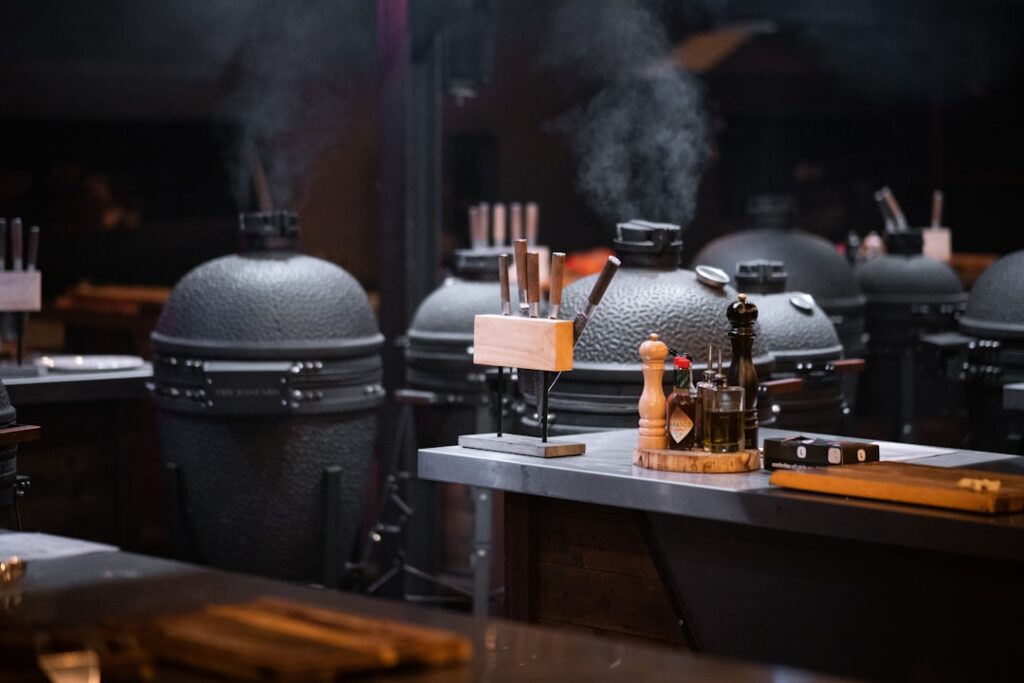
Backyard cooks who chase fall-off-the-bone brisket and perfect pulled pork eventually discover that the secret is not the rub, it is heat stability. A ceramic smoker, often called a kamado grill, uses thick ceramic walls to hold remarkably steady temperatures for hours, making low-and-slow barbecue far easier than on a thin metal smoker. These egg-shaped cookers excel at smoking, grilling, and even baking, all in one durable unit. They are an investment, so understanding how they work and how to use them safely helps you get the most from one.
Part of our Tile & Grout guide — explore the full guide →
How a Ceramic Smoker Works
The magic is in the material. Thick ceramic walls absorb and radiate heat evenly while insulating against outside temperature swings, so once you set a target temperature the cooker holds it with minimal fuss. Airflow vents at the top and bottom let you dial in precise temperatures, from a gentle 225°F for smoking to a searing 700°F or more for grilling and pizza. Most kamados burn natural lump charcoal, which lights cleanly and produces less ash than briquettes.
Why Cooks Love Them
Ceramic smokers earn loyal fans for several reasons:
- Stable temperatures: Hold a set heat for many hours, ideal for overnight cooks.
- Fuel efficiency: Excellent insulation means less charcoal per cook.
- Versatility: Smoke, grill, sear, roast, and bake in one cooker.
- Moisture retention: The sealed design keeps meats juicy.
- Durability: Quality ceramic can last decades with care.
What to Look For When Buying
Several features separate a great kamado from a mediocre one:
- Ceramic quality and thickness: Thicker, well-glazed ceramic insulates better and resists cracking.
- Size: Cooking diameters range from compact 13-inch models to large 24-inch units; choose by how many people you typically cook for.
- Airflow controls: Precise, easy-to-adjust top and bottom vents make temperature management simpler.
- Gaskets and hinges: A good seal and a sturdy spring-assisted hinge improve performance and longevity.
- Accessories: A heat deflector or plate setter is essential for indirect smoking.
Setting Up for Low and Slow
Smoking on a kamado is straightforward once you understand the basics. Fill the firebox with lump charcoal, light it in one or two spots rather than all over, and let it come up gradually to your target. Add a heat deflector to shield the food from direct flame, place a drip pan if you like, and set the grate. Then control temperature with the vents, opening them for more heat and closing them down to maintain or lower it. Add wood chunks for smoke flavor as you light the coals.
Important Safety Practices
A ceramic smoker is a charcoal-fired appliance, so treat it with the same respect as any open-flame cooker. These precautions are essential:
- Use the smoker outdoors only, never in a garage, tent, or enclosed space. Burning charcoal produces carbon monoxide, which is odorless and deadly indoors.
- Place it on a stable, non-combustible surface well away from siding, railings, and overhangs.
- Open the lid slowly and stand back to avoid a flashback, a sudden burst of flame when oxygen rushes in to a hot, oxygen-starved fire.
- Keep a fire extinguisher nearby and never leave a lit smoker unattended around children or pets.
- Let ashes cool completely before disposal, and store them in a metal container away from anything flammable.
Essential Accessories
A few add-ons unlock the full range of a ceramic smoker. A heat deflector or plate setter is the single most important accessory, since it enables true indirect smoking and baking. A quality dual-probe digital thermometer lets you monitor the cooker and the meat without lifting the lid. A cover protects the exterior and gasket from weather, while a chimney starter or electric lighter gets coals going cleanly without lighter fluid, which can taint flavor. Optional extras like a pizza stone, a second cooking grate for more capacity, and ash tools round out the setup. Buy the deflector and thermometer first; the rest can wait.
Care and Maintenance
Ceramic cookers are tough but not indestructible. Avoid dousing a hot smoker with water, since thermal shock can crack the ceramic. Let it cool naturally, then brush out ash and clean the grate. Protect the exterior glaze and the gasket from damage, and store the unit under a cover to shield it from the elements. Replace worn gaskets to keep the seal tight.
Ceramic vs. Other Smoker Types
How does a kamado stack up against the alternatives? Compared with an offset stick burner, a ceramic smoker is far easier to manage and far more fuel efficient, though purists argue offsets give a deeper smoke flavor. Against a pellet smoker, the kamado is more hands-on and versatile for high-heat searing, while pellet grills win on set-and-forget convenience. Versus a basic bullet-style charcoal smoker, the kamado holds temperature far better and lasts much longer, justifying its higher price for committed cooks. Choose based on how much you value convenience, flavor, and versatility.
What You Can Cook
The temperature range makes a ceramic smoker remarkably flexible. At low heat it produces classic barbecue, while cranked up it handles foods a dedicated smoker never could:
- 225 to 275°F: Brisket, pork shoulder, ribs, and other low-and-slow cuts.
- 300 to 400°F: Whole chickens, turkeys, and roasts.
- 400 to 600°F: Pizza on a stone, baked breads, and roasted vegetables.
- 600°F and up: Searing steaks and burgers with a hard crust.
Tips for Better Results
A few habits separate good cooks from great ones on a kamado. Approach your target temperature slowly from below rather than overshooting, since a hot ceramic cooker is hard to cool down. Use a quality digital probe thermometer to track both the cooker and the meat, rather than trusting the dome gauge alone. Add wood chunks sparingly, as the efficient, sealed design needs less smoke than you might expect. And resist opening the lid often, which spikes the temperature and extends your cook time.
What a Ceramic Smoker Costs
Ceramic smokers span a wide price range. Entry-level and smaller models often run $300 to $700, mid-size quality units typically fall between $700 and $1,500, and large premium brands can exceed $1,500. Factor in accessories like a heat deflector, cover, and quality lump charcoal. While pricier than a basic metal smoker upfront, a well-made kamado’s durability and versatility make it a long-term centerpiece for serious backyard cooks.
Prefer to explore on your own?
See how new flooring looks in your actual room in seconds — free, no signup.
Try the free Floor Studio →

