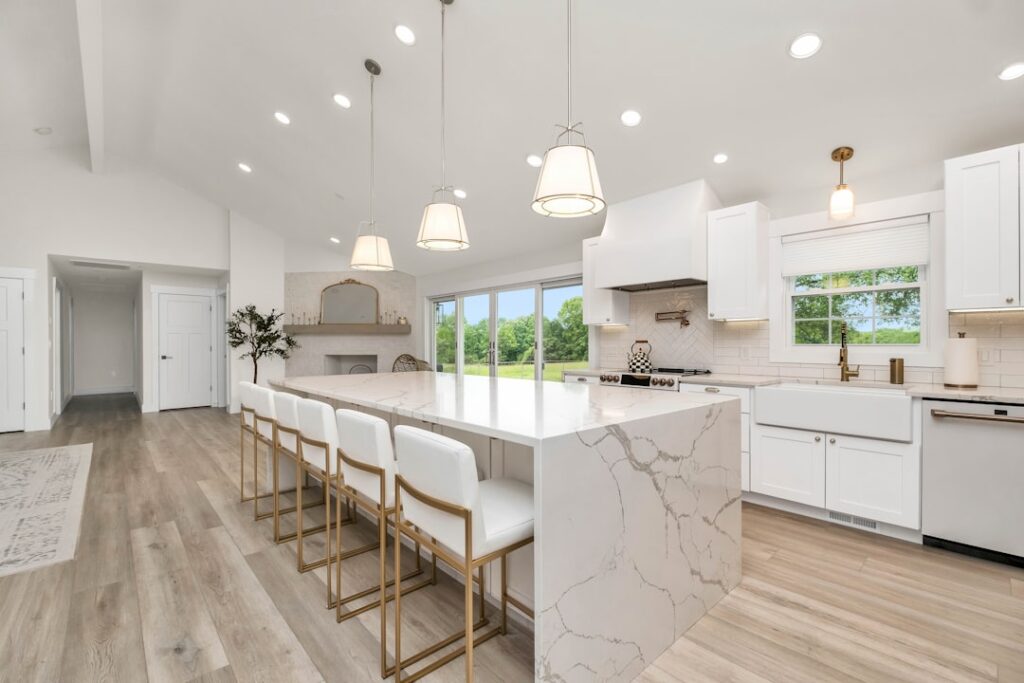
The kitchen is the hardest-working room in the house, and its floor takes more abuse than any other surface in your home. Between spills, dropped pans, foot traffic, grease, and the occasional dishwasher leak, choosing kitchen flooring means balancing durability, water resistance, comfort, and looks in a way few other rooms demand. Get it right and the floor performs quietly for decades; get it wrong and you will be mopping up warped planks or scrubbing stained grout for years.
Part of our Kitchen Remodeling guide — explore the full guide →
The right floor cuts through the marketing and matches how you actually live. Below are the top kitchen flooring options, their real-world strengths and weaknesses, and the practical factors, water resistance, comfort, maintenance, and budget, that should drive your decision.
What Makes a Good Kitchen Floor
Before comparing materials, understand what a kitchen floor must endure. It faces frequent moisture from spills and cleaning, heavy foot traffic in concentrated paths, dropped objects that can dent or crack, and staining agents like oil, wine, and food. On top of that, you often stand on it for long stretches while cooking, so comfort underfoot matters too. The ideal kitchen floor is water resistant, durable, easy to clean, and reasonably comfortable.
No single material wins on every count, so choosing well means prioritizing the factors that matter most to your household. A busy family with kids and pets should weight durability and water resistance heavily, while a serious cook who stands for hours may value comfort more. Keep your specific lifestyle in mind while reviewing the options below.
While you’re upgrading the kitchen floor, it might be a good time to rethink the seating too. Swapping out old bar stools is one of those small changes that makes the whole room feel more pulled together.
We may earn a commission when you purchase through our links.
Tile: The Durable Classic
Porcelain and ceramic tile are the traditional kitchen workhorses for good reason. They are extremely durable, fully waterproof when properly installed, and impervious to stains, heat, and scratches. Spilled sauce wipes right up, and a dropped pan is far more likely to survive than the tile. Porcelain is denser and tougher than ceramic, making it the better choice for busy kitchens, and both come in endless looks including convincing wood and stone imitations.
The trade-offs are comfort and grout. Tile is hard and cold underfoot, which can be tiring during long cooking sessions and unforgiving to dropped glassware. Grout lines require sealing and can stain over time, though modern stain-resistant grouts and larger tiles reduce that upkeep. Expect $5 to $12 per square foot installed. For durability-first households, tile remains hard to beat.
Luxury Vinyl: The Modern Favorite
Luxury vinyl plank and tile have become the most-recommended kitchen flooring for the majority of homeowners, and for good reason. Quality rigid-core LVP is fully waterproof, comfortable and warmer underfoot than tile, quiet, and remarkably durable against scratches and dents. It convincingly mimics hardwood and stone, installs quickly as a floating floor, and forgives minor subfloor imperfections common in older kitchens.
At roughly $3 to $7 per square foot installed, LVP also delivers strong value. It cleans easily with a sweep and damp mop, resists stains, and stands up to pets and kids. The main considerations are choosing a reputable brand with a thick wear layer for longevity, and accepting that vinyl, while durable, is not as premium-feeling as real stone or wood to some buyers. For most kitchens, its balance of performance and price is unbeatable.
Hardwood: Warmth With Caveats
Real hardwood brings unmatched warmth, beauty, and resale value, and many homeowners love the seamless look of running wood from the kitchen through adjoining living spaces. Engineered hardwood, with its plywood core, handles kitchen humidity better than solid wood and is the better choice for this room. Wood is comfortable underfoot and can be refinished to erase years of wear, a real advantage over most alternatives.
The caveat is water. Hardwood is vulnerable to standing water, and an unnoticed leak or repeated spills can cause staining, cupping, or warping. It also dents and scratches more easily than tile or vinyl. If you love wood and keep a tidy kitchen, engineered hardwood at $6 to $12 per square foot installed is a beautiful choice, but wipe up spills promptly and consider a sealed, high-quality finish.
Laminate: Budget Wood Looks
Laminate flooring offers a wood look at a low price, typically $2 to $5 per square foot installed, with excellent scratch and dent resistance thanks to its tough wear layer. For a budget-conscious kitchen refresh, water-resistant laminate can be a reasonable choice, and its hard surface handles traffic and pets well while cleaning up easily.
The historic weakness of laminate is water. Standard laminate has a fiberboard core that swells and delaminates if water seeps into the seams and sits. Newer water-resistant and waterproof laminates have improved dramatically, so if you choose laminate for a kitchen, buy a genuinely water-resistant product and seal the perimeter. Even so, for a wet room like the kitchen, luxury vinyl offers greater peace of mind than laminate.
Comfort, Safety, and Maintenance
Beyond the material itself, think about how the floor feels and functions day to day. If you cook a lot, softer surfaces like vinyl and wood, or an anti-fatigue mat over tile, ease the strain of standing. For safety, choose a floor with some slip resistance, especially important where water hits the floor near the sink, and avoid high-gloss finishes that become slick when wet.
Maintenance also varies. Vinyl and tile are the lowest-effort, needing only sweeping and damp mopping, while hardwood requires more careful cleaning and periodic refinishing. Grout on tile floors needs occasional sealing. Match the maintenance level to how much upkeep you are realistically willing to do, since the easiest floor to care for is the one you will keep looking good.
Making Your Final Choice
To choose the right kitchen flooring, rank your priorities. For maximum durability and a classic look, choose porcelain tile and add anti-fatigue mats for comfort. For the best all-around balance of waterproofing, comfort, looks, and value, luxury vinyl plank is the top pick for most kitchens. If warmth and resale value top your list and you keep a careful kitchen, engineered hardwood delivers unmatched beauty. On a tight budget, a quality water-resistant laminate stretches your dollars.
Whatever you select, prioritize water resistance in this room above almost everything else, since moisture is the number one cause of kitchen floor failure. Buy quality within your chosen category, install it properly, and your kitchen floor will handle everything family life throws at it while looking great for years to come.
Coordinating With Adjoining Rooms
Kitchens rarely exist in isolation, and how the floor relates to neighboring rooms matters, especially in open-concept homes. Running one continuous floor from the kitchen into the adjacent living or dining area makes the whole space feel larger and more cohesive, which is a major reason luxury vinyl and wood-look products are so popular; they perform in the kitchen while flowing seamlessly into living areas. If you choose tile for durability, consider whether a hard, cold floor suits an attached family room where people relax.
If you do change materials between rooms, plan the transition carefully with a clean threshold and try to keep tones related so the shift feels intentional. Matching floor heights avoids trip hazards and awkward transition strips. Thinking about the whole sightline, rather than the kitchen in isolation, leads to a floor choice that looks deliberate and elevates the entire main level of your home rather than chopping it into disconnected zones.
Installation and Subfloor Considerations
The best flooring underperforms over a bad subfloor, so do not overlook what lies beneath. Kitchens need a flat, sound, dry subfloor, and any leveling or repair should happen before installation. Tile in particular requires a rigid, properly prepared substrate, often cement backer board, to prevent cracking, which is why professional installation is money well spent for tile. Luxury vinyl and laminate float over minor imperfections more forgivingly but still benefit from a flat base.
Consider installation cost and difficulty as part of your decision. Floating LVP and laminate are realistic DIY projects that save on labor, while tile and hardwood usually warrant a professional for lasting results. Factor in the cost of removing old flooring, any subfloor repair, and transition strips when budgeting. Also think about height; adding a new floor over existing flooring can create clearance issues with appliances and doors. Planning the installation details up front ensures your chosen kitchen floor goes in cleanly and lasts as long as the material allows.
Prefer to explore on your own?
See how new flooring looks in your actual room in seconds — free, no signup.
Try the free Floor Studio →