Ask ten contractors to name the best floor and you’ll get ten different answers, because there’s no single winner — only the right match for a specific room, budget, and lifestyle. Choosing the best flooring means weighing durability, water resistance, comfort, cost, and resale value against how each room is actually used. A floor that’s perfect for a formal living room is wrong for a basement, and vice versa. This guide compares the major flooring types head to head so you can decide what’s best for your home.
- How to Define “Best” for Your Home
- Hardwood: The Classic Standard
- Luxury Vinyl Plank: The Practical Winner
- Tile: The Most Durable Option
- Laminate: The Budget Champion
- Best Flooring by Room
- Cost vs Value Over Time
- Comfort, Sound, and Underfoot Feel
- Maintenance and Lifestyle Fit
- Mixing Materials Across the Home
- The Bottom Line
How to Define “Best” for Your Home
Before comparing materials, rank what matters most to you. Is it waterproofing because you have kids and pets? Long-term resale value? Comfort underfoot? Lowest possible cost? Your priorities determine the answer more than any product ranking. A young family in a flood-prone region and a couple renovating a heritage home should not choose the same floor.
Room function is the second filter. Wet areas, high-traffic zones, and below-grade spaces each rule out certain materials, narrowing the field before you even look at colors.
Hardwood: The Classic Standard
Solid and engineered hardwood remain the benchmark for warmth, beauty, and resale value. Real wood can be sanded and refinished multiple times, lasting generations, and buyers consistently pay a premium for it.
The downsides are cost and sensitivity. Solid hardwood runs $8 to $16 per square foot installed, scratches under pets, and reacts to humidity. It’s the best choice for above-grade living and dining rooms in climate-controlled homes, but a poor fit for basements and full baths.
Luxury Vinyl Plank: The Practical Winner
For sheer versatility, LVP is hard to beat. It’s 100% waterproof, scratch-resistant, comfortable underfoot, and convincingly mimics wood, all at $5 to $9 per square foot installed. It works in nearly every room, including kitchens, bathrooms, and basements where hardwood fails.
The trade-offs: it can’t be refinished, adds less resale value than real wood, and the cheapest tiers look plasticky and dent. Choose a 20-mil wear layer with an SPC core and it becomes the best all-around floor for busy households.
Tile: The Most Durable Option
Porcelain and ceramic tile are the toughest floors you can buy — waterproof, scratch-proof, and nearly indestructible. They’re the best choice for entries, bathrooms, mudrooms, and hot climates where their coolness is welcome.
At $9 to $18 per square foot installed, tile is mid-to-premium priced, and it’s hard and cold underfoot without radiant heat. Grout lines require occasional sealing. For wet areas and high-wear zones, nothing outlasts it.
Laminate: The Budget Champion
Laminate delivers a wood look for the lowest price — $4 to $7 per square foot installed — with good scratch resistance from its tough wear layer. Modern AC4 and AC5 products handle real traffic well.
Standard laminate isn’t waterproof, though, so it’s best in bedrooms, living rooms, and hallways rather than kitchens or baths. Waterproof laminate lines have closed much of that gap for a small premium.
Best Flooring by Room
Matching material to room is where good decisions get made:
- Kitchen: LVP or porcelain tile — waterproof and durable.
- Bathroom: Porcelain tile or waterproof LVP.
- Living/dining room: Hardwood or engineered wood for value and warmth.
- Bedrooms: Carpet, laminate, or LVP for comfort.
- Basement: SPC vinyl or tile — moisture-proof below grade.
- Entry/mudroom: Tile for maximum durability.
Cost vs Value Over Time
Cheapest upfront isn’t always best value. Hardwood costs more but lasts generations and boosts resale. LVP costs less and performs everywhere but eventually gets replaced rather than refinished. Tile costs more to install but rarely needs replacing. Factor lifespan into the math: a $12 hardwood floor that lasts 50 years can beat a $5 floor replaced twice in that span.
Comfort, Sound, and Underfoot Feel
Beyond durability and looks, how a floor feels and sounds shapes daily life. Carpet is the warmest and quietest underfoot, ideal for bedrooms and stairs. Cork and WPC vinyl offer cushion and sound absorption. Tile and polished concrete are the hardest and loudest, sending sound bouncing and feeling cold without radiant heat.
In open-plan homes and multi-story houses, acoustics matter more than buyers expect. A good underlayment under laminate or LVP cuts the hollow click of footsteps, and rugs soften hard surfaces. If you spend long hours standing in a kitchen, the slight give of WPC vinyl is easier on your joints than rigid tile. Factor comfort into the decision, not just the spec sheet.
Maintenance and Lifestyle Fit
The best floor for you also depends on how much upkeep you’ll realistically do. LVP and tile are the lowest-maintenance — a damp mop handles most messes. Hardwood needs more care: prompt spill cleanup, periodic recoating, and protection from pet claws. Carpet demands regular vacuuming and occasional deep cleaning.
Match the floor to your household honestly. Large dogs, young kids, and high foot traffic push you toward waterproof, scratch-resistant surfaces like 20-mil LVP or tile. A quiet adult household can enjoy the warmth of hardwood with far less worry. Choosing against your actual lifestyle is how people end up resenting an otherwise beautiful floor within a year.
Mixing Materials Across the Home
You don’t have to choose one floor for the whole house, and the best results often come from mixing. A common, effective approach runs hardwood or wood-look LVP through the main living spaces, tile in bathrooms and entries, and carpet in bedrooms. The key is keeping a consistent color story so transitions feel intentional rather than abrupt.
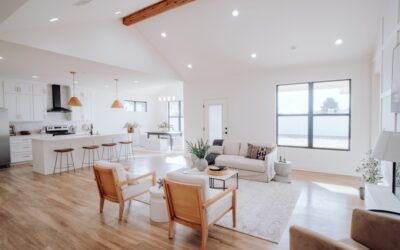
When mixing materials, plan the transitions carefully. Use proper transition strips where floor heights differ, and try to keep wood and wood-look products in the same tone family so they read as a cohesive whole. Open-concept homes especially benefit from running a single material across the connected living, dining, and kitchen zones to make the space feel larger, then switching only in closed-off rooms.
The Bottom Line
The best flooring is the one that fits the room and your priorities. For all-around practicality in a busy home, 20-mil SPC luxury vinyl is the strongest single answer. For resale value and timeless warmth, hardwood wins above grade. For wet areas and durability, tile is unmatched, and laminate covers tight budgets. Define what matters most, match the material to each room, and weigh lifespan against price — that’s how you choose a floor you won’t regret.
Prefer to explore on your own?
See how new flooring looks in your actual room in seconds — free, no signup.
Try the free Floor Studio →