Trendy kitchens look spectacular in magazines for about three years and then start aging the entire house. Classic kitchens age in reverse: they look better five and ten years later than the day they were installed. Designing a true classic kitchen means choosing cabinets, counters, hardware, and layouts that were already proven a hundred years ago and will still feel right a hundred years from now. This guide walks through the materials, proportions, color palettes, and detailing that define a kitchen built to outlast every passing trend.
Part of our Kitchen Remodeling guide — explore the full guide →
- What Makes a Kitchen Classic
- Cabinet Style and Material
- Counter Material That Ages Well
- Backsplash That Stays Timeless
- Hardware That Reads Classic
- Layouts That Have Worked for a Century
- Lighting Layers
- Range and Hood Choices
- Flooring That Belongs
- Detailing That Separates Tiers
- Realistic Budget for a Classic Kitchen
What Makes a Kitchen Classic
Three principles separate timeless kitchens from dated ones. Symmetry: balanced compositions read calm and expensive. Quality materials: solid wood, natural stone, and real metal age gracefully where laminate and plastic do not. Restraint: 3 finishes maximum, no more than 2 cabinet colors, and one statement element per room.
Skip the open shelving fad, the all-black kitchen, the matte navy lower cabinet trend, and the integrated panel everything look. Each of those will date the kitchen by 2030. Pick design moves you can name from a kitchen photographed in 1925 and still find beautiful today.
Cabinet Style and Material
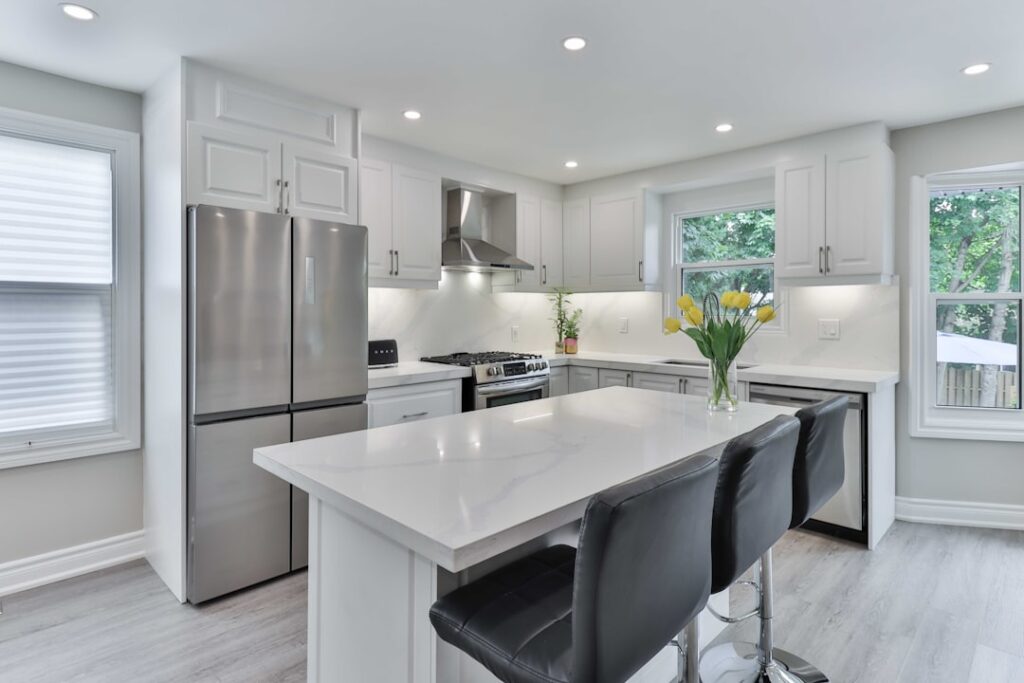
Inset Shaker cabinets in painted wood are the most enduring choice. The flush face frame, square-edged door panel, and visible hinges have looked correct since 1860. White, off-white, soft cream, sage green, and warm taupe all read classic without locking into a specific decade.
Use solid maple, white oak, or cherry for the door frames and panels. Avoid MDF doors except for paint-grade applications where the painted finish hides the substrate. Real wood survives decades of bumps, refinishes, and color changes.
Counter Material That Ages Well
Marble has been used in kitchens for 2,000 years and still looks right today. Carrara at $50 to $100 per square foot installed develops a patina that classic kitchens embrace rather than fight. Soapstone at $70 to $140 darkens beautifully with mineral oil. Honed granite in a single neutral tone reads as quiet and timeless.
Skip glossy quartz with bold veining patterns. They look fresh today and dated within a decade. Skip butcher block as the primary work surface (it stains and dents) but use it on an island or a small section near the prep sink for warmth.
Backsplash That Stays Timeless
Subway tile in 3 by 6 inch white ceramic with a thin grout line is the most-installed and least-regretted backsplash material in American homes. Daltile Restore at $4 per square foot delivers the look at builder pricing. Handmade Zellige tile from Cle or Mosaic House at $15 to $30 per square foot adds artisan character without trendy patterns.
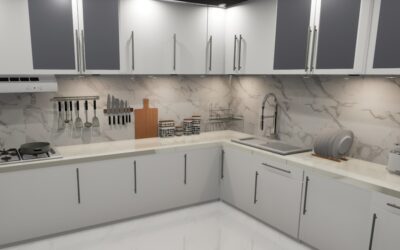
Marble slab backsplashes that match the counter create the highest-end look at $80 to $150 per square foot installed. Avoid mirrored tile, glass mosaic strips, and bold-pattern cement tiles in primary kitchens, all of which scream a specific design year.
Hardware That Reads Classic
- Polished or unlacquered brass cup pulls and bin pulls (3 to 4 inch sizes)
- Polished nickel knobs (1 to 1.25 inch diameter)
- Oil-rubbed bronze for warm-tone kitchens with darker cabinets
- Polished chrome for modern-leaning classic kitchens
- Skip matte black: it will date the kitchen within 5 years
Mix one knob style and one pull style throughout. Knobs on uppers, pulls on lowers and drawers is a reliable rule. Source from Restoration Hardware, Rejuvenation, or House of Antique Hardware for quality that lasts.
Layouts That Have Worked for a Century
The work triangle between sink, range, and refrigerator should total 12 to 26 feet with no leg shorter than 4 feet. The galley layout, U-shape, and L-shape with island all date back to early-20th-century kitchen science and still serve the cook efficiently today.
Keep the range centered on a wall whenever possible for symmetry. Flank with matching upper cabinets, matching base cabinets, and a hood centered above. Center pendants over an island. Symmetry signals classic.
Lighting Layers
Plan three layers of light. Recessed cans on dimmers provide ambient light at 30 to 50 lumens per square foot. Two or three pendants over an island deliver task and visual focal points. Wall sconces flanking the range or window add warmth in evening hours.
Color temperature stays between 2700K and 3000K for classic warmth. Skip 4000K kitchen ceilings unless you genuinely prefer the daylight feel of a commercial space. Hand-blown glass shades in seeded or clear glass beat painted metal pendants for longevity.
Range and Hood Choices
A 36-inch professional gas or dual-fuel range from Wolf, BlueStar, or La Cornue at $7,000 to $15,000 anchors a classic kitchen for 25 plus years. The understated stainless steel finish ages without going out of style. Pair with a matching ventilation hood, custom-paneled to match cabinets or finished in stainless to match the range.
Skip slide-in induction with hidden controls if the goal is timeless. Save the cutting-edge appliances for trendier spaces and choose appliances that look like the same shapes used in 1985 and still look right.
Flooring That Belongs
Wide-plank white oak flooring in a natural matte finish at $9 to $14 per square foot installed is the safest classic choice. Marble or limestone tile in larger formats works in formal homes. Hex mosaic tile floors in a 1-inch black-and-white pattern fit early-20th-century houses authentically.
Avoid bamboo, cork, and overly distressed wood looks. The first two were trendy briefly, and heavy distressing reads more rustic than classic.
Detailing That Separates Tiers
Crown molding capping wall cabinets, light rail under upper cabinets to hide LED strips, furniture-style toe kicks on islands, glass-front upper cabinets in measured doses, plaster or smooth painted ceilings rather than knockdown texture, and substantial trim around windows. These details cost a few hundred dollars per element but lift the entire room into a tier most kitchens never reach.
Realistic Budget for a Classic Kitchen
A modest 150 square foot classic kitchen with custom-painted Shaker cabinets, marble counters, subway tile, white oak floors, polished nickel hardware, and a 36-inch professional range runs $55,000 to $90,000 turnkey. Larger 250 square foot kitchens with islands and full pantries land between $90,000 and $160,000. The premium over a builder-grade kitchen pays back across the next 25 years of not redoing the room when trends shift, not to mention the resale appeal in nearly any neighborhood.