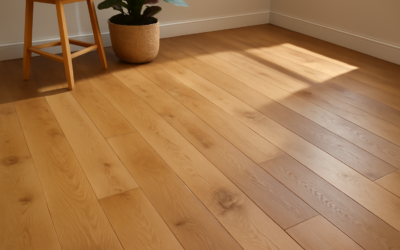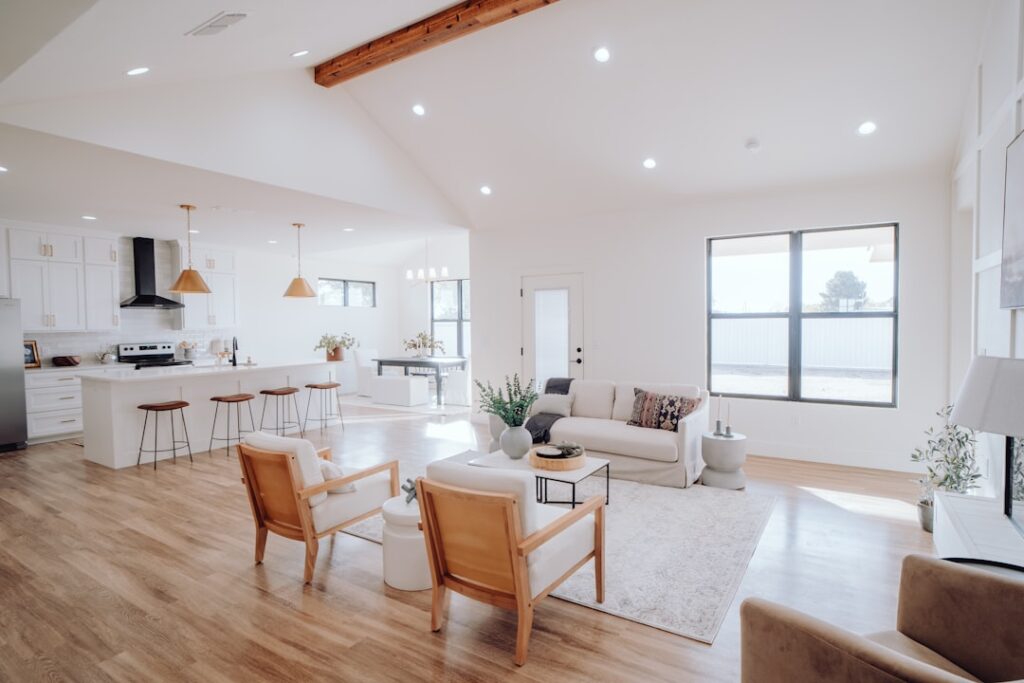
There’s a reason red oak strip flooring has covered American homes since the 1920s — it works. Properly installed and finished, classic wood flooring outlasts every other surface in the home, often hitting 80 to 100 years before requiring more than a periodic refinish. If you’re choosing between traditional solid hardwood and the newer engineered or LVP alternatives, this guide walks through species, widths, finishes, and the realities of cost in 2026.
What Makes a Floor “Classic”
Classic wood flooring traditionally refers to solid 3/4-inch tongue-and-groove hardwood in widths of 2.25, 3.25, or 4 inches, nail-down installed over a plywood or OSB subfloor. Red oak dominates the category because it’s plentiful, takes stain beautifully, and offers a Janka hardness rating of 1290 — durable enough for kitchens, hallways, and family rooms.
Wider plank floors (5 to 8 inches) gained popularity in the 2010s but technically fall outside the classic strip category. They look stunning, but solid wide plank is more prone to seasonal cupping and gapping unless humidity stays tightly controlled between 30% and 50% relative humidity year-round.
Species Worth Knowing
Beyond red oak, four other species fall into the classic American hardwood category:
- White oak: Janka 1360. Tighter grain, accepts gray and modern stains better than red oak. Material runs $5 to $9 per sq ft.
- Hard maple: Janka 1450. Pale, uniform appearance. Notoriously hard to stain evenly without conditioner. $5 to $8/sq ft.
- Hickory: Janka 1820. Most durable common species; dramatic color variation. $6 to $9/sq ft.
- Ash: Janka 1320. Similar to oak but lighter and more linear in grain. $6 to $10/sq ft, limited availability post-emerald ash borer.
- American cherry: Janka 950. Soft but ages beautifully with deep reddish patina. $7 to $11/sq ft.
Walnut and white pine also have classic American pedigrees but sit lower on the Janka scale (1010 and 380 respectively), making them better suited to bedrooms and formal rooms than high-traffic areas.
Strip vs Plank Width Tradeoffs
Narrow strip flooring (2.25-inch) hides seasonal movement best. It also reads as traditional and slightly busy — perfect for Craftsman and colonial homes. Mid-width (3.25 to 4 inch) is the sweet spot for most renovations: classic enough to feel timeless, wide enough to look current.
Once you cross 5 inches, the floor reads contemporary. It also demands tighter moisture control and often calls for engineered construction to avoid telegraphing subfloor movement. If your heart is set on 6-inch boards, consider an engineered oak with a 4mm wear layer — same look, far better dimensional stability.
Site-Finished vs Prefinished: The Real Cost Picture
Prefinished oak runs $4 to $7 per sq ft material plus $4 to $6 install — total $8 to $13 installed. The factory aluminum-oxide finish lasts 25+ years before refinishing, and the install is fast (1,000 sq ft in 1-2 days for an experienced crew).
Site-finished raw oak runs $3 to $5 per sq ft material plus $4 to $6 install plus $3 to $5 for sand and three-coat polyurethane. Total: $10 to $16 installed. The advantage is a perfectly flush surface with no microbevels and full custom stain control. The downside is dust (even with HEPA-equipped sanders, expect a film), 5 to 7 days of finishing time, and a more delicate first-year cure.
Finish Options That Affect Maintenance
Three finish systems dominate site-finished classic floors:
- Oil-modified polyurethane: Warm amber tone, 8 to 10 hours dry time per coat, full cure in 30 days. About $3.50/sq ft applied.
- Water-based polyurethane (Bona Traffic HD, Loba): Clear, dries in 2 hours, full cure in 7 to 14 days. Better for white oak and natural finishes. About $4.50/sq ft.
- Hardwax oil (Rubio Monocoat, Pallmann Magic Oil): Penetrates rather than coats. Easy spot-repair. Requires re-oiling every 3 to 5 years. About $5/sq ft.
Bona Traffic HD is the standard for high-traffic residential — commercial-grade durability, low VOC, NWFA-certified. If your contractor proposes a single-coat finish or a generic big-box polyurethane, push back. Two coats minimum, three coats preferred.
Installation Method and Why It Matters
Classic 3/4-inch solid hardwood gets installed nail-down using 2-inch L or T cleats from a Bostitch or Powernail pneumatic nailer. Industry standard is 8 to 10 cleats per board on 6-inch centers. Skip this spec and you’ll hear squeaks within 18 months.
Before nailing, the subfloor needs to be flat to within 3/16-inch over 10 feet (NWFA standard). High spots get planed; low spots get shimmed or self-leveled. Plywood subfloors should be at least 3/4-inch thick. OSB requires 7/8-inch minimum for adequate nail holding.
Maintenance That Extends the Lifespan
Once installed, classic wood flooring is forgiving but not bulletproof. Sweep or vacuum (hard floor setting) weekly. Damp-mop monthly using Bona Hardwood Floor Cleaner or a manufacturer-approved equivalent. Avoid steam mops, Murphy Oil Soap (builds up over time), and excessive water.
Felt pads on furniture, rugs in high-pivot areas (entries, stove zones), and indoor humidity control between 30% and 50% relative humidity prevent 90% of long-term issues. A recoat — single coat over scuffed but intact finish — runs $1.50 to $2.50 per sq ft and adds a decade of life every 8 to 12 years before a full sand-and-refinish is needed.
When Classic Wood Beats Engineered or LVP
Solid classic hardwood is the right call if you plan to own the home 15+ years, you have stable HVAC keeping humidity in range, the install location is above grade, and you value the ability to refinish 3 to 4 times over a century. It’s the wrong call below grade, in bathrooms, over concrete slabs without a moisture barrier, or where the install is expected to outlast the homeowner’s stay. In those cases, an engineered oak with a thick wear layer captures most of the look without the dimensional risk.
Prefer to explore on your own?
See how new flooring looks in your actual room in seconds — free, no signup.
Try the free Floor Studio →