Concrete epoxy turns a dusty, stained slab into a hard, glossy, chemical-resistant floor that looks like a showroom. Garages, basements, workshops, and even kitchens benefit from a coating that shrugs off oil, road salt, and dropped tools. The catch is that epoxy is unforgiving of poor preparation. Skip a step and the coating peels within months. Done right, it lasts a decade or more. This guide covers what epoxy is, how to prep and apply it, the safety precautions that matter, and what the project costs.
Part of our Epoxy, Concrete & Garage Floors guide — explore the full guide →
What Concrete Epoxy Is
Epoxy is a two-part coating made from a resin and a hardener that you mix just before applying. The chemical reaction between them cures into a thick, rigid, plastic-like layer bonded to the concrete. This is different from epoxy paint, which is mostly paint with a small amount of epoxy added; true two-part epoxy is far tougher and longer lasting.
You can buy water-based, solvent-based, and 100 percent solids epoxy. Solids epoxy goes on thickest and is the most durable but also the trickiest for a first-timer because it cures fast. Water-based kits sold at home centers are the most beginner-friendly.
Where Concrete Epoxy Works
Epoxy excels anywhere you want a durable, easy-to-clean floor:
- Garages: The most common use, resisting oil, gasoline, salt, and tire wear.
- Basements: Brightens the space and resists moisture from the slab when a proper vapor barrier exists.
- Workshops and utility rooms: Stands up to dropped tools and chemical spills.
- Commercial and laundry areas: Sanitary, seamless, and simple to mop.
Epoxy is not ideal over slabs with persistent moisture problems or significant cracking until those issues are corrected first.
Surface Preparation Is Everything
The most common reason epoxy fails is bad prep. The concrete must be clean, dry, profiled, and free of any existing sealer. Follow these steps:
- Test for moisture: Tape a plastic sheet to the slab for 24 hours. Condensation underneath means the slab is too damp to coat.
- Clean thoroughly: Degrease oil stains, sweep, and scrub away all dirt.
- Etch or grind: Acid etching or mechanical grinding opens the concrete pores so the epoxy can grip. A smooth, sealed slab will not bond.
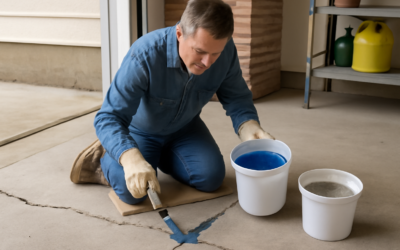
- Repair cracks: Fill cracks and pits with a concrete patch and let them cure.
- Let it dry completely: The slab must be fully dry before you apply anything.
Take your time here. Hours spent on prep determine whether the coating lasts ten years or ten weeks.
Safety First
Epoxy and the etching chemicals involved demand real precautions. Always read and follow the manufacturer’s instructions on the product you buy.
- Ventilate the space. Open doors and windows and run fans. Epoxy and solvent fumes can be strong, and solvent-based products especially require good airflow.
- Wear protection. Use chemical-resistant gloves, safety glasses, and clothing you can discard. For solvent-based epoxy, a respirator rated for organic vapors is recommended.
- Handle acid etch carefully. If acid etching, wear gloves and eye protection and follow dilution and neutralizing directions exactly.
- Keep skin clear. Uncured epoxy can irritate or sensitize skin; wash off any contact promptly.
- Mind cure times. Keep people and pets off the floor until the manufacturer says it is fully cured.
Applying the Epoxy
Once prep is done and the slab is dry, application moves quickly, so have everything ready. Mix the resin and hardener exactly per the instructions; incorrect ratios will not cure properly. Many homeowners apply a primer coat first, then the main epoxy, working in manageable sections.
Cut in the edges with a brush, then roll the field with a quality roller, maintaining a wet edge so sections blend. If you are adding decorative color flakes, broadcast them onto the wet epoxy before it sets. After the base cures, most systems get a clear topcoat for added durability and gloss. Respect the recoat window listed on the product.
Decorative Options and Finishes
Epoxy is not just utilitarian gray. The most popular upgrade is broadcasting colored vinyl flakes (sometimes called chips) into the wet coating, which adds texture, hides minor imperfections, improves slip resistance, and gives a speckled, professional look. Metallic epoxy systems use special pigments that swirl during application to create marbled, three-dimensional effects that resemble flowing stone or lava, popular for showroom-style garages and basements.
Solid color epoxy in shades like tan, blue, or charcoal gives a clean, uniform finish. Whatever look you choose, a clear topcoat over the base improves durability and gloss, and an anti-slip additive mixed into the topcoat is wise for areas that get wet, since cured epoxy can be slippery.
How Long Concrete Epoxy Lasts
A properly prepped and applied epoxy floor commonly lasts 10 to 20 years in a residential garage, and even longer in low-traffic areas. The biggest factor in longevity is preparation, not the epoxy itself. A poorly prepped floor may delaminate within a year, while a meticulously ground, clean, dry slab holds its coating for a decade or more. Heavy commercial use, dragging metal equipment, and hot-tire pickup from vehicles shorten the life, while gentle residential use extends it.
Signs that a floor is due for recoating include dulling gloss, surface scratches, and small areas of peeling. Many epoxy systems can be cleaned, lightly abraded, and recoated rather than fully removed, which is far less work than starting over.
What Concrete Epoxy Costs
DIY kits for a two-car garage typically run $150 to $600 depending on quality and whether they include flakes and a topcoat. Professional installation, including grinding and a multi-coat system, generally costs $3 to $12 per square foot, with premium decorative or metallic finishes running higher. A pro-installed two-car garage often lands between $1,500 and $4,000. The slab prep tools, etch, and protective gear add modestly to a DIY budget.
Maintenance
Epoxy is easy to live with. Sweep regularly and mop with a mild cleaner. Wipe up oil and chemical spills promptly, even though the surface resists them. Avoid dragging sharp metal, and place mats under vehicle tires if you notice hot-tire pickup. A well-maintained epoxy floor stays glossy for many years.
Final Thoughts
Concrete epoxy rewards careful work with a tough, attractive, low-maintenance floor. Test for moisture, prep the slab properly, ventilate well, wear the right protection, and follow the manufacturer’s instructions to the letter. Get the preparation right and your epoxy floor will look great and perform for a decade or more.
Frequently Asked Questions
Can you use epoxy on a driveway or outdoor concrete?
Standard epoxy is not recommended outdoors. Sunlight yellows and breaks down most epoxies, and freeze-thaw cycles and moisture rising through the slab can make it peel. A glossy epoxy surface also gets slippery when wet. For driveways and patios, use a breathable penetrating concrete sealer or a UV-stable coating rated for exterior use.
How long after epoxy can you drive on a garage floor?
Most garage floor epoxies allow foot traffic after about 24 hours, but vehicles usually need to wait several days, often 3 to 7, while the coating reaches a full cure. Cool temperatures slow curing. Check the product label, and park on the floor only after the stated full-cure time to avoid hot-tire marks.
What is the difference between epoxy and polyaspartic floor coatings?
Polyaspartic coatings cure much faster and resist yellowing from sunlight, so they are often used as a topcoat over an epoxy base. Epoxy builds a thicker, harder base layer and costs less but cures slowly and ambers in UV light. The short working time of polyaspartic makes it harder for a first-timer to apply.
Is anchoring epoxy the same as floor epoxy?
No. Anchoring epoxy is a thick adhesive for setting bolts, rebar, and threaded rod into drilled holes in concrete. Concrete repair epoxy fills cracks and spalls. Floor epoxy is a coating rolled over the whole slab. Each is formulated for its own job, so use the product made for the task.